

Dsigngo is a Graphic Design and Digital Marketing Company.
Write what you are looking for and press enter to begin your search!

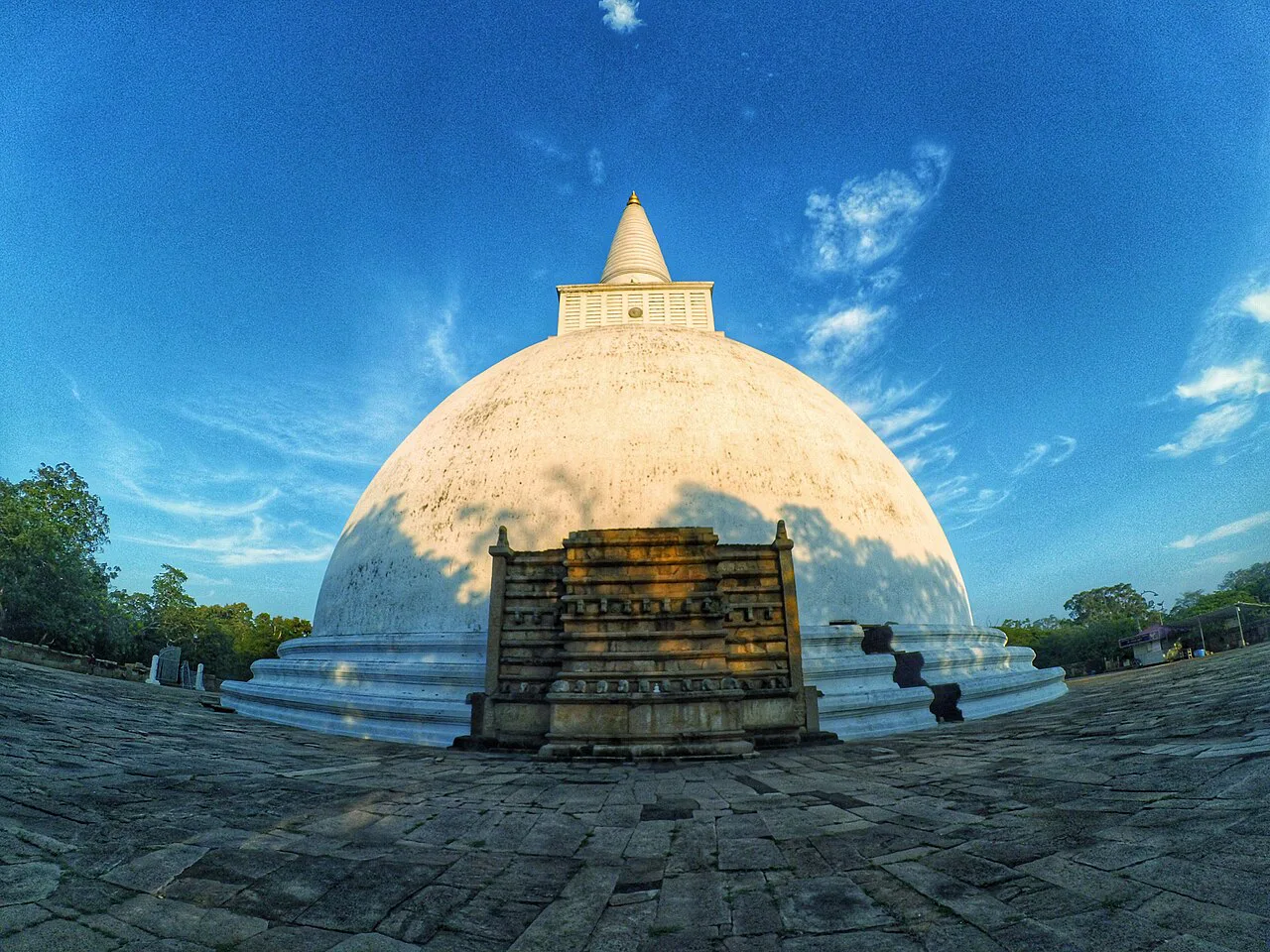
Anuradhapura, Cultural Triangle
Mirisavetiya Dagoba and the Goldfish Park
A king forgot to offer his monks a bite of chilli before eating it himself, and built an entire stupa as penance, according to one of Anuradhapura’s most beloved local legends.
Almost every Sri Lankan child grows up hearing the story of Mirisavetiya: how a king, having broken his own religious vow over something as small as a chilli, built one of Anuradhapura’s most enduring monuments simply to make amends.
Quick Facts
| Location | Near Tissa Wewa, north of the rest house, Anuradhapura |
| Built by | King Dutugemunu, 161 to 137 BCE |
| Significance | The first stupa Dutugemunu built after recapturing Anuradhapura |
| Name meaning | ‘Miris’ (chilli) + a founding legend involving the king’s broken vow |
| Nearby feature | Ranmasu Uyana, the Royal Pleasure Garden, also called the Goldfish Park |
| Entry | Free, since it remains an active place of worship |
Commonly searched as: Mirisavetiya Dagoba · Mirisawetiya Anuradhapura · Goldfish Park Anuradhapura · King Dutugemunu stupa · things to do in Anuradhapura
A King’s Broken Vow
King Dutugemunu had made a personal vow that before eating any meal, he would first offer a portion to the Buddhist clergy. According to the most cherished version of the legend, the king one day ate a chilli, miriskarala in Sinhala, forgetting to make that customary offering first. Realising his mistake, and treating the lapse with genuine seriousness despite its small scale, he built an entire stupa as an act of atonement, which became known as Mirisavetiya in reference to the chilli that prompted its construction.
A second, equally popular legend ties the same site to a different story: that Dutugemunu owned a royal sceptre containing a sacred relic of the Buddha, and while bathing in the nearby Tissa Wewa reservoir, he left the sceptre planted in the bank. When he returned, the sceptre proved impossible to remove, an omen he took as a sign that a stupa should be built on that exact spot, making Mirisavetiya the first monument he constructed after recapturing Anuradhapura from Elara.
A Monument That Nearly Vanished
Mirisavetiya received renovation from numerous kings across the centuries following Dutugemunu’s reign, a pattern typical of Anuradhapura’s most revered monuments. But once the city ceased to be Sri Lanka’s capital and the population centre shifted elsewhere, Mirisavetiya, like so many of Anuradhapura’s temples, fell into neglect. By the 19th century, the site had become so thoroughly overgrown with trees and undergrowth that it was, by most accounts, genuinely unrecognisable as a former royal monument until later restoration efforts brought it back to something resembling its original form.
What makes Mirisavetiya’s survival story genuinely charming, beyond the restoration itself, is how the stupa’s founding legend has stayed so firmly embedded in local memory across all those centuries of neglect and eventual recovery. Long after the physical structure had vanished beneath jungle growth, the story of a king’s small broken vow and his outsized act of atonement kept circulating among Sri Lankan families, passed down as a childhood story that many visitors say they heard well before ever seeing the actual stupa in person.
The Goldfish Park
South along the shore of the same lake sits Ranmasu Uyana, commonly known as the Royal Pleasure Gardens or Goldfish Park, a landscaped royal garden whose surviving rock-carved elephant reliefs and ancient pools offer a genuinely rare glimpse into ancient Sri Lankan landscape architecture. Local tradition holds this garden as the spot where Prince Saliya, Dutugemunu’s own son, first met Asokamala, the low-caste woman who would become his bride, a romance controversial enough at the time that Saliya reportedly gave up his claim to the throne for her.
Visiting Tips
- Entry is free, since the stupa remains an active place of worship rather than a purely ticketed archaeological site.
- Combine with a stroll or bike ride along the banks of Tissa Wewa, taking in Mirisavetiya, Issurumuniya, and the Royal Pleasure Gardens together.
- Dress modestly and remove shoes and headwear before entering the stupa grounds.
- Visit for a genuinely peaceful, less crowded experience compared to Anuradhapura’s larger, more heavily visited stupas.
Where It Sits on the Map
Mirisavetiya Dagoba, near Tissa Wewa, Anuradhapura Open in Google Maps ↗
Frequently Asked Questions
Why is Mirisavetiya’s name connected to a chilli?
According to legend, King Dutugemunu forgot to make his customary religious offering before eating a chilli, and built the stupa as an act of atonement for that broken vow.
What is the other legend associated with the stupa?
That Dutugemunu’s royal sceptre, containing a Buddha relic, became stuck in the ground while he bathed nearby, which he took as a sign to build the stupa on that exact spot.
What is the Goldfish Park?
Ranmasu Uyana, the Royal Pleasure Gardens, a landscaped royal garden near Mirisavetiya, notable for its ancient rock-carved elephant reliefs and pools.
Is there an entry fee for Mirisavetiya?
No, entry is free since it remains an active place of worship rather than a purely ticketed site.
← Sri Lanka: The Complete Guide — see all 258 places by region
Related News
A guide to Sri Lanka's Cultural Triangle: Sigiriya, Polonnaruwa, Anuradhapura, Dambulla and Mihintale, with travel tips.

A complete guide to Sigiriya Rock Fortress: King Kashyapa's parricide, the water gardens, the famous frescoes, visiting tips and map.
A guide to the ancient city of Polonnaruwa: from Chola conquest to Parakramabahu the Great's garden-city, visiting tips and map.













