

Dsigngo is a Graphic Design and Digital Marketing Company.
Write what you are looking for and press enter to begin your search!

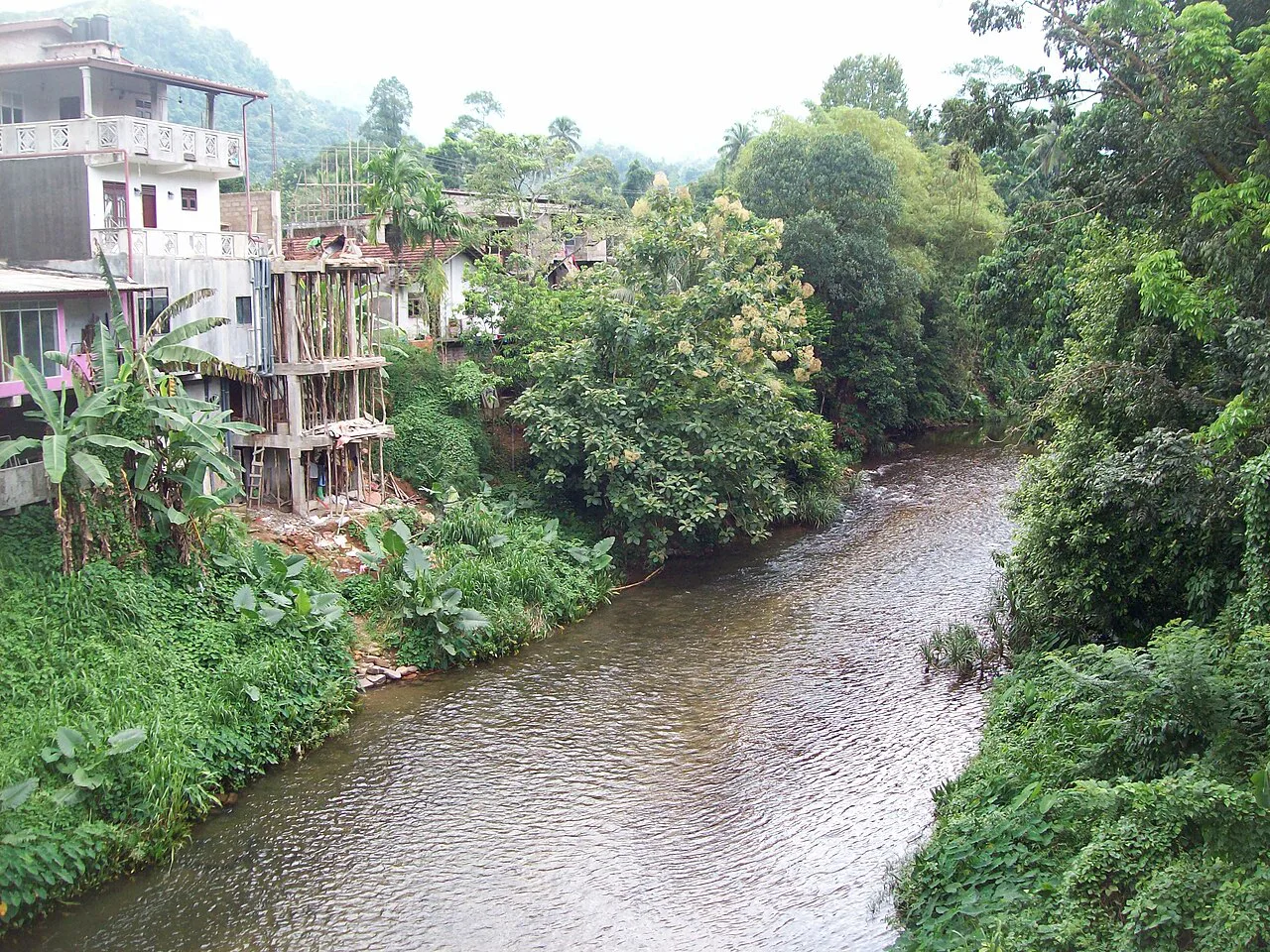
Hill Country, Sri Lanka
Kitulgala
A sleepy jungle village that barely appeared on any map until a 1957 Oscar-winning war film blew up a purpose-built bridge on its river, launching it into becoming Sri Lanka’s adventure capital.
Before 1957, Kitulgala was simply a quiet village along the Kelani River, named for the fishtail palm trees (kithul) growing in the surrounding hills. David Lean’s Oscar-winning war epic changed that permanently, turning an obscure jungle hamlet into one of the most recognisable names in Sri Lankan adventure tourism.
Quick Facts
| Location | Kelani River valley, about 80 to 100 km from Colombo |
| Name origin | From ‘Kithul’ (fishtail palm) and ‘gala’ (rock/boulder) |
| Claim to fame | Primary filming location for ‘The Bridge on the River Kwai’ (1957) |
| Main activity | White-water rafting, Grade 2 to 3 rapids over a 5 km stretch |
| Archaeological site | Belilena Cave, evidence of human habitation over 30,000 years old |
| Bordering reserve | Kelani Valley/Makandawa Forest Reserve |
Commonly searched as: Kitulgala Sri Lanka · Kitulgala white water rafting · Bridge on the River Kwai filming location · Kitulgala rainforest · things to do in Kitulgala
Hollywood Arrives in the Jungle
In 1956 and 1957, director David Lean chose Kitulgala’s stretch of the Kelani River as the primary filming location for “The Bridge on the River Kwai,” a war epic that went on to win seven Academy Awards, including Best Picture. The production built what was, at the time, the most expensive film set ever constructed, a full-scale wooden bridge across the river, purely so it could be dramatically destroyed in the film’s climactic explosion scene, using a genuine retired locomotive from the Sri Lankan railway system as the doomed train. While the wooden bridge itself was destroyed on camera, the concrete foundations built to support it remain visible in the river today, still drawing film history enthusiasts more than six decades later.
That single production put Kitulgala on the map in a way little else could have, and the village, largely unchanged in character since the filming days, has spent the decades since building an entirely new identity around outdoor adventure tourism, drawing both curious film fans and adrenaline-seeking rafters in roughly equal measure.
Sri Lanka’s White-Water Capital
Kitulgala’s Kelani River offers the country’s most popular white-water rafting, a roughly 5 km stretch featuring five major rapids and four minor ones, rated Grade 2 to 3, accessible to relative beginners while still delivering genuine thrills for more experienced rafters. The first major rapid, nicknamed “Virgin’s Breast,” tends to soak and wake up every rafter within the opening minutes, and calmer stretches between rapids allow time to swim and take in the surrounding rainforest scenery. Beyond rafting, the area supports canyoning, waterfall abseiling, kayaking, and hiking through some of the wettest, most biodiverse terrain in southwestern Sri Lanka.
Prehistoric Human History
A short distance from the main village, Belilena Cave has yielded archaeological evidence of human habitation stretching back more than 30,000 years, tied to Sri Lanka’s prehistoric Balangoda culture. That deep human history, layered beneath the area’s more recent cinematic and adventure-tourism fame, adds a genuinely ancient dimension to a destination most visitors associate purely with rafting and film trivia.
Visiting Tips
- Book rafting trips through an established, safety-certified local operator, given the genuine rapids involved.
- Visit the concrete bridge foundations in the river for a quick piece of film history alongside your outdoor activities.
- Consider a guided walk through the neighbouring Makandawa Forest Reserve for birdwatching, reached by dugout canoe or suspension bridge.
- Kitulgala works well as a stop between Colombo and the Hill Country proper, given its position along the route toward Nuwara Eliya via Hatton.
A Village That Reinvented Itself Twice
Kitulgala’s story is really a story of two separate transformations layered on top of an ancient human presence stretching back tens of thousands of years. First came the sudden, temporary disruption of a major Hollywood production descending on a quiet jungle village for a single film shoot, an event that could easily have faded from memory once the cameras left. Instead, it became the foundation of an entirely new local economy, one built specifically around film tourism and, eventually, the outdoor adventure activities the surrounding river and rainforest happened to be perfectly suited for. Few Sri Lankan towns owe their modern identity so directly to a single foreign film production, and fewer still have managed to build something as genuinely sustainable and locally beneficial out of that initial spark of outside attention.
Where It Sits on the Map
Kitulgala, Kelani River Valley, Sabaragamuwa Province Open in Google Maps ↗
Frequently Asked Questions
Why is Kitulgala famous?
It was the primary filming location for the 1957 Oscar-winning film ‘The Bridge on the River Kwai,’ and has since become Sri Lanka’s leading white-water rafting and adventure tourism destination.
Can visitors still see anything from the film?
Yes, concrete foundations from the purpose-built bridge that was destroyed in the film’s climactic scene remain visible in the Kelani River.
What level of rafting experience is needed?
The river’s Grade 2 to 3 rapids are considered accessible to relative beginners while still offering excitement for experienced rafters.
Is there anything historically significant near Kitulgala besides the film?
Yes, nearby Belilena Cave has yielded archaeological evidence of human habitation dating back over 30,000 years.
← Sri Lanka: The Complete Guide — see all 258 places by region
Related News
A guide to Sri Lanka's Hill Country: Kandy, tea plantations, Ella, Adam's Peak, Horton Plains, and travel tips.
A complete guide to Kandy: the last Sinhalese kingdom's fall in 1815, the Temple of the Tooth, Kandy Lake, and visiting tips.
A guide to Kandy Lake, built by the last king of Kandy in 1807: its dark construction history, the island retreat, walking the shore, and...













