

Dsigngo is a Graphic Design and Digital Marketing Company.
Write what you are looking for and press enter to begin your search!

Mihintale, Cultural Triangle
Kantaka Chetiya
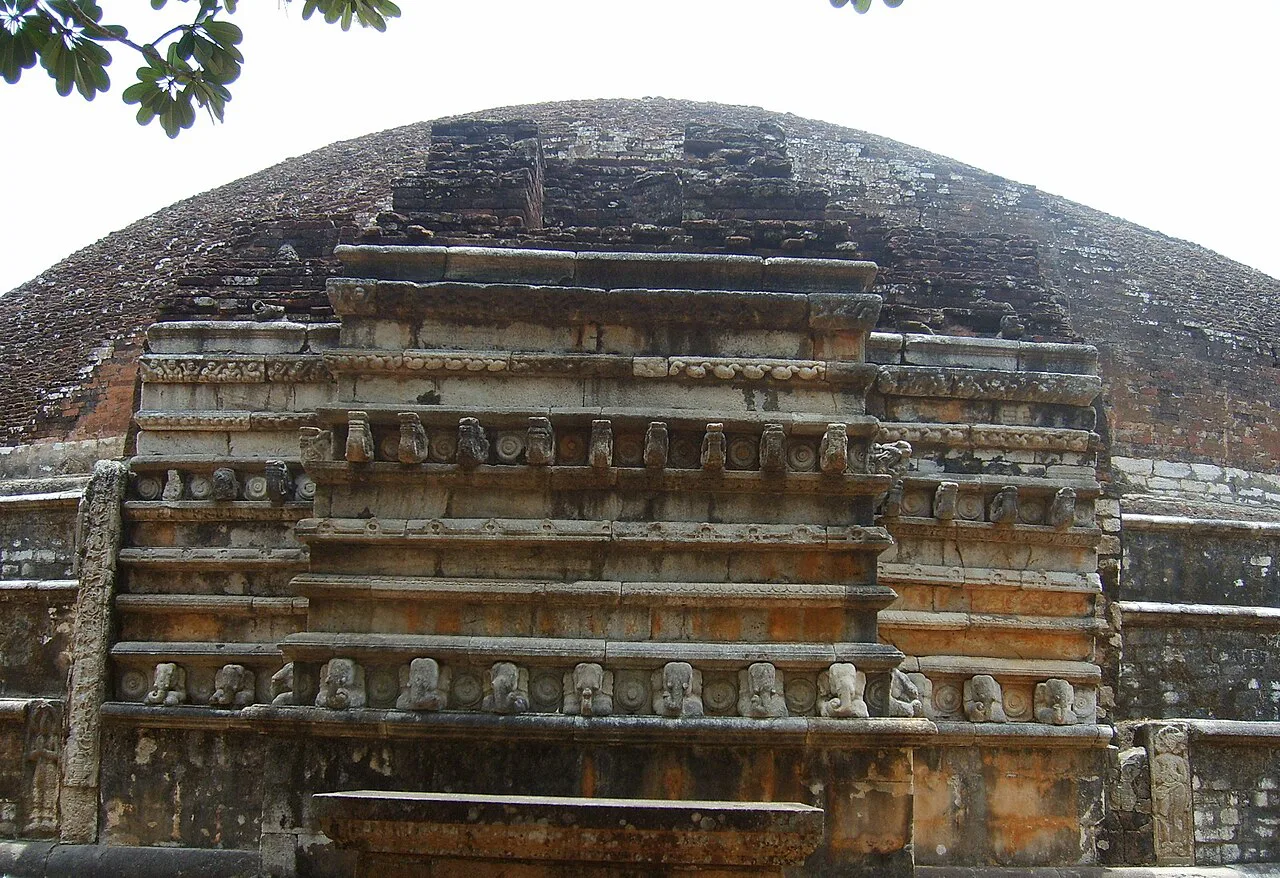
Once towering over 30 metres, this 2nd-century BCE stupa has worn down to a fraction of its original height, yet its four ornately carved entrance facades remain among the finest surviving examples of early Sri Lankan stone sculpture.
A short detour off Mihintale’s main stairway, up a branch flight of roughly 80 to 100 steps, leads to one of the earliest religious monuments anywhere on the island: Kantaka Chetiya, its weathered dome still ringed by four elaborately carved entrance facades depicting dwarfs, geese, and a menagerie of other figures.
Quick Facts
| Location | Reached via a side stairway branching off Mihintale’s main path |
| Age | 2nd century BCE, among the oldest religious monuments on the island |
| Original height | Over 30 metres |
| Current height | About 12 metres |
| Base circumference | Approximately 425 feet |
| Notable feature | Four carved vahalkada (frontispiece) facades at the cardinal points |
Commonly searched as: Kantaka Chetiya Mihintale · Kantaka Cetiya stupa · Mihintale ancient carvings · vahalkada Sri Lanka · things to do at Mihintale
One of the Island’s Earliest Stupas
Kantaka Chetiya dates to the 2nd century BCE, making it one of the earliest religious monuments anywhere in Sri Lanka, constructed not long after Mahinda’s founding visit transformed Mihintale into a major centre of Buddhist worship. Excavated in 1934, the stupa’s base survives as three giant steps of carefully dressed stone, a construction technique characteristic of early Sinhalese stupa architecture, with a circumference of roughly 425 feet at ground level.
Time has not been kind to the dome itself: originally standing well over 30 metres tall, the stupa has worn down considerably, today reaching only about 12 metres, its upper structure reduced to what one description calls “a heap of masonry” rather than the smooth, symmetrical dome it would once have presented. Despite that erosion, the monument’s scale at ground level still conveys a genuine sense of its original ambition.
Carvings That Survived Two Millennia
Kantaka Chetiya’s real draw for most visitors isn’t the eroded dome but its four ornamental entrance facades, known as vahalkadas, positioned at each of the cardinal points. Two of these four facades survive in notably good condition, densely decorated with sculpted friezes: rows of ganas, playful dwarf figures, alongside hamsa, stylised geese, along with additional carvings of elephants and other animals woven into the overall decorative programme. The eastern facade is generally considered the best preserved of the four, its horizontal bands of carving separated by strips of plain, undecorated stone, a composition that gives the whole facade a genuinely rhythmic, carefully balanced visual structure.
Caves for the Earliest Monks
Nearby caves close to the stupa are considered among the earliest dwellings used by resident monks at Mihintale, physical evidence of monastic life at the site stretching back to nearly the very beginning of Sri Lankan Buddhism itself, contemporaneous with, or shortly following, Kantaka Chetiya’s own construction.
An inscription discovered near one of these caves indicates it was prepared for one of King Devanampiya Tissa’s own brothers, part of the wider chronicle account describing 68 caves the king had readied on the mountain for the growing community of monks who settled at Mihintale in the wake of Mahinda’s teaching. That royal patronage, extending even to individual family members taking up monastic residence on the mountain, underscores just how completely the Sri Lankan royal court embraced Buddhism in the years immediately following the founding meeting.
Visiting Tips
- Take the branch stairway off the main Mihintale path, roughly 80 to 100 steps, to reach the site.
- Focus your attention on the eastern facade, generally regarded as the best-preserved of the four carved vahalkadas.
- Look for the nearby monastic caves, offering a tangible sense of Mihintale’s earliest resident monks.
- Allow enough time to appreciate the carvings closely, they reward slow, careful viewing rather than a quick glance.
Where It Sits on the Map
Kantaka Chetiya, Mihintale mountain Open in Google Maps ↗
Frequently Asked Questions
How old is Kantaka Chetiya?
It dates to the 2nd century BCE, making it one of the earliest religious monuments in Sri Lanka.
How tall was Kantaka Chetiya originally?
Over 30 metres, though the eroded dome now stands at only about 12 metres.
What are the vahalkadas?
Four ornamental entrance facades positioned at the cardinal points, carved with friezes of dwarfs, geese, elephants and other figures; two survive in particularly good condition.
How do visitors reach Kantaka Chetiya?
Via a branch stairway of roughly 80 to 100 steps that splits off from Mihintale’s main ascending path.
← Sri Lanka: The Complete Guide — see all 258 places by region
Related News
A guide to Sri Lanka's Cultural Triangle: Sigiriya, Polonnaruwa, Anuradhapura, Dambulla and Mihintale, with travel tips.

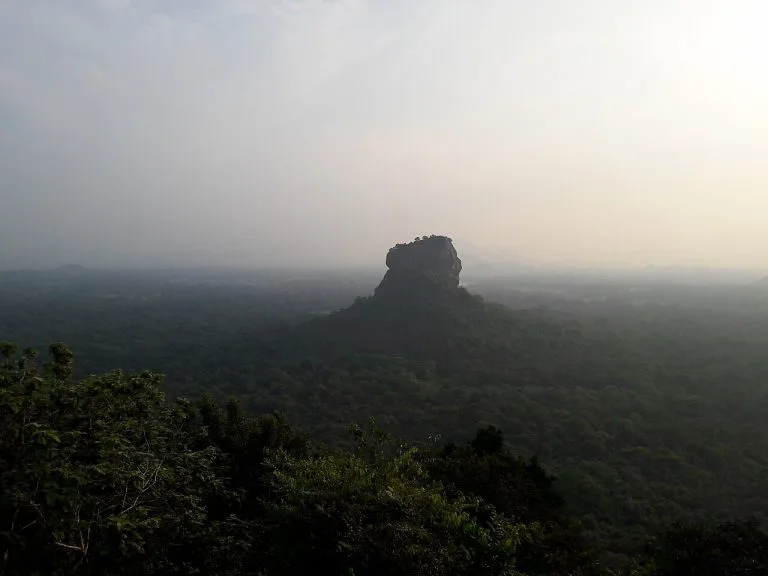
A complete guide to Sigiriya Rock Fortress: King Kashyapa's parricide, the water gardens, the famous frescoes, visiting tips and map.
A guide to the ancient city of Polonnaruwa: from Chola conquest to Parakramabahu the Great's garden-city, visiting tips and map.













