

Dsigngo is a Graphic Design and Digital Marketing Company.
Write what you are looking for and press enter to begin your search!

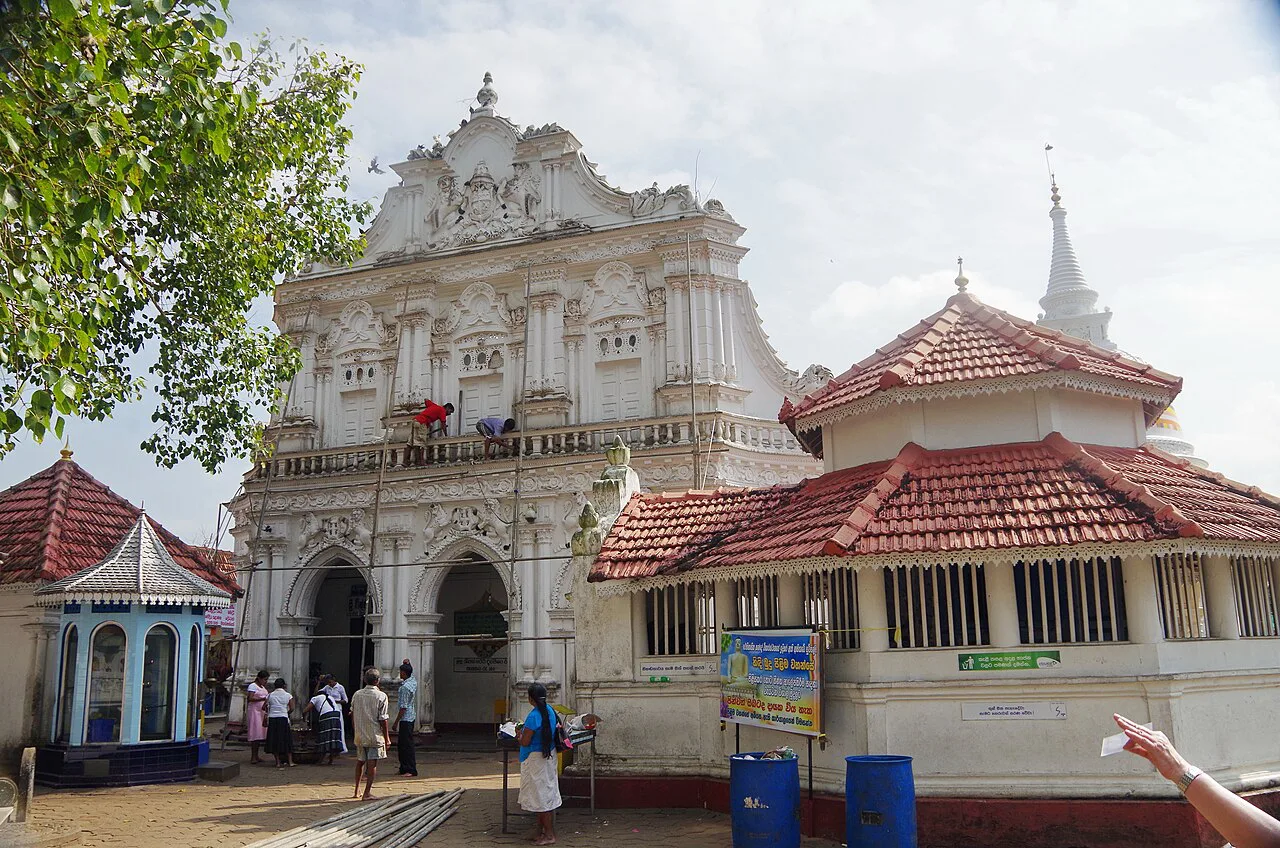
Aluthgama, West Coast
Kande Vihara
An 18th-century hilltop temple crowned since 2007 by a 160-foot seated Buddha statue, one of the tallest of its kind anywhere in the world.
Long before its giant Buddha statue became a fixture on postcards and Instagram feeds, Kande Vihara was already an important pilgrimage site, its name literally meaning ‘hill temple’ for the hillock it has occupied since the 18th century. Today that name applies to a far taller landmark than its founders could have imagined.
Quick Facts
| Location | Hilltop between Aluthgama and Bentota, Kalutara District |
| Founded | 1734, by Venerable Karapagala Dewamitta Thero |
| Buddha statue | 48.8 m (160 ft) tall, one of the tallest seated Buddha statues in the world |
| Statue completed | Foundation laid 2002, opened to the public in 2007 |
| Sacred Bodhi tree | Over 300 years old |
| Other names | Aluthgama Kande Viharaya, Bentota Kande Viharaya |
Commonly searched as: Kande Vihara · Aluthgama Buddha statue · tallest Buddha statue Sri Lanka · things to do near Bentota · Aluthgama temple
An 18th-Century Foundation
Kande Vihara was established around 1734 by Venerable Karapagala Dewamitta Thero, acting on the advice of Venerable Udugama Chandrasara Thero, then chief incumbent of the nearby Galapatha Raja Maha Vihara and a pupil of the influential monk Welivita Saranankara Sangha Raja, a key figure in an 18th-century Buddhist revival movement in Ceylon. Sitting atop a hillock, or “kanda” in Sinhala, which gives the temple its name, Kande Vihara grew over the following centuries under the guidance of seven successive Maha Theros, expanding into a full temple complex with a stupa, sacred Bodhi tree, relic chamber, image house, and several devales dedicated to guardian deities including Upulvan, Kataragama, and Pattini.
In 1904, the temple added the Kshethrarama Pirivena, an educational institution for training Buddhist monks, cementing its role as both a devotional and educational centre for the surrounding district. Formal state patronage over the decades has funded multiple rounds of renovation, and the temple is today recognised as a protected archaeological site.
The Statue That Changed Everything
Kande Vihara’s modern fame rests overwhelmingly on a single addition. In 2002, temple authorities laid the foundation stone for a colossal Samadhi Buddha statue, depicting the Bhumisparsha Mudra, the earth-touching gesture associated with the moment of the Buddha’s enlightenment. Completed and opened to the public in 2007, the statue stands 48.8 metres, or roughly 160 feet, tall, making it one of the tallest seated Buddha statues anywhere in the world and transforming Kande Vihara from a well-regarded regional temple into one of the most visited religious sites on Sri Lanka’s West Coast.
Beyond the Statue
The temple’s older structures are just as worth exploring. The relic chamber, believed to be the oldest building on the grounds, features a carved stone moonstone at its entrance and interior walls covered in Kandyan-era frescoes. The image house contains three Buddha statues in standing, seated and sleeping postures, with walls and ceilings throughout both its inner and outer chambers decorated with Jataka tale murals depicting the Buddha’s previous lives. The sacred Bodhi tree, over 300 years old, remains a focal point for devotees, who tie vows and prayers to its branches.
Visiting Tips
- Entry is free, though donations are welcomed to support the temple’s upkeep.
- Photography is generally permitted, though visitors should remain respectful around worshippers and ritual areas.
- The hilltop location offers good views over the surrounding Aluthgama and Bentota area.
- Combine with a visit to Bentota‘s beach and river attractions, given the temple’s central location between the two towns.
A Temple That Grew With the Country Around It
Kande Vihara’s trajectory mirrors a pattern seen at several major Sri Lankan Buddhist sites: a modest 18th-century foundation that gradually accumulated new structures, patrons and significance over centuries, before a single dramatic 21st-century addition brought it to a much wider audience. The giant Buddha statue didn’t replace the temple’s older identity so much as amplify it, drawing new visitors who might otherwise never have encountered the centuries-old relic chamber and its Kandyan frescoes tucked away behind the modern statue’s shadow. For visitors, that layering rewards a proper, unhurried visit rather than a quick photo stop at the statue alone, the older buildings hold just as much history, even if they’re less immediately visible from the road.
Where It Sits on the Map
Kande Vihara, hilltop between Aluthgama and Bentota Open in Google Maps ↗
Frequently Asked Questions
When was Kande Vihara founded?
Around 1734, by Venerable Karapagala Dewamitta Thero, on the advice of Venerable Udugama Chandrasara Thero.
How tall is the temple’s Buddha statue?
48.8 metres (160 feet), making it one of the tallest seated Buddha statues in the world; its foundation was laid in 2002 and it opened to the public in 2007.
What else is there to see at the temple besides the statue?
A stupa, a 300-year-old Bodhi tree, a relic chamber with Kandyan-era frescoes, and an image house with murals depicting Jataka tales.
Is there an entry fee?
No, entry is free, though donations are appreciated to support the temple’s maintenance.
← Sri Lanka: The Complete Guide — see all 258 places by region
Related News
A guide to Sri Lanka's West Coast region, from Kalpitiya to Hikkaduwa: beaches, history, wildlife and travel tips.
A complete guide to Negombo, Sri Lanka: history, the fish market, Dutch canal, churches, and visiting tips near the airport.

A guide to Sri Munneswaram Temple near Chilaw, Sri Lanka: history, the Ramayana legend, festivals, visiting tips and map.













