

Dsigngo is a Graphic Design and Digital Marketing Company.
Write what you are looking for and press enter to begin your search!

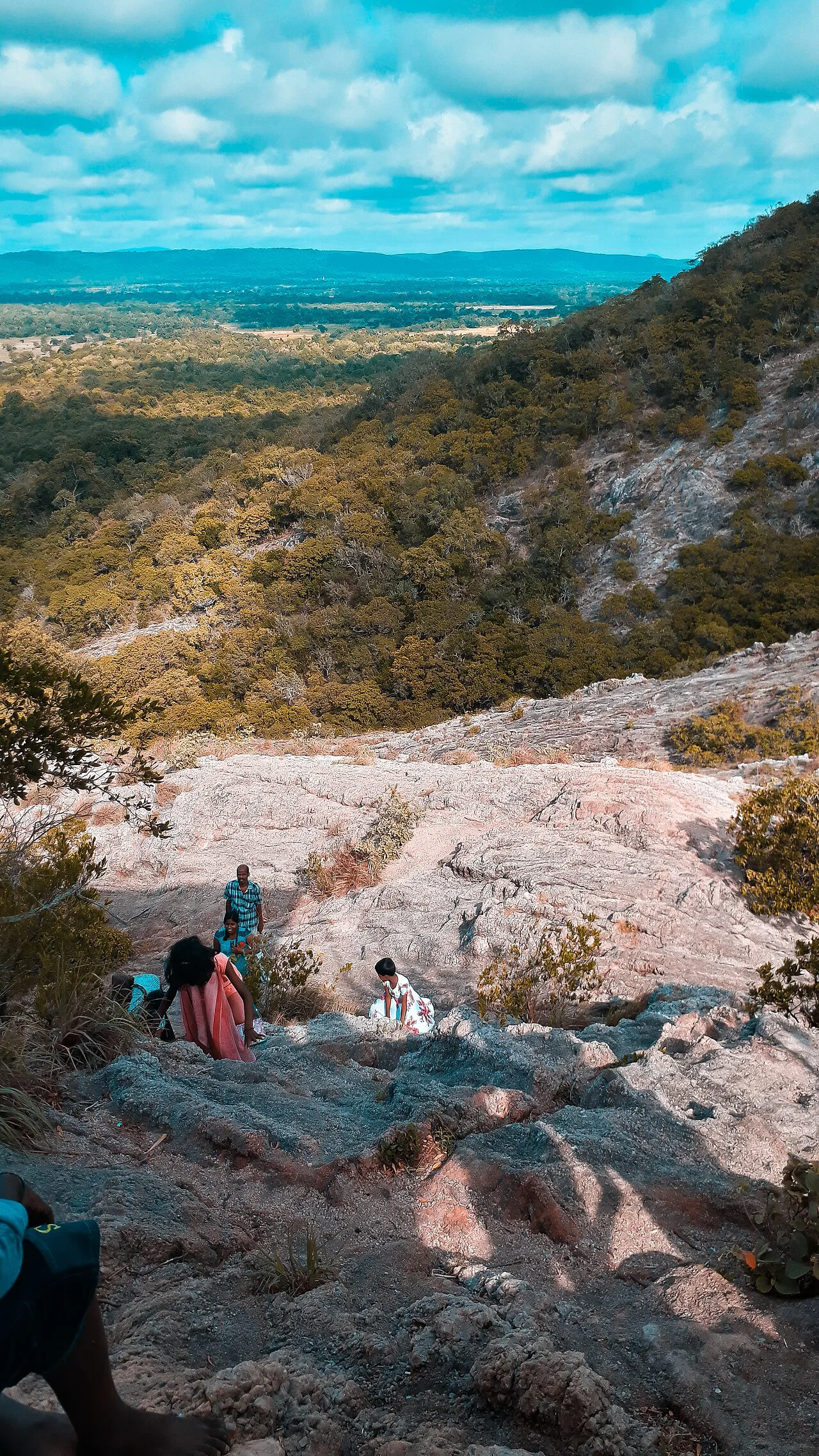
Near Dambulla, Cultural Triangle
Jathika Namal Uyana
For centuries this forest functioned as both a genuine sanctuary for people fleeing persecution and, by some accounts, one of history’s earliest environmental prison sentences, sending offenders here specifically to plant ironwood trees.
Somewhere beneath the shade of Asia’s largest ironwood forest lies a genuinely striking piece of history: a place where people fleeing royal persecution could once claim protected sanctuary, on the condition that they spend their time there planting trees rather than simply hiding.
Quick Facts
| Location | About 25 minutes from Dambulla, via Galkiriyagama |
| Size | About 260 to 1,005 hectares depending on source, spanning ironwood forest and quartz mountain |
| Quartz age | Estimated at over 550 million years |
| Historical sanctuary status | Possibly from the 8th century CE, under King Dappula |
| Associated legend | A rehabilitation practice sending offenders to plant ironwood trees as penance |
| Protection status | Declared an archaeological site in 2001, national forest reserve in 2005 |
Commonly searched as: Jathika Namal Uyana · Pink Quartz Mountain Sri Lanka · ironwood forest Sri Lanka · Namal Uyana Dambulla · things to do near Dambulla
A Forest Tied to Buddhism’s Earliest Days
Namal Uyana’s forest history reaches back to the earliest period of Sri Lankan Buddhism, closely associated with King Devanampiya Tissa, the same monarch whose meeting with Mahinda at Mihintale introduced Buddhism to the island in the 3rd century BCE. Local tradition connects the forest to a well-known episode in which Mahinda encountered the king in the forests around Dambulla, delivering a discourse emphasising environmental stewardship, reminding the ruler that all living beings share equal rights to the land and that a king serves merely as its guardian rather than its owner. That philosophy appears to have shaped how the forest was subsequently treated and protected for centuries afterward.
By the 8th century CE, part of Namal Uyana is believed to have functioned as a sanctuary, quite possibly one of the earliest recorded sanctuaries anywhere in human history, offering protection to individuals fleeing persecution, including those escaping royal authority. According to tradition, people granted refuge here were symbolically described as being “transformed” into Na (ironwood) trees; in practice, this meant they were required by resident monks to plant and nurture trees as a condition of their protected status, a form of restorative penance that, over centuries, contributed directly to the forest’s dense, structured growth.
Asia’s Largest Ironwood Forest and Pink Quartz Mountain
Today Namal Uyana holds two distinct natural features side by side: an extensive ironwood (Na) forest, the endemic species that also serves as Sri Lanka’s national tree, and widely cited as the largest such forest anywhere in Asia, and a striking pink quartz mountain range, similarly considered the largest deposit of its kind in South Asia, with the quartz itself estimated at more than 550 million years old. Local tradition holds, though without firm documentary confirmation, that quartz from this very site was used in embellishing the windows of India’s Taj Mahal, a claim that adds a further layer of romantic legend to the site’s genuine geological significance.
A Rich, Protected Ecosystem
Beyond its trees and quartz, Namal Uyana supports remarkable biodiversity for its size, over 100 plant species, including roughly 80 varieties used in traditional Ayurvedic medicine, alongside wildlife ranging from elephants to leopards. The site was formally declared an archaeological reserve in 2001, following advocacy from a Sri Lankan monk, Vanavasi Rahula Thera, and gained national forest reserve status in 2005, protections that today safeguard both its ancient monastery ruins and its ecologically significant forest cover.
Visiting Tips
- Allow a couple of hours to properly explore both the forest walk and the roughly 30-minute hike up the quartz mountain.
- Wear sturdy footwear given the uneven terrain on the mountain ascent.
- Combine with Popham Arboretum or the Dambulla Cave Temples, both within easy reach.
- Bring water and sun protection, particularly for the more exposed quartz mountain section of the visit.
Where It Sits on the Map
Jathika Namal Uyana, near Dambulla Open in Google Maps ↗
Frequently Asked Questions
What is Jathika Namal Uyana known for?
It’s home to Asia’s largest ironwood (Na) forest and the largest pink quartz mountain range in South Asia, alongside ancient Buddhist monastery ruins.
What was the forest’s connection to sanctuary and punishment?
From around the 8th century CE, it may have functioned as one of history’s earliest sanctuaries, where people fleeing persecution were required to plant and nurture ironwood trees as a condition of protection.
How old is the pink quartz deposit?
Estimated at over 550 million years, making it a genuinely ancient geological feature.
When was the site formally protected?
Declared an archaeological site in 2001 and a national forest reserve in 2005.
← Sri Lanka: The Complete Guide — see all 258 places by region
Related News
A guide to Sri Lanka's Cultural Triangle: Sigiriya, Polonnaruwa, Anuradhapura, Dambulla and Mihintale, with travel tips.

A complete guide to Sigiriya Rock Fortress: King Kashyapa's parricide, the water gardens, the famous frescoes, visiting tips and map.
A guide to the ancient city of Polonnaruwa: from Chola conquest to Parakramabahu the Great's garden-city, visiting tips and map.













