

Dsigngo is a Graphic Design and Digital Marketing Company.
Write what you are looking for and press enter to begin your search!

Kandy, Hill Country
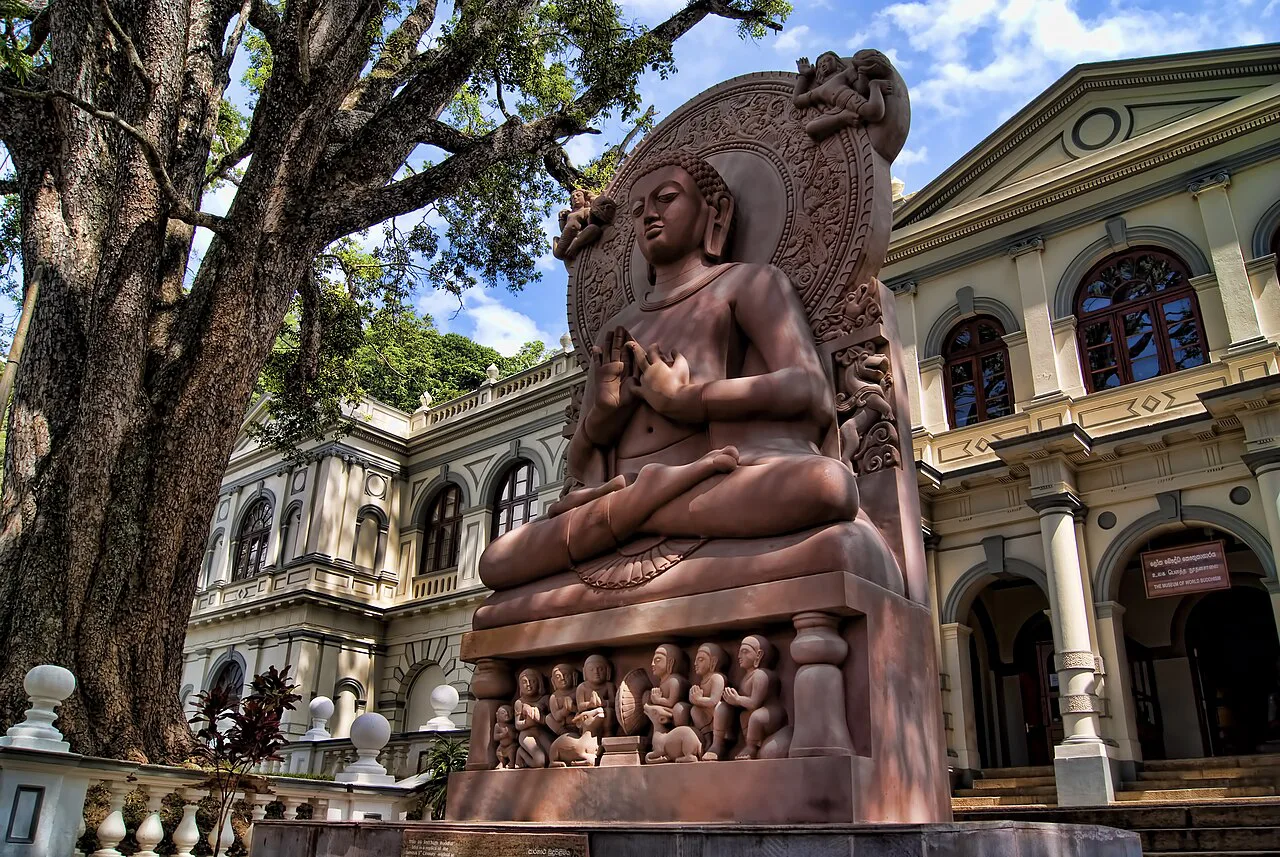
International Buddhist Museum
First proposed soon after Sri Lankan independence in 1948, this museum, the world’s first dedicated to global Buddhism, took over six decades to finally open, in a Victorian-era courthouse repurposed for the occasion.
Behind the Temple of the Tooth stands a grand 1880s courthouse that once handled colonial-era legal proceedings, and now, after an idea first floated shortly after Sri Lanka’s independence sat dormant for over six decades, tells the story of Buddhism’s spread across seventeen countries under one roof.
Quick Facts
| Location | Behind the Temple of the Tooth, central Kandy |
| Building | Former British colonial High Court (Kachcheri), built 1880 |
| Site history | Formerly part of the palace of Kandyan King Wimaladharmasuriya |
| Idea first proposed | 1948, shortly after Sri Lankan independence |
| Museum opened | 2011/2012, timed near the 2,600th anniversary of the Buddha’s enlightenment |
| Contributing countries | 17, including India, Thailand, Japan, China, Korea and Myanmar |
Commonly searched as: International Buddhist Museum Kandy · World Buddhist Museum Kandy · things to do in Kandy · Buddhism history museum · Temple of the Tooth complex
An Idea That Took Over Sixty Years
The concept behind the International Buddhist Museum, sometimes called the World Buddhist Museum, was first proposed not long after Sri Lanka gained independence in 1948, envisioned as an institution dedicated specifically to the global spread and cultural adaptation of Buddhism, rather than Sri Lankan Buddhist history alone. That ambition sat unrealised for decades, until a suitable building finally became available: a grand Victorian-era courthouse dating to 1880, previously used as Kandy‘s Kachcheri (colonial administrative and court offices), itself built on ground that had once formed part of the palace of Kandyan King Wimaladharmasuriya. With the site secured, the project, led jointly by temple authorities and Sri Lanka’s Department of Archaeology under archaeologist Professor Leelananda Prematilleke, finally opened around 2011 to 2012, timed to coincide with the 2,600th anniversary of the Buddha’s enlightenment.
A Genuinely International Collaboration
What makes the museum distinctive is its structure: rather than a single curated narrative, each of seventeen participating countries, including India, Bangladesh, Nepal, Pakistan, Japan, China, Korea, Indonesia, Thailand, Myanmar, Laos, Vietnam, Cambodia, Malaysia, Bhutan and Afghanistan, alongside Sri Lanka itself, curated its own exhibit documenting how Buddhism took root and evolved within its particular cultural context. Funding for the extensive refurbishment came substantially from the Thai government, alongside contributions from other Buddhist nations, reflecting the genuinely collaborative, pan-Asian character of the project.
What’s Inside
Spread across two floors and more than twenty rooms, the museum displays scrolls, sculptures, paintings, photographs and artefacts illustrating Buddhism’s spread and cultural adaptation across Asia and beyond. Interactive touchscreen displays supplement the physical exhibits, and a well-stocked library offers material for visitors wanting to go deeper than a single walkthrough allows. The building’s colonial architecture remains largely intact even as its interior has been repurposed entirely for its new religious and educational function.
Visiting Tips
- Combine with the Temple of the Tooth and Kandy National Museum, both immediately adjacent within the same former palace complex.
- Allow at least an hour, given the museum’s scale across two floors and twenty-plus rooms.
- Check for special exhibitions or lectures, which run periodically throughout the year.
- Visit the air-conditioned gift shop near the exit for Buddhist-themed souvenirs and reading material.
A Building With Its Own Layered Past
The site’s history adds an extra dimension worth appreciating on a visit. Ground that once held a Kandyan king’s palace was later built over by British colonial administrators for a courthouse serving an entirely different legal and political order, and has now been repurposed once again into a space dedicated to interfaith and international cultural exchange around Buddhism. That sequence, royal, colonial, then international-collaborative, mirrors Kandy’s own broader history in miniature, a single site adapting to whatever institution and purpose each era demanded of it, while the physical building itself endures largely unchanged in outward form.
Where It Sits on the Map
International Buddhist Museum, behind the Temple of the Tooth, Kandy Open in Google Maps ↗
Frequently Asked Questions
When was the International Buddhist Museum first proposed?
The idea was first raised shortly after Sri Lankan independence in 1948, but it took over six decades for a suitable building to become available.
What building houses the museum?
A Victorian-era former High Court (Kachcheri) building dating to 1880, itself built on land that once formed part of a Kandyan king’s palace.
What makes this museum unique?
It’s the world’s first museum dedicated to the global spread of Buddhism, with seventeen countries each curating their own exhibit on Buddhism’s history and cultural adaptation within their region.
When did the museum actually open?
Around 2011 to 2012, timed to coincide with the 2,600th anniversary of the Buddha’s enlightenment.
← Sri Lanka: The Complete Guide — see all 258 places by region
Related News
A guide to Sri Lanka's Hill Country: Kandy, tea plantations, Ella, Adam's Peak, Horton Plains, and travel tips.
A complete guide to Kandy: the last Sinhalese kingdom's fall in 1815, the Temple of the Tooth, Kandy Lake, and visiting tips.
A guide to Kandy Lake, built by the last king of Kandy in 1807: its dark construction history, the island retreat, walking the shore, and...













