

Dsigngo is a Graphic Design and Digital Marketing Company.
Write what you are looking for and press enter to begin your search!

Galle Fort, The South
Historical Mansion Museum
A restored Dutch house on Leyn Baan Street, filled floor to ceiling with one collector’s lifetime accumulation of antiques, and, unusually, everything inside is also for sale.
Most museums keep their collections firmly behind glass. The Historical Mansion Museum in Galle Fort does the opposite: every single antique typewriter, VOC-stamped porcelain plate, and piece of colonial jewellery crammed into its shelves and cupboards is available to purchase, making it perhaps the only museum in Sri Lanka you can technically walk out of having bought the exhibits.
Quick Facts
| Location | Leyn Baan Street, Galle Fort |
| Founder | Abdul Gaffar, a long-time Galle resident and private collector |
| Building | A restored Dutch colonial house, rebuilt from ruin in the late 1980s |
| Inspiration | The Salarjung Museum in Hyderabad, India |
| Notable feature | A Dutch East India Company (VOC) well dated 1763 in the central courtyard |
| Entry | Free, with all exhibited items also available for purchase |
Commonly searched as: Historical Mansion Museum Galle · Galle Fort private museum · Leyn Baan Street museum · Galle Fort antiques · things to do in Galle Fort
From Ruin to ‘History Hoarder’s Paradise’
The Historical Mansion Museum began, by most accounts, a little over a decade before it became one of Galle Fort’s most talked-about oddities, when local resident Abdul Gaffar, inspired by the Salarjung Museum in Hyderabad, India, which houses the vast private collection of a former Nizam’s prime minister, decided to build something similar of his own. He purchased a ruined Dutch-era house on Leyn Baan Street in the heart of the fort and set about restoring it, going so far as to use a traditional mixture of clay and coral in repairing the walls to stay faithful to the building’s original 17th-century construction methods.
What resulted is widely described, only half-jokingly, as a “history hoarder’s paradise.” Rows, shelves and cupboards throughout the mansion hold antique typewriters, cameras, jewellery, VOC-stamped blue-and-white Chinese porcelain, and a genuinely bewildering range of miscellaneous colonial-era objects, likely making it the largest private museum anywhere in Sri Lanka.
The Courtyard and Its Old Well
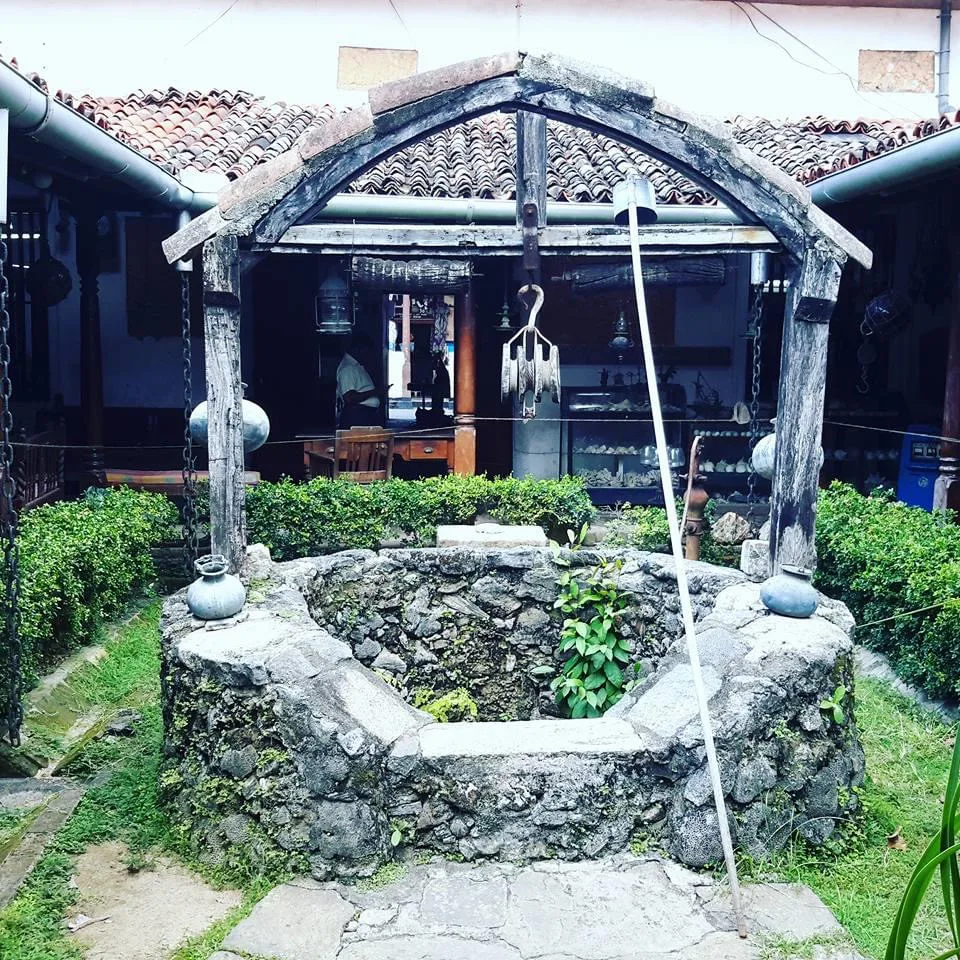
At the centre of the mansion sits a shaded courtyard, widely considered the museum’s most atmospheric feature, built around an old Dutch well dated 1763, its stone slab still bearing the inscribed monogram of the Dutch East India Company (VOC). Surrounded by timber verandahs, clay-tiled roofs and weathered stone paving, the courtyard offers a genuinely evocative sense of what domestic life inside the fort looked like centuries ago, rather than the more formal, curated feel of a conventional museum display.
Living Craft Demonstrations
Beyond static exhibits, the museum occasionally hosts live demonstrations of traditional crafts, including gem cutting and polishing, and the delicate art of beeralu lace-making, a technique introduced by the Portuguese and traditionally passed down from mother to daughter, still practised today in Galle and nearby Weligama, though on a far smaller scale than a century ago.
Visiting Tips
- Entry is free, and the museum is open daily, typically 9 am to 6 pm.
- Everything on display is also for sale, so browsing here doubles as antique shopping if something catches your eye.
- Look closely at the courtyard well and its 1763 VOC inscription, one of the most genuinely old and evocative details in the entire building.
- Combine with a wider walk down Leyn Baan Street, itself one of Galle Fort‘s characterful colonial-era lanes.
A Museum Built on One Person’s Obsession
What separates the Historical Mansion Museum from the fort’s more formal institutions is that it isn’t the product of a government heritage department or an institutional acquisitions committee, it’s the accumulated result of one individual’s decades-long personal fascination with the objects of old Ceylon. That gives the collection a genuinely unfiltered, idiosyncratic character, items are arranged for the pleasure of discovery rather than strict museological logic, and the sheer density of objects crammed into every available surface reflects a collector’s instinct rather than a curator’s plan. For visitors who find conventional museums a little too polished and orderly, that unfiltered quality is precisely the appeal, wandering through feels less like touring an institution and more like exploring someone’s genuinely remarkable attic.
Where It Sits on the Map
Historical Mansion Museum, Leyn Baan Street, Galle Fort Open in Google Maps ↗
Frequently Asked Questions
Who founded the Historical Mansion Museum?
Abdul Gaffar, a long-time resident of Galle, who restored a ruined Dutch house and filled it with his own extensive private collection of antiques.
Is there an entry fee?
No, entry is free, and unusually, every item on display is also for sale.
What is the museum’s most notable feature?
A central courtyard built around an old Dutch well dated 1763, its stone slab still bearing the Dutch East India Company’s VOC monogram.
What kinds of objects are on display?
Antique typewriters, cameras, jewellery, VOC-era Chinese porcelain, traditional beeralu lace, and a wide range of other colonial-era artefacts and curiosities.
← Sri Lanka: The Complete Guide — see all 258 places by region
Related News

A guide to Southern Sri Lanka, from Galle to Kataragama: beaches, wildlife safaris, colonial forts, and travel tips.

A complete guide to Galle Fort: history from Ptolemy to the Dutch, walking the ramparts, top sights, and visiting tips.
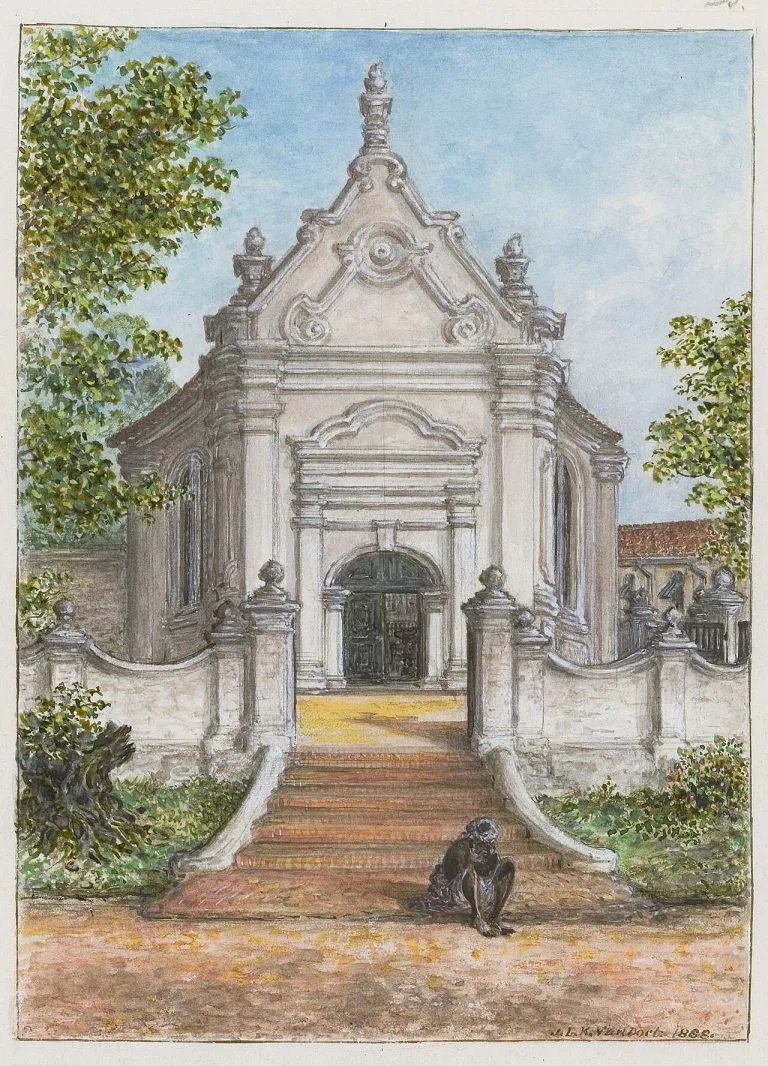
A guide to the Dutch Reformed Church in Galle Fort: the story behind its 1755 completion, the tombstone floor, visiting tips and map.













