

Dsigngo is a Graphic Design and Digital Marketing Company.
Write what you are looking for and press enter to begin your search!

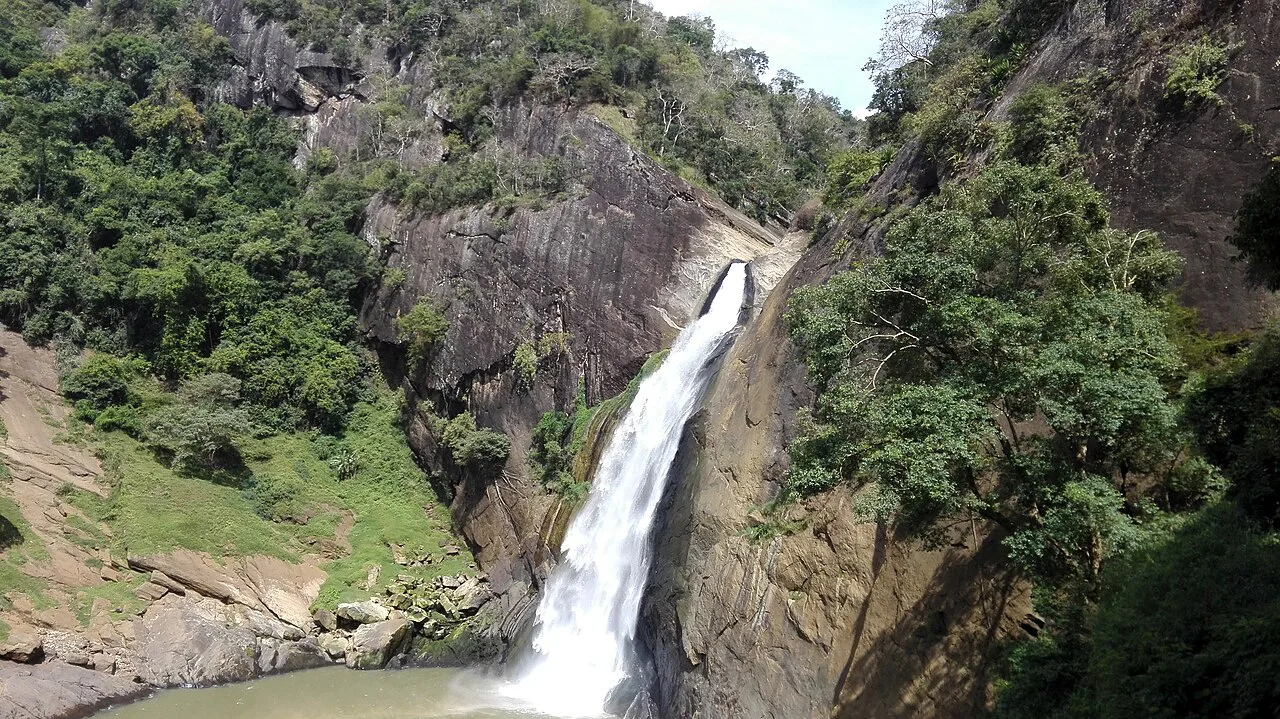
Near Badulla, Hill Country
Dunhinda Falls
Known locally as the ‘Bridal Falls’ for its veil-like spray, this 64-metre cascade near Badulla carries legends of a flood that swallowed a town, a golden-earringed fish guarding buried treasure, and two lovers who chose the pool below over life apart.
Dunhinda’s name comes from a purely physical description, the Sinhala words for ‘gave’ and ‘evaporate,’ referencing the fine, smoky mist that rises where the falling water strikes its pool. The legends surrounding it are considerably less clinical.
Quick Facts
| Location | About 5 km from Badulla, off the Badulla-Mahiyangana road |
| Height | 64 metres (210 ft) |
| River | Badulu Oya, a tributary of the Mahaweli Ganga |
| Nickname | ‘Bridal Falls,’ for its veil-like spray shape |
| Access | About 1 to 1.5 km walk from the entrance gate |
| Historical era referenced | King Rajasinghe II of Kandy (17th century) |
Commonly searched as: Dunhinda Falls Badulla · Bridal Falls Sri Lanka · Dunhinda Falls legend · Badulla waterfalls · things to do near Badulla
A Fern That Flooded a Town
The most historically anchored legend associated with Dunhinda dates to the reign of King Rajasinghe II of Kandy in the 17th century. According to the story, a giant fern became lodged at the top of the falls, wedged between two mountains, forming an accidental dam that caused the Badulu Oya to back up and flood the town of Badulla below. The king assigned the job of clearing the blockage to a man named Ranhavadidaraya, who reportedly laboured for three months before finally freeing the water and allowing Badulla to re-emerge. The dislodged fern is said to have washed downstream and lodged again at a location now called Pussellawa, “pus” meaning fern, a place name locals still connect directly to this centuries-old flood story.
Buried Treasure and a Guardian Fish
A separate legend gives the pool beneath the falls a more mysterious character. According to this tale, a beautiful fish wearing a golden earring swims above buried treasure belonging to Kumarasinghe, the Prince of Uva, surfacing only once a year. The treasure is said to be guarded by men wielding golden swords who demand a human sacrifice from anyone who dares to swim there in search of it, a suitably ominous warning that has likely discouraged more than a few treasure hunters over the generations.
The Eloping Princess
Perhaps the most poignant story tied to Dunhinda concerns a 14th-century princess, Mampitiya Anuhas Menike Bandara, said to be of royal Gampola blood, who fell in love with a commoner, Kahapitiye Arachchi Bandara. Facing her father’s fury over the match, the couple fled together, but were eventually tracked down; rather than be separated, the pair are said to have drowned themselves together in the basin at the foot of the falls. Local legend adds a further, eerier layer, holding that the spirits of the princess and her lover still guard hidden treasure at the bottom of the pool today, a detail that closely echoes the separate buried-treasure legend and suggests these local stories have blended and reinforced one another over the centuries.
Getting There
Dunhinda sits about 5 km from Badulla town, reached via a signposted junction on the Badulla-Mahiyangana road, followed by a roughly 1 to 1.5 km walk along a forest footpath lined with vendors selling herbal drinks and local snacks. Along the way, a smaller cascade known as Kuda Dunhinda (“Lesser Dunhinda”) offers a preview before the main falls come into view. The path is generally well used but narrows in places, so some caution is warranted, and swimming in the main pool isn’t recommended given potentially hazardous underwater conditions.
Visiting Tips
- Visit June to July for the sunniest, most pleasant weather around Badulla, or November to March if you prefer the falls at maximum volume during wetter conditions.
- Allow at least two hours total, including the walk in both directions and time at the falls themselves.
- Entry costs a nominal fee for locals and a somewhat higher rate for foreign visitors; the site is open 7 am to 5 pm.
- Combine with the nearby Muthiyangana Raja Maha Vihara in Badulla, one of Sri Lanka’s sixteen most sacred Buddhist sites, for a fuller day trip.
Where It Sits on the Map
Dunhinda Falls, near Badulla, Uva Province Open in Google Maps ↗
Frequently Asked Questions
What does the name Dunhinda mean?
It comes from the Sinhala words ‘dun’ (gave) and ‘hinda’ (evaporate), describing the misty spray that rises where the falling water hits its pool.
Why is it called Bridal Falls?
Because of the way its spray forms a shape resembling a bridal veil as the water descends.
What legends are associated with Dunhinda Falls?
A flooded-town story from King Rajasinghe II’s reign, a buried-treasure legend involving a golden-earringed fish, and a tragic tale of an eloping 14th-century princess who drowned herself and her lover in the pool below.
Is it safe to swim at Dunhinda Falls?
No, bathing in the main pool is not recommended due to potentially hazardous underwater conditions.
← Sri Lanka: The Complete Guide — see all 258 places by region
Related News
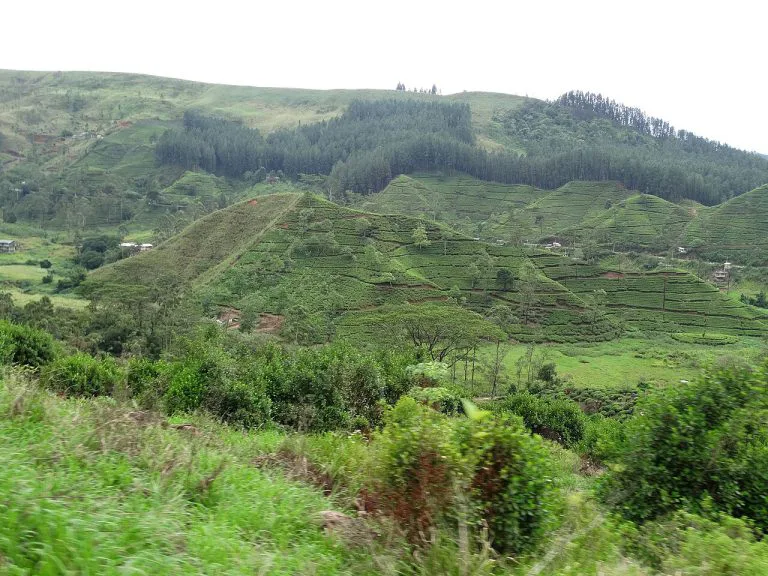
A guide to Sri Lanka's Hill Country: Kandy, tea plantations, Ella, Adam's Peak, Horton Plains, and travel tips.
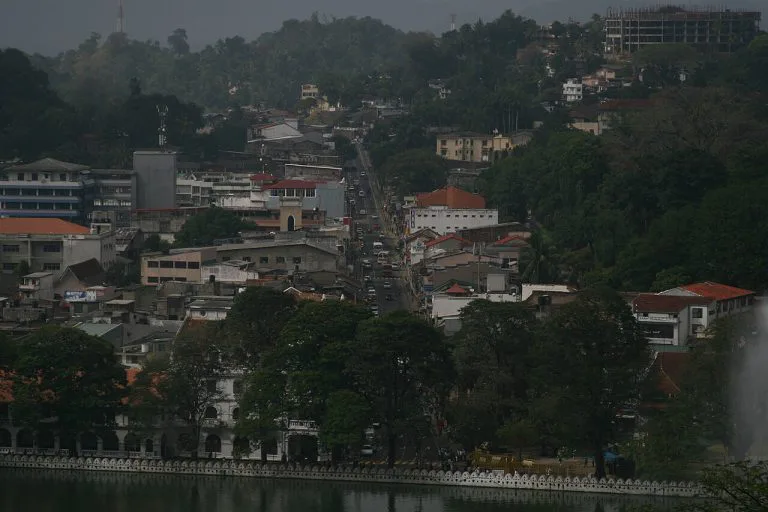
A complete guide to Kandy: the last Sinhalese kingdom's fall in 1815, the Temple of the Tooth, Kandy Lake, and visiting tips.
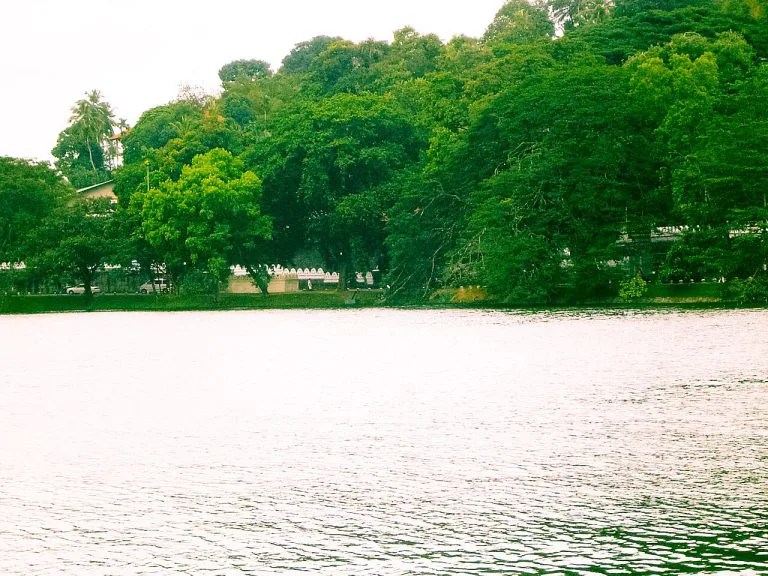
A guide to Kandy Lake, built by the last king of Kandy in 1807: its dark construction history, the island retreat, walking the shore, and...













