

Dsigngo is a Graphic Design and Digital Marketing Company.
Write what you are looking for and press enter to begin your search!

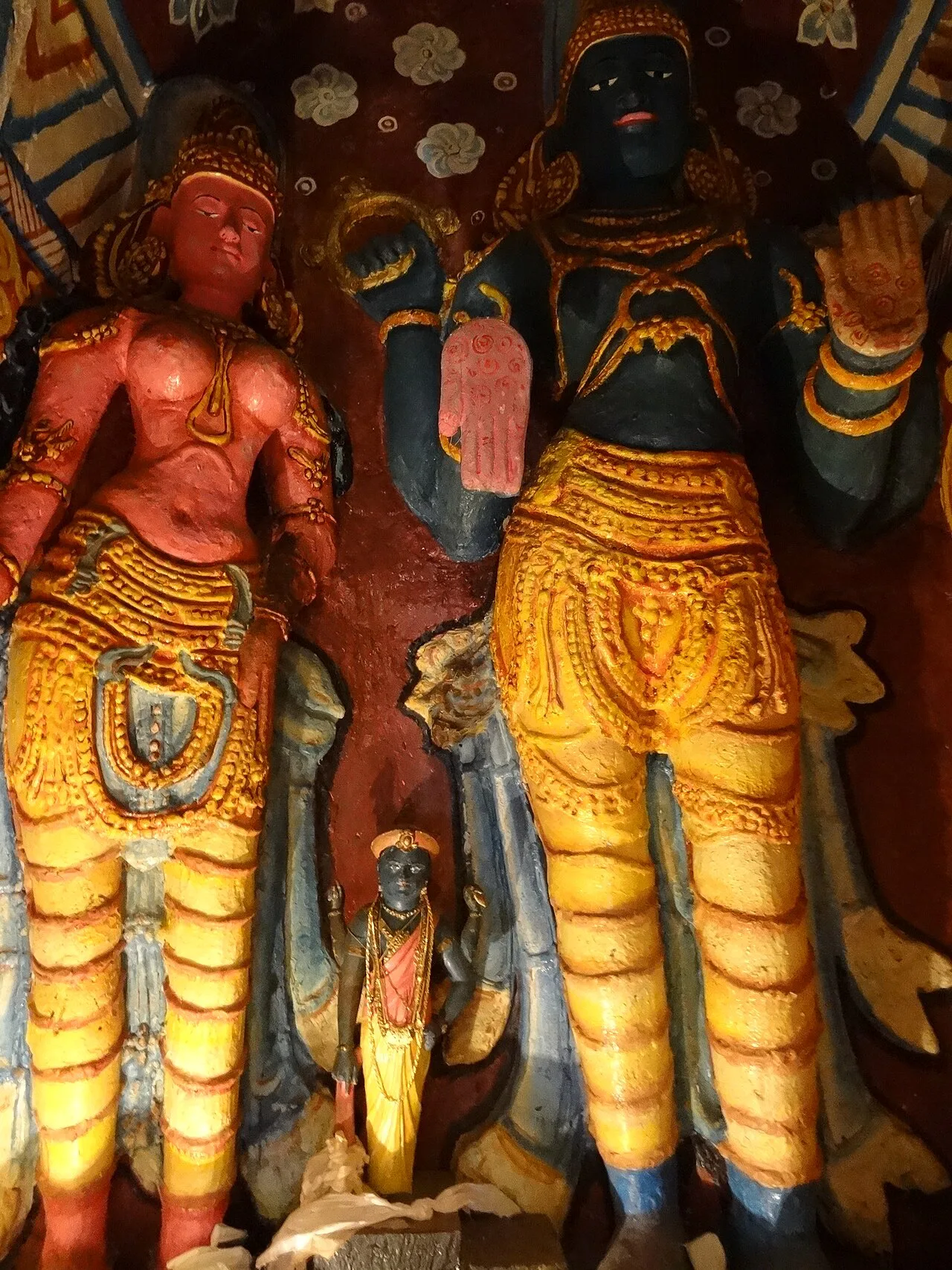
Dondra, The South
Devi Nuwara Devale
What remains of a shrine complex so revered it once held a thousand statues, dedicated to the deity Upulvan and rebuilt after Portuguese forces destroyed the original temple’s gleaming copper roof.
The Galge, a small, weathered stone chamber standing quietly within the Devinuwara temple grounds, is one of the very few structures here that the Portuguese never managed to tear down, making it a rare physical link to a temple complex that medieval chroniclers once described as containing a thousand sacred statues.
Quick Facts
| Location | Dondra (Devinuwara), southernmost tip of Sri Lanka |
| Deity | Upulvan, identified by Hindus with Vishnu (Tenavarai Nayanar) |
| Documented origins | At least the 7th century CE, under King Dappula I |
| Original structure | A three-storey temple on vaulted arches, with a copper roof |
| Destroyed | 16th century, by the Portuguese |
| Surviving pre-Portuguese structure | The Galge, a stone shrine chamber |
Commonly searched as: Devinuwara Devale · Dondra Upulvan temple · Devi Nuwara temple Sri Lanka · Galge shrine Dondra · things to do near Matara
A Temple That Once Held a Thousand Statues
At its height, the temple complex at Devinuwara was among the most celebrated religious sites anywhere on the island, a status reflected in the settlement’s very name, meaning “City of the Gods.” Documentary and archaeological evidence traces a significant temple here to at least the 7th century CE, during the reign of King Dappula I, and medieval accounts describe the complex as containing as many as a thousand statues drawn from various Hindu and Buddhist traditions, an almost unimaginable concentration of religious imagery reflecting centuries of accumulated royal and merchant patronage.
The main shrine was dedicated to Upulvan, a guardian deity central to Sinhalese Buddhist cosmology and identified by Hindu worshippers with Vishnu, under the name Tenavarai Nayanar. Built as a three-storey structure resting on vaulted arches, positioned dramatically on a promontory overlooking the Indian Ocean, the temple’s design was renovated during the 13th century under King Parakramabahu II according to Chera-style Dravidian architectural principles, reflecting South Indian influence on the site’s religious and artistic character.
Destroyed by the Portuguese, Never Fully Restored to Its Former Scale
The temple’s dramatic decline came in the 16th century, when Portuguese colonial forces destroyed the main shrine, famously said to have carried a gleaming copper roof, as part of a broader campaign against non-Christian religious sites along the coasts they controlled. The scale of destruction meant Devinuwara never fully regained its earlier grandeur; the roughly 200 granite columns that survive scattered around the site today offer only a partial sense of what was lost.
One structure did survive largely intact: the Galge, a modest stone shrine chamber predating the Portuguese period, now considered one of the oldest intact religious buildings anywhere at the site. Alongside it stands a Makara Thorana, an ornately carved stone gateway featuring the mythological makara, or sea-dragon, motif characteristic of medieval Sri Lankan temple architecture, another surviving fragment of the complex’s former richness.
A Living Shrine, Not Just Ruins
Despite the destruction, the devalaya was rebuilt and remains an active place of worship today, drawing devotees for regular rituals and, most dramatically, the annual Devinuwara Esala Perahera, held during the Tamil and Sinhala month of Esala (roughly July or August). The procession follows a prescribed route beginning at the shrine’s stone doorway and continuing along Hadagala Main Road, Sinhasana Road, Ampitiya Road and further through the town, drawing large crowds in a modern echo of the ancient site’s former status as a major pilgrimage destination.
Visiting Tips
- Look for the Galge and the surviving granite columns, the clearest physical links to the site’s pre-Portuguese grandeur.
- Combine with Dondra Head Lighthouse, immediately nearby, for a fuller visit to Sri Lanka’s southernmost point.
- Visit during the Esala Perahera for a considerably more vivid devotional experience, though expect larger crowds.
- Dress modestly, as at any active place of Hindu-Buddhist worship in Sri Lanka.
A Reminder of Scale Lost to History
Standing among the scattered granite columns at Devinuwara today, it takes a genuine effort of imagination to picture the site as medieval chroniclers described it, a complex holding perhaps a thousand statues, drawing pilgrims and merchants from Africa, Europe and the Malabar Coast, its temple roof gleaming with copper visible from ships approaching the coast. That scale is almost entirely gone, reduced to fragments and a rebuilt shrine considerably more modest than what once stood here. Devinuwara is, in that sense, less a monument to continuity than a monument to loss, a reminder of how thoroughly colonial-era religious destruction reshaped Sri Lanka’s sacred landscape, even at sites the island’s own kings and chroniclers once considered among its most important.
Where It Sits on the Map
Devinuwara Upulvan Devale, Dondra, southernmost Sri Lanka Open in Google Maps ↗
Frequently Asked Questions
What deity is the Devinuwara Devale dedicated to?
Upulvan, a guardian deity in Sinhalese Buddhist tradition, identified by Hindu devotees with Vishnu.
Why was the original temple destroyed?
Portuguese colonial forces destroyed the main shrine, including its notable copper roof, in the 16th century as part of a wider campaign against non-Christian religious sites.
What survives from before the Portuguese destruction?
The Galge, a stone shrine chamber, along with roughly 200 granite columns and a carved Makara Thorana gateway.
Is the temple still active today?
Yes, the rebuilt devalaya remains a working place of worship, hosting the annual Devinuwara Esala Perahera festival.
← Sri Lanka: The Complete Guide — see all 258 places by region
Related News
A guide to Southern Sri Lanka, from Galle to Kataragama: beaches, wildlife safaris, colonial forts, and travel tips.

A complete guide to Galle Fort: history from Ptolemy to the Dutch, walking the ramparts, top sights, and visiting tips.
A guide to the Dutch Reformed Church in Galle Fort: the story behind its 1755 completion, the tombstone floor, visiting tips and map.













