

Dsigngo is a Graphic Design and Digital Marketing Company.
Write what you are looking for and press enter to begin your search!

The East, Sri Lanka
Batticaloa
Dip an oar into the lagoon on a full moon night, hold the other end to your ear, and locals say you’ll hear something like distant, plucked guitar music rising from beneath the water.
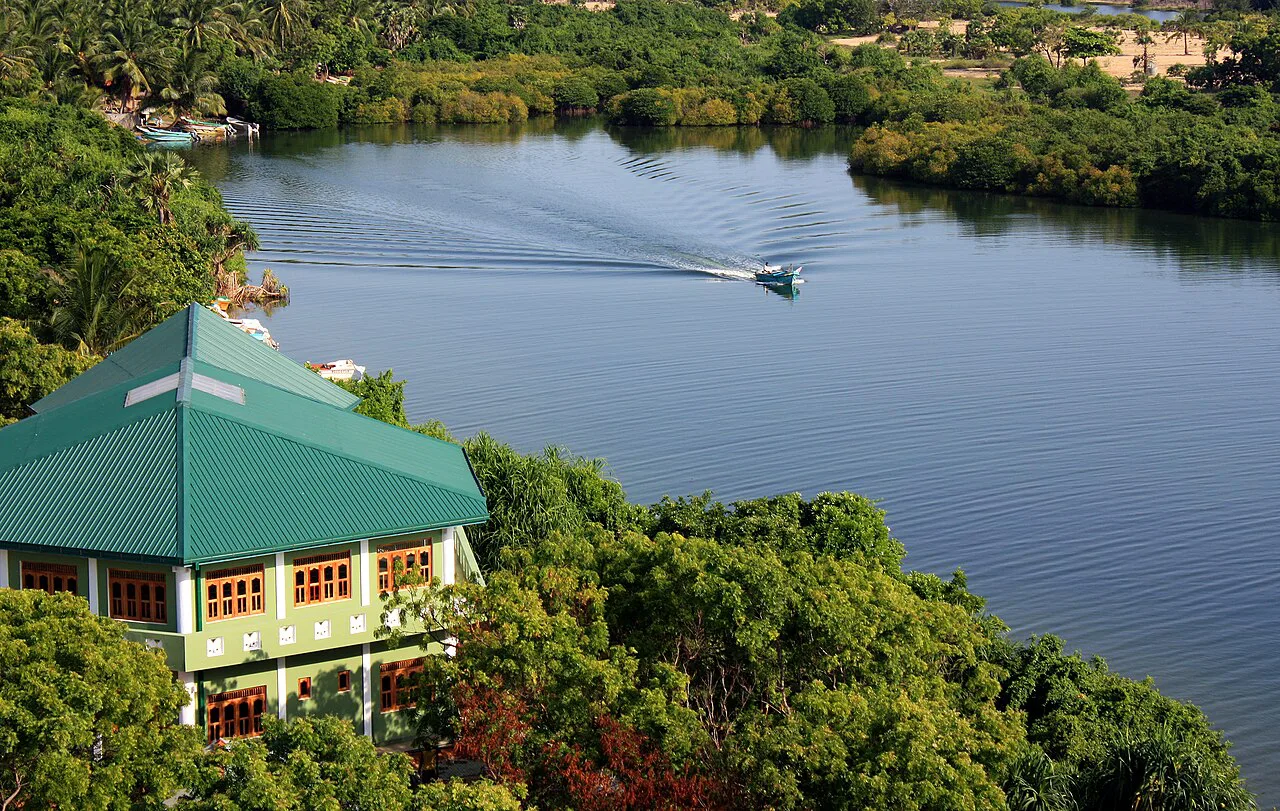
Batticaloa’s town centre sits on Puliyanthivu, an island within its own vast lagoon, connected to the mainland by three bridges, giving the town a genuinely watery character that has shaped both its practical development and its most enduring local legend.
Quick Facts
| Location | Northeastern coast, capital of Batticaloa District |
| Town site | Puliyanthivu island, within Batticaloa Lagoon |
| Colonial history | Captured by Portuguese (1622), Dutch (1638), British (1796) |
| Key legend | The ‘singing fish’ of Batticaloa Lagoon, heard from Kallady Bridge |
| Historic bridge | Kallady Bridge (Lady Manning Bridge), Sri Lanka’s oldest and longest iron bridge |
| Population | About 86,000 (2012 census) |
Commonly searched as: Batticaloa Sri Lanka · Batticaloa singing fish · Kallady Bridge · Batticaloa Fort · things to do in Batticaloa
A Town Fought Over for Its Lagoon
Batticaloa’s strategic coastal position made it, like so many Sri Lankan port towns, a genuine prize for successive colonial powers. The Portuguese captured it in 1622, the Dutch took over in 1638, and the British finally ousted the Dutch in 1796, each power recognising the value of the town’s location along the northeastern trade routes. More recently, Batticaloa and the surrounding region saw sustained conflict during Sri Lanka’s civil war, controlled by the LTTE through much of the 1980s before government forces retook the area in 1991, a chapter of more recent history that shaped the town considerably before its current, more settled identity as a regional trading hub for rice and coconut.
The Legend of the Singing Fish
Batticaloa’s most distinctive local legend centres on its lagoon, and specifically on the sounds said to rise from beneath the water near Kallady Bridge on full moon nights. According to tradition, dipping an oar into the water and holding the other end to your ear reveals a faint, musical sound, often described as resembling plucked guitar strings, said to be produced by fish or other marine life in the lagoon, most audible during the period between April and September. Whether the phenomenon has a fully confirmed scientific explanation or remains genuinely mysterious, it has become one of Batticaloa’s most enduring pieces of local folklore, drawing curious visitors to the bridge specifically hoping to hear it for themselves.
The Kallady Bridge itself, also known as Lady Manning Bridge after the wife of a British colonial governor, carries its own historical distinction as Sri Lanka’s oldest and longest bridge built with iron, part of the Colombo-Batticaloa Highway crossing the lagoon that surrounds the old town.
Layers of Colonial and Religious History
Batticaloa’s Dutch Fort complex remains a genuine highlight for visitors, its old cannons resting alongside government offices still in active operational use today, a rare example of a colonial-era fort that never fully transitioned into a purely historical monument. The town’s colourful mix of places of worship, including St. Mary’s Cathedral and numerous kovils and mosques, reflects a genuine multi-faith character, and Gandhi Park, with its statue of Mahatma Gandhi, adds a further point of interest within the compact old town.
Visiting Tips
- Visit Kallady Bridge on a full moon night between April and September for the best chance of hearing the singing fish phenomenon.
- Explore the Dutch Fort complex on foot, still a genuinely active part of the town’s administrative life.
- Combine with a lagoon boat trip past fishing villages, rice paddies and coconut farms, ending with sunset views.
- Use Batticaloa as a base or day-trip stop for exploring nearby Passikudah and Kalkudah beaches.
Where It Sits on the Map
Batticaloa, Eastern Province, Sri Lanka Open in Google Maps ↗
Frequently Asked Questions
What is the ‘singing fish’ legend of Batticaloa?
A local tradition holding that a faint, musical sound, often compared to plucked guitar strings, rises from Batticaloa Lagoon near Kallady Bridge, especially audible on full moon nights between April and September.
Why was Batticaloa historically significant to colonial powers?
Its strategic coastal and lagoon position made it a valuable prize, captured successively by the Portuguese (1622), Dutch (1638), and British (1796).
What is the Kallady Bridge?
Also known as Lady Manning Bridge, it’s Sri Lanka’s oldest and longest bridge built from iron, crossing Batticaloa Lagoon as part of the Colombo-Batticaloa Highway.
What can visitors see at Batticaloa’s Dutch Fort?
Old cannons and colonial-era buildings, many of which remain in active use as government offices today, rather than existing purely as a historical monument.
← Sri Lanka: The Complete Guide — see all 258 places by region
Related News
A guide to Sri Lanka's East Coast: Trincomalee, Batticaloa, Arugam Bay, wildlife parks, and the region's unique dry-season timing.
A guide to Trincomalee: one of the world's finest natural harbours, its ancient temple, colonial and WWII history, visiting tips and map.
A guide to Fort Frederick in Trincomalee: built from a demolished temple's stones, still an active Sri Lankan military base, its resident deer, visiting tips...













