

Dsigngo is a Graphic Design and Digital Marketing Company.
Write what you are looking for and press enter to begin your search!

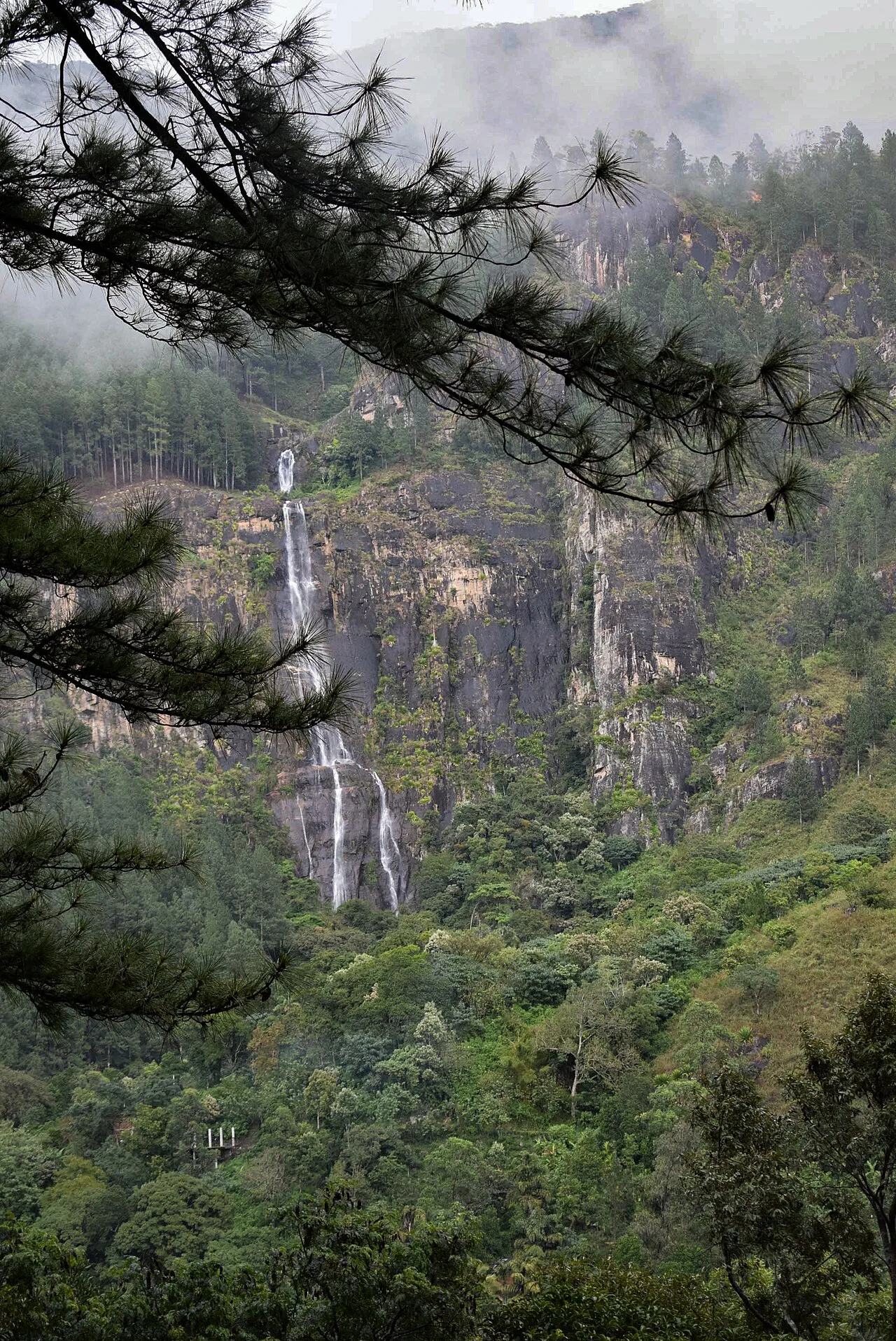
Near Kalupahana, Hill Country
Bambarakanda Falls
A single 263-metre drop through a grove of pine trees, so remote and rarely visited that many travellers mistake the more accessible Diyaluma Falls for the country’s tallest instead.
Bambarakanda holds the title of Sri Lanka’s tallest waterfall by a comfortable margin, yet its remote setting off the Colombo-Bandarawela road means it draws a fraction of the visitors that flock to the shorter but more accessible Diyaluma Falls nearby.
Quick Facts
| Location | Kalupahana, Badulla District, about 5 km from the A4 highway |
| Height | 263 metres (863 ft), a single drop |
| World ranking | 461st tallest waterfall globally |
| Watercourse | Kuda Oya, a tributary of the Walawe River |
| Setting | A forest glade of pine trees, at roughly 1,100 m elevation |
| Best flow | October to March, or January to April depending on rainfall patterns |
Commonly searched as: Bambarakanda Falls · tallest waterfall Sri Lanka · Kalupahana waterfall · Hill Country waterfalls · things to do near Haputale
The Tallest, But Not the Most Visited
At 263 metres, Bambarakanda comfortably holds the record as Sri Lanka’s tallest waterfall, ranking 461st among the world’s tallest according to the World Waterfall Database. Formed by the Kuda Oya, a tributary of the Walawe River, the falls drop as a single, slender cascade through a forest glade planted with pine trees, an unusual, almost temperate-feeling backdrop for a Sri Lankan waterfall, sitting at roughly 1,100 metres elevation near the southern foot of Horton Plains.
Despite its record-holding height, Bambarakanda remains considerably less visited than the country’s second-tallest waterfall, Diyaluma, largely due to its more remote location off the main A4 highway near Kalupahana, roughly 22 km from the nearest town of Balangoda. That relative obscurity means many casual travellers, and even some guidebooks, end up conflating the two falls or assuming the more famous Diyaluma holds the height record instead.
A Waterfall Wrapped in Legend
Local tradition holds Bambarakanda as a sacred site, with some accounts describing the water as possessing healing properties and the fall itself as a gift created directly by the gods for the people of the surrounding region. Whether or not visitors take that legend literally, the site’s genuine remoteness and setting amid swaying pine trees, described by some visitors as visibly swaying in the strong winds that blow across the exposed mountainside, give it a distinctly different, more otherworldly atmosphere than many of Sri Lanka’s more accessible cascades.
Reaching the Falls
A footpath leads from the main access road to a pool at the base of the falls, hidden within the pine grove. The full drop is best appreciated from a distance along the approach road, where the waterfall’s slender profile against the surrounding forest becomes clearly visible. Water volume varies considerably by season, at its strongest and most dramatic from around October through March or during the peak January to April window, and noticeably reduced during drier months.
Visiting Tips
- Visit October to March or January to April for the strongest, most photogenic flow.
- Access via the B449 road near Kalupahana, most commonly reached from Wellawaya or Haputale.
- Wear sturdy shoes for the footpath down to the base pool, and be cautious of strong winds at higher vantage points.
- Combine with a visit to the more accessible Diyaluma Falls, roughly 40 km away, for a fuller day of Hill Country waterfalls.
Worth the Detour, Precisely Because Few Take It
There’s a genuine irony in Bambarakanda’s relative obscurity: it holds the actual title most visitors assume belongs to a more famous, more photographed waterfall elsewhere in the Hill Country, yet its remoteness means far fewer people ever stand before it. For travellers willing to make the specific detour off the main highway, that obscurity is entirely the point, a genuinely record-holding natural landmark experienced without the crowds that gather at more conveniently located falls. Sri Lanka’s tallest waterfall remaining one of its least visited says something about how tourism attention often follows accessibility rather than actual superlatives, a pattern worth keeping in mind when planning which of the country’s many waterfalls deserve the extra effort to reach.
Where It Sits on the Map
Bambarakanda Falls, Kalupahana, Badulla District Open in Google Maps ↗
Frequently Asked Questions
Is Bambarakanda really Sri Lanka’s tallest waterfall?
Yes, at 263 metres it holds the record, ranking 461st tallest globally, ahead of the more famous but shorter Diyaluma Falls.
Why is Bambarakanda less visited than Diyaluma?
Its more remote location off the main highway near Kalupahana, requiring a specific detour, means it draws considerably fewer visitors than more easily accessible falls nearby.
What is the best time to see Bambarakanda at full flow?
Roughly October to March, or the January to April window, when rainfall keeps the Kuda Oya’s flow strongest.
What makes Bambarakanda’s setting distinctive?
It cascades through a forest glade of pine trees, an unusual, almost temperate backdrop compared to most Sri Lankan waterfalls.
← Sri Lanka: The Complete Guide — see all 258 places by region
Related News
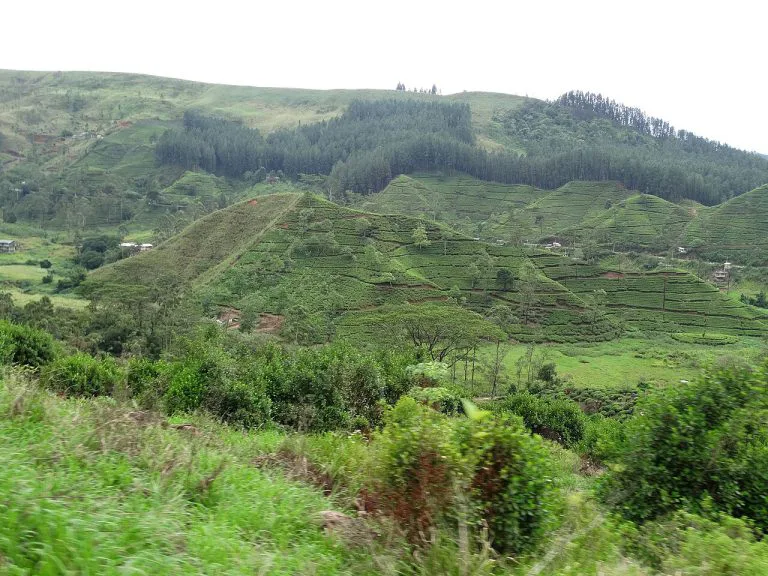
A guide to Sri Lanka's Hill Country: Kandy, tea plantations, Ella, Adam's Peak, Horton Plains, and travel tips.
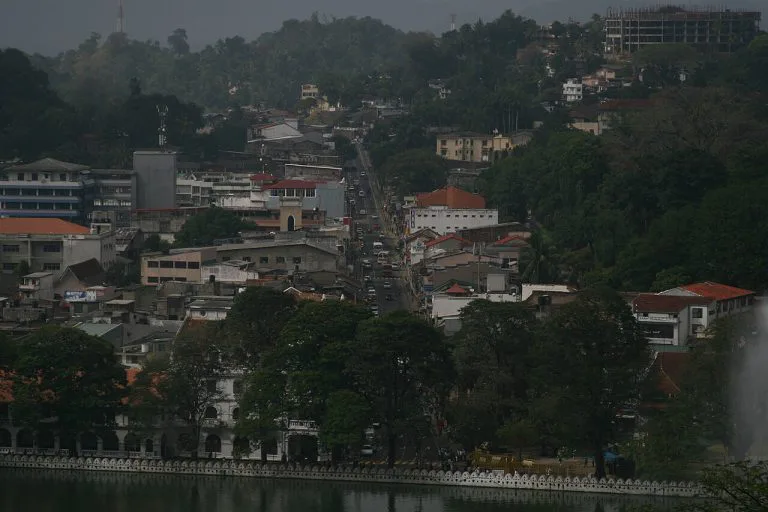
A complete guide to Kandy: the last Sinhalese kingdom's fall in 1815, the Temple of the Tooth, Kandy Lake, and visiting tips.
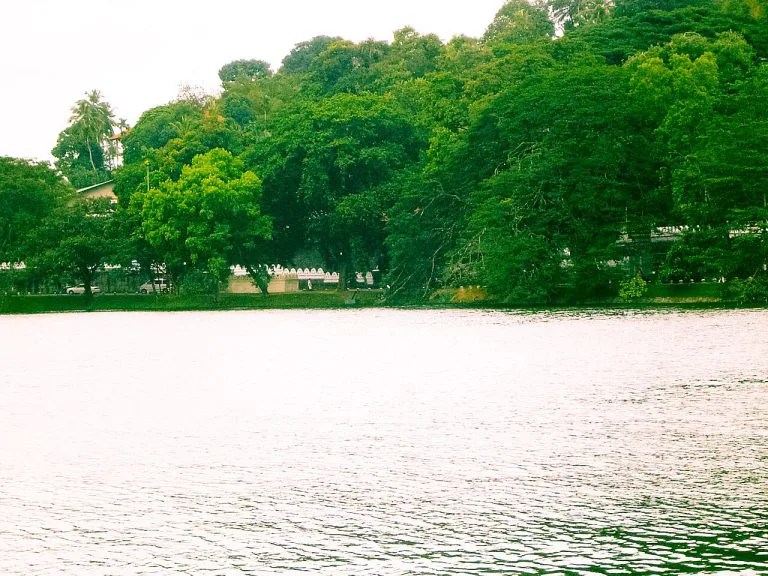
A guide to Kandy Lake, built by the last king of Kandy in 1807: its dark construction history, the island retreat, walking the shore, and...













