

Dsigngo is a Graphic Design and Digital Marketing Company.
Write what you are looking for and press enter to begin your search!

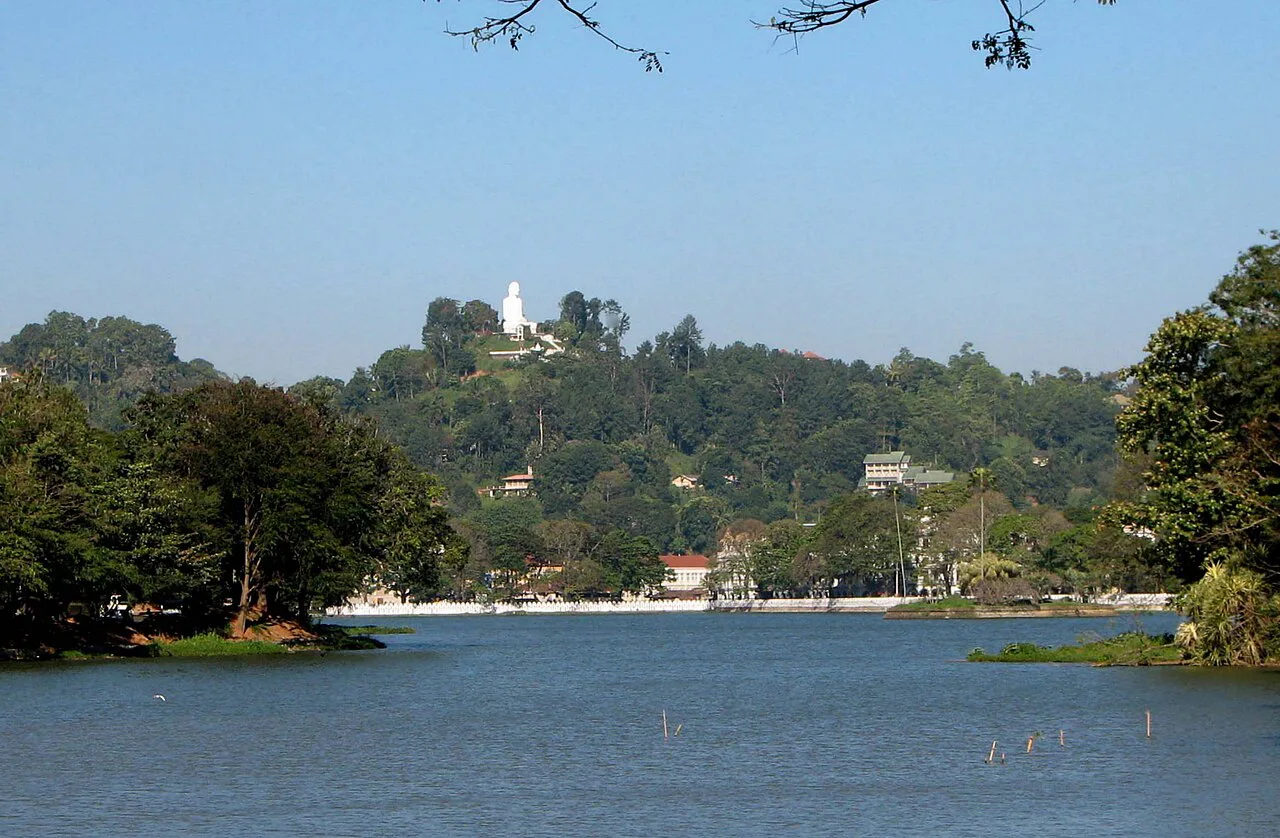
Kandy, Hill Country
Bahiravakanda Buddha
An 88-foot white Buddha statue built on a hill once believed to be home to a human-eating gnome demanding virgin sacrifices, its own construction delayed for years by opposition from Kandy’s most senior monks.
Long before it became one of Kandy’s most photographed landmarks, Bahirawakanda hill had a considerably darker reputation among local villagers, who once believed it was home to a demon that had to be appeased with human sacrifice.
Quick Facts
| Location | Bahirawakanda hill, about 2 km from Kandy city centre |
| Formal name | Sri Maha Bodhi Viharaya |
| Statue height | 88 feet (26.83 metres) |
| Land donated | Early 1970s, by Minister of Lands Hector Kobbekaduwa |
| Statue unveiled | 1 January 1993, by President Ranasinghe Premadasa |
| Statue posture | Dhyana Mudra, the meditation pose associated with the Buddha’s first enlightenment |
Commonly searched as: Bahiravakanda Buddha Statue · Sri Maha Bodhi Viharaya Kandy · Kandy hilltop temple · things to do in Kandy · Kandy panoramic views
Gnome Mountain
Bahirawakanda translates roughly to “Gnome Mountain,” a name rooted in local legend rather than the peaceful Buddhist statue now associated with the hill. According to stories once widely believed by surrounding villagers, the hill was home to a “bahirawa,” an evil gnome-like spirit said to devour unsuspecting humans who wandered too close. To appease it, villagers reportedly practised human sacrifice, offering a virgin girl, or in some tellings several, to the spirit in hopes of protection. Over time, as fear of the hill faded, that grim folklore gave way to an entirely different use for the site: a place of Buddhist devotion rather than dread.
A Statue Delayed by Temple Politics
The project’s origins trace to the early 1970s, when land on the hill was donated by Hector Kobbekaduwa, then Minister of Lands, to Venerable Ampitiye Dammarama Thero, a monk of the Amarapura Nikaya, who initially lived in a makeshift dwelling on the site while soliciting funds for construction. The project wasn’t universally welcomed: senior monks connected to the Temple of the Tooth and the Siyam Nikaya reportedly opposed the plan, concerned that a towering new statue on the hillside would visually overshadow the established religious centre of the city below. It took until 1980 for Hinatiyana Dhammaloka, chief monk of the Amarapura Nikaya, to secure the legal rights needed to proceed with construction on Bahirawakanda hill.
Even after that resolution, the statue took years to complete, finally finished in 1992 and formally unveiled on 1 January 1993 by then-President Ranasinghe Premadasa. Standing 88 feet tall, the white statue depicts the Buddha in Dhyana Mudra, the meditation posture associated with his first enlightenment, and has become one of the tallest Buddha statues in Sri Lanka, visible from almost anywhere in Kandy.
What’s Inside and Around It
A small gallery within the statue’s base displays a series of images depicting the Buddha’s life, from infancy through adulthood. Outside, the hilltop location offers genuinely panoramic views over Kandy city, Kandy Lake, surrounding evergreen forests and tea plantations, with additional stairs behind the statue allowing visitors to climb even higher for an expanded vantage point. The statue is particularly striking after dark, when it’s illuminated against the night sky above the twinkling lights of the city below.
Visiting Tips
- Visit early morning or after sunset for cooler temperatures, fewer crowds, and the best lighting conditions.
- Reach the base by tuk-tuk from central Kandy, then expect a roughly 20-minute walk up a steep but manageable path to the statue itself.
- Remove hats and shoes before entering the temple grounds, and consider bringing flowers or lighting an oil lamp as a traditional offering.
- Combine with the Temple of the Tooth and Kandy Lake, both a short distance away, for a fuller day of Kandy sightseeing.
From Feared Hillside to Skyline Icon
Bahirawakanda’s transformation, from a hill villagers avoided out of genuine fear to one of Kandy’s most recognisable and photographed landmarks, mirrors a pattern seen at several Sri Lankan sites where older, pre-Buddhist folklore has gradually been absorbed and reframed by Buddhist religious practice. The gnome legend hasn’t been erased so much as folded into the site’s broader story, a colourful footnote mentioned by local guides rather than a belief anyone still holds with genuine dread. What remains is a place that now serves the opposite function of its old reputation: rather than something to fear and appease, it’s somewhere visitors climb specifically to find calm, take in the view, and reflect, a fairly complete inversion of the hill’s original meaning to the people who once lived in its shadow.
Where It Sits on the Map
Bahiravakanda Buddha Statue (Sri Maha Bodhi Viharaya), Kandy Open in Google Maps ↗
Frequently Asked Questions
Why is the hill called Bahirawakanda?
The name means roughly ‘Gnome Mountain,’ referencing local legends about an evil spirit once believed to inhabit the hill, appeased historically through human sacrifice according to folklore.
How tall is the Bahiravakanda Buddha statue?
88 feet (26.83 metres), making it one of the tallest Buddha statues in Sri Lanka.
Why was construction of the statue delayed?
Senior monks connected to the Temple of the Tooth reportedly opposed the project, concerned it would overshadow Kandy’s established religious centre; it took until 1980 to secure the legal rights needed to proceed.
When was the statue completed and unveiled?
Finished in 1992 and formally unveiled on 1 January 1993 by then-President Ranasinghe Premadasa.
← Sri Lanka: The Complete Guide — see all 258 places by region
Related News
A guide to Sri Lanka's Hill Country: Kandy, tea plantations, Ella, Adam's Peak, Horton Plains, and travel tips.
A complete guide to Kandy: the last Sinhalese kingdom's fall in 1815, the Temple of the Tooth, Kandy Lake, and visiting tips.
A guide to Kandy Lake, built by the last king of Kandy in 1807: its dark construction history, the island retreat, walking the shore, and...













