

Dsigngo is a Graphic Design and Digital Marketing Company.
Write what you are looking for and press enter to begin your search!

The Cultural Triangle, Sri Lanka
Arankele
Long before rag-robed reformist monks built their meditation walkways here, Arankele was already home to a monk remembered in tradition as Sri Lanka’s last great Arahant, one who had fully attained enlightenment.
Arankele’s name is thought to combine ‘aran,’ short for Arahant, with ‘kele,’ meaning forest, a fitting etymology for a site whose earliest fame rests on a single revered monk, Maliyadeva, remembered in tradition as the last person on the island to fully achieve the enlightened state of Arahantship.
Quick Facts
| Location | Kurunegala District, about 117 km from Colombo |
| Earliest resident | Arahant Maliyadeva, believed active in the 2nd century BCE |
| Major expansion | 3rd to 4th centuries CE, under Kings Mahasena, Jethatissa and Buddhadasa |
| Monastic order | The Pansukulika (‘rag-robe wearing’) ascetic monks |
| Signature feature | A perfectly straight stone meditation walkway roughly half a kilometre long |
| Medicinal connection | King Buddhadasa, a noted Ayurvedic physician-king, planted medicinal herbs around the site |
Commonly searched as: Arankele forest monastery · Arankele meditation path · Maliyadeva Arahant · Pansukulika monks · things to do in the Cultural Triangle
The Home of Sri Lanka’s Last Arahant
According to the Mahavamsa, Arahant Maliyadeva, active around the 2nd century BCE, made Arankele his personal dwelling, and his meditation chamber from that era reportedly still survives at the site today. Maliyadeva holds a genuinely unique status in Sri Lankan Buddhist tradition, remembered as the last person recorded to have achieved full Arahantship, the complete liberation from the cycle of rebirth that represents the highest attainment in Theravada Buddhist practice. That association alone would make Arankele a site of real historical and devotional significance, well before considering the far more extensive ruins that followed.
Arankele’s major architectural expansion came later, during the 3rd and 4th centuries CE, under successive kings Mahasena, his son Jethatissa, and Buddhadasa, the latter a king with genuine expertise in Ayurvedic medicine, who specifically instructed that medicinal plants be cultivated around the monastery grounds, drawing on the naturally diverse flora already present across the surrounding Dolukanda, Dunkanda and Madukanda mountains.
A Sister Site to Ritigala
In its later period, Arankele became home to the Pansukulika order, the same reformist “rag-robe wearing” ascetic monks associated with Ritigala, giving the two sites a genuine architectural kinship: both feature distinctive double-platform structures known as padhanaghara, raised stone platforms connected by a central stone bridge, built with a deliberately minimalist, undecorated style reflecting the Pansukulikas’ rejection of ornamentation and worldly comfort. Unlike Ritigala, though, Arankele’s main meditation walkway runs largely at ground level along the foot of the mountain rather than climbing its slopes, giving the two sites a subtly different physical character despite their shared monastic tradition.
Half a Kilometre of Perfectly Straight Stone
Arankele’s most remarkable surviving feature is its main meditation walkway, a stone path stretching roughly half a kilometre in an almost perfectly straight line through dense forest, its geometric precision creating a striking visual contrast against the wild, untamed jungle surrounding it. Small flights of steps branch off along the way, leading to chapter houses, ponds, and cave dwellings on the hillside, and a circular stone-paved “roundabout” partway along the path served as a rest area, its now-vanished roof once shading meditating monks from the sun. A separate small covered walkway near the site’s main reception hall is believed to be the only roofed meditation walkway of its kind surviving anywhere in Sri Lanka.
Visiting Tips
- Visit at dawn for the most atmospheric experience, when the forest is at its coolest and quietest.
- Walk the full half-kilometre meditation path to appreciate its remarkable geometric precision against the natural forest.
- Keep noise to a minimum, given that resident monks may still be meditating in the surrounding forest.
- Wear comfortable shoes suited to uneven forest terrain and occasional stone steps.
Where It Sits on the Map
Arankele Forest Monastery, Kurunegala District Open in Google Maps ↗
Frequently Asked Questions
Who was Arahant Maliyadeva?
A monk active around the 2nd century BCE, traditionally remembered as the last person in Sri Lanka to fully achieve Arahantship, complete liberation from the cycle of rebirth; his meditation chamber at Arankele reportedly survives today.
What connects Arankele to Ritigala?
Both were homes to the Pansukulika (‘rag-robe wearing’) ascetic monks and share a distinctive minimalist double-platform (padhanaghara) architectural style.
What is Arankele’s most notable feature?
A perfectly straight stone meditation walkway roughly half a kilometre long, cutting through dense forest, along with the only surviving roofed meditation walkway in Sri Lanka.
When did Arankele see its major expansion?
During the 3rd and 4th centuries CE, under Kings Mahasena, Jethatissa and Buddhadasa, the latter known for his Ayurvedic medical expertise.
← Sri Lanka: The Complete Guide — see all 258 places by region
Related News
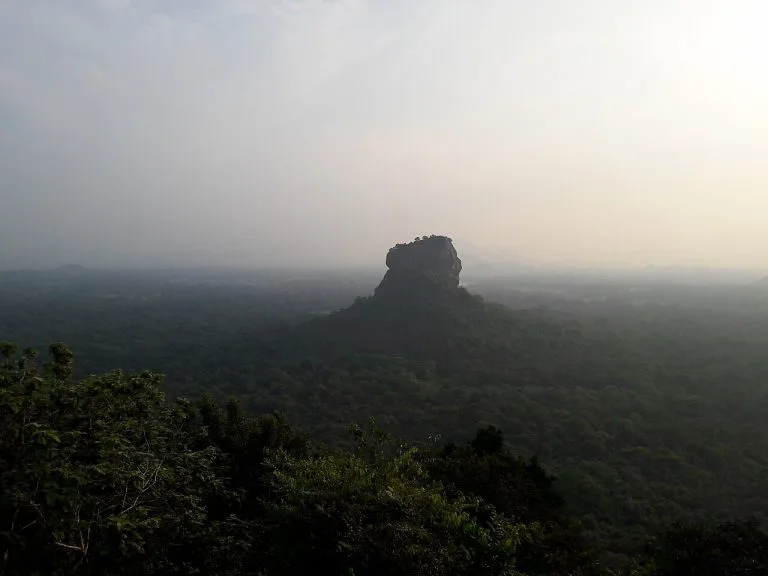
A guide to Sri Lanka's Cultural Triangle: Sigiriya, Polonnaruwa, Anuradhapura, Dambulla and Mihintale, with travel tips.

A complete guide to Sigiriya Rock Fortress: King Kashyapa's parricide, the water gardens, the famous frescoes, visiting tips and map.
A guide to the ancient city of Polonnaruwa: from Chola conquest to Parakramabahu the Great's garden-city, visiting tips and map.













