

Dsigngo is a Graphic Design and Digital Marketing Company.
Write what you are looking for and press enter to begin your search!

North Western Province, Sri Lanka
Wilpattu National Park
Sri Lanka’s largest and oldest national park, defined by its natural sand-rimmed lakes and a leopard population that rivals the more famous Yala.
Wilpattu doesn’t get the crowds that Yala does, and that’s precisely why serious wildlife watchers increasingly seek it out. Sri Lanka’s oldest and largest national park spent sixteen years closed during the civil war, and its slow, careful reopening has left it with a genuinely wild character that’s becoming harder to find elsewhere on the island.
Quick Facts
| Location | North western coast, spanning the North Western and North Central Provinces |
| Size | 1,317 km², the largest national park in Sri Lanka |
| Established | Wildlife sanctuary in 1905, national park status in December 1938 |
| Signature feature | Villus, natural sand-rimmed lakes that fill with rainwater |
| Closed period | December 1988 to March 2003, due to civil war security concerns |
| Wildlife | High-density leopard population, sloth bears, elephants, deer, and rich birdlife |
Commonly searched as: Wilpattu National Park · Sri Lanka leopard safari · Wilpattu vs Yala · Sri Lanka wildlife park · villus Wilpattu
Named for Its Lakes
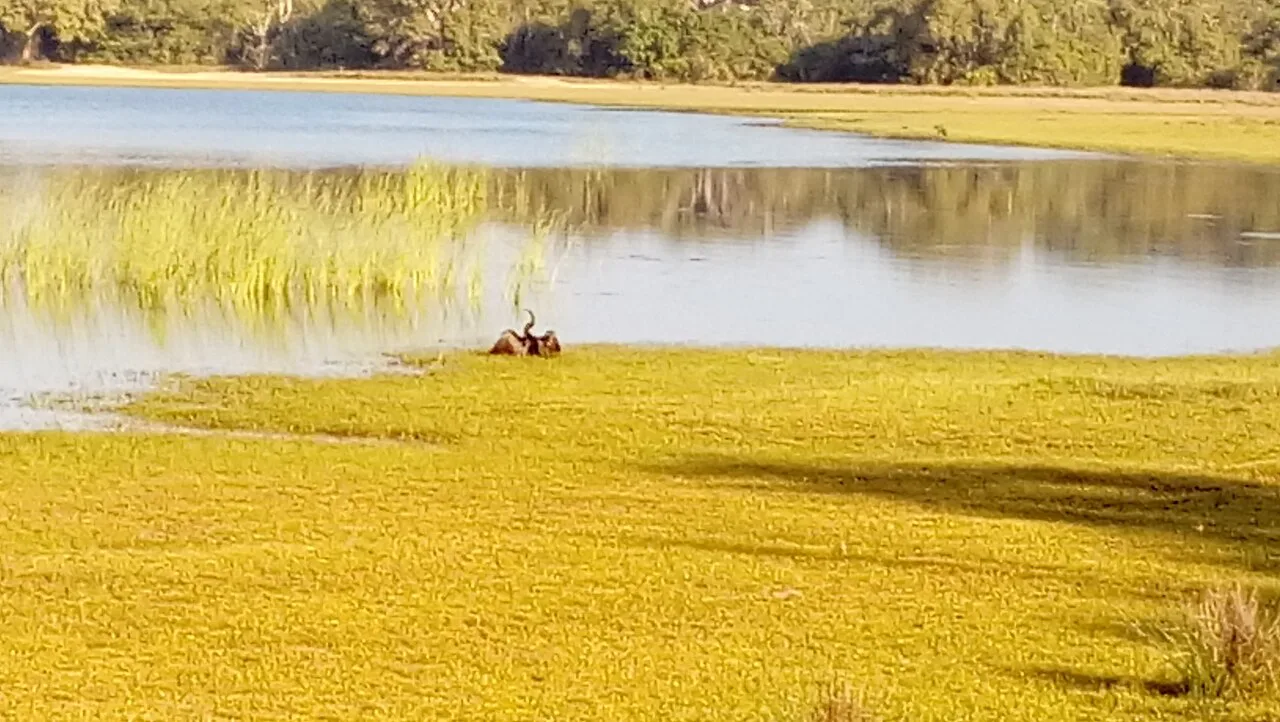
Wilpattu takes its name directly from its most distinctive geographical feature. In Sinhala, “Wilpattu” translates roughly to “land of lakes,” while in Tamil it’s understood to mean “ten lakes,” both references to the villus, shallow, sand-rimmed natural depressions scattered throughout the park that fill with rainwater and become focal points for wildlife activity, especially during drier periods when animals gather at the water’s edge. Around 60 of these natural lakes dot the landscape, and their presence, rather than any single dramatic landmark, defines the park’s character and gives it its name.
The area was first protected as a wildlife sanctuary in 1905, one of the earliest conservation designations anywhere on the island, and was formally upgraded to national park status in December 1938, making Wilpattu not just Sri Lanka’s largest protected area at 1,317 square kilometres, but also its oldest.
Closed by War, Reopened to a Different Sri Lanka
Wilpattu’s modern history is inseparable from Sri Lanka’s civil war. Security concerns forced the park’s closure in December 1988, five years into the conflict between the government and the Liberation Tigers of Tamil Eelam, and it remained shut to visitors for sixteen years, finally reopening on 16 March 2003. During those closed decades, researchers note that development simply didn’t happen and many people moved away from the area, which may have inadvertently helped preserve forested habitat outside the park’s boundaries, even as bushmeat hunting during the conflict likely reduced deer populations to some degree. Since reopening, the park has become a focus of renewed conservation research, including the first dedicated leopard studies conducted after its long closure, using camera traps and scat analysis to better understand the population that had gone effectively unstudied for over a decade and a half.
What You’ll See on Safari
Wilpattu’s leopard population is a major draw, with a 2015 camera-trap survey by the Wilderness & Wildlife Conservation Trust identifying 49 individual leopards in the surveyed area alone, and later research estimating leopard density comparable to sections of the better-known Yala National Park. In fact, decades ago, Wilpattu, not Yala, was the park most associated with Sri Lankan leopard sightings. Alongside leopards, the park supports healthy populations of sloth bears, elephants, spotted deer, mugger crocodiles, and star tortoises, plus rich birdlife including painted storks, Asian openbills, crested serpent eagles, and the vividly coloured Sri Lankan junglefowl, the national bird.
Wilpattu vs Yala
Visitors weighing the two parks should know the trade-off: Yala generally offers higher odds of a leopard sighting due to its higher density in the tourist-accessible zones, but also draws considerably larger crowds of safari jeeps. Wilpattu, with only around 25% of its total area currently open to visitors, offers a quieter, more unpredictable experience, better suited to travellers who value a genuine sense of wilderness over guaranteed sightings.
Visiting Tips
- Jeep safaris are the standard way to explore, typically arranged through a lodge or tour operator based near the park entrance.
- Some Kalpitiya-based accommodations offer a boat safari across the lagoon directly into the park as an alternative route.
- Visit during the dry season for the best chances of animal sightings around the villus, when water is scarcer elsewhere.
- Set expectations for a wilder, less crowded experience than Yala, with correspondingly less predictable wildlife sightings.
Where It Sits on the Map
Wilpattu National Park, North Western/North Central Provinces, Sri Lanka Open in Google Maps ↗
Frequently Asked Questions
Why is it called Wilpattu?
The name references the villus, natural sand-rimmed lakes scattered throughout the park; roughly 60 of these lakes exist, giving the park both its Sinhala and Tamil names.
Why was Wilpattu closed for so long?
Security concerns during the Sri Lankan Civil War forced its closure from December 1988 to March 2003, a gap of sixteen years.
Is Wilpattu better than Yala for leopard sightings?
Wilpattu has a strong leopard population and historically rivalled or exceeded Yala’s reputation for leopards, but Yala’s accessible zones generally offer higher sighting probability; Wilpattu offers a quieter, wilder experience instead.
How much of the park can visitors access?
Currently only about 25% of Wilpattu’s total area is open to visitors, with the rest remaining dense forest or scrub.
← Sri Lanka: The Complete Guide — see all 258 places by region
Related News
A guide to Sri Lanka's West Coast region, from Kalpitiya to Hikkaduwa: beaches, history, wildlife and travel tips.
A complete guide to Negombo, Sri Lanka: history, the fish market, Dutch canal, churches, and visiting tips near the airport.

A guide to Sri Munneswaram Temple near Chilaw, Sri Lanka: history, the Ramayana legend, festivals, visiting tips and map.













