

Dsigngo is a Graphic Design and Digital Marketing Company.
Write what you are looking for and press enter to begin your search!

The South, Sri Lanka
Unawatuna
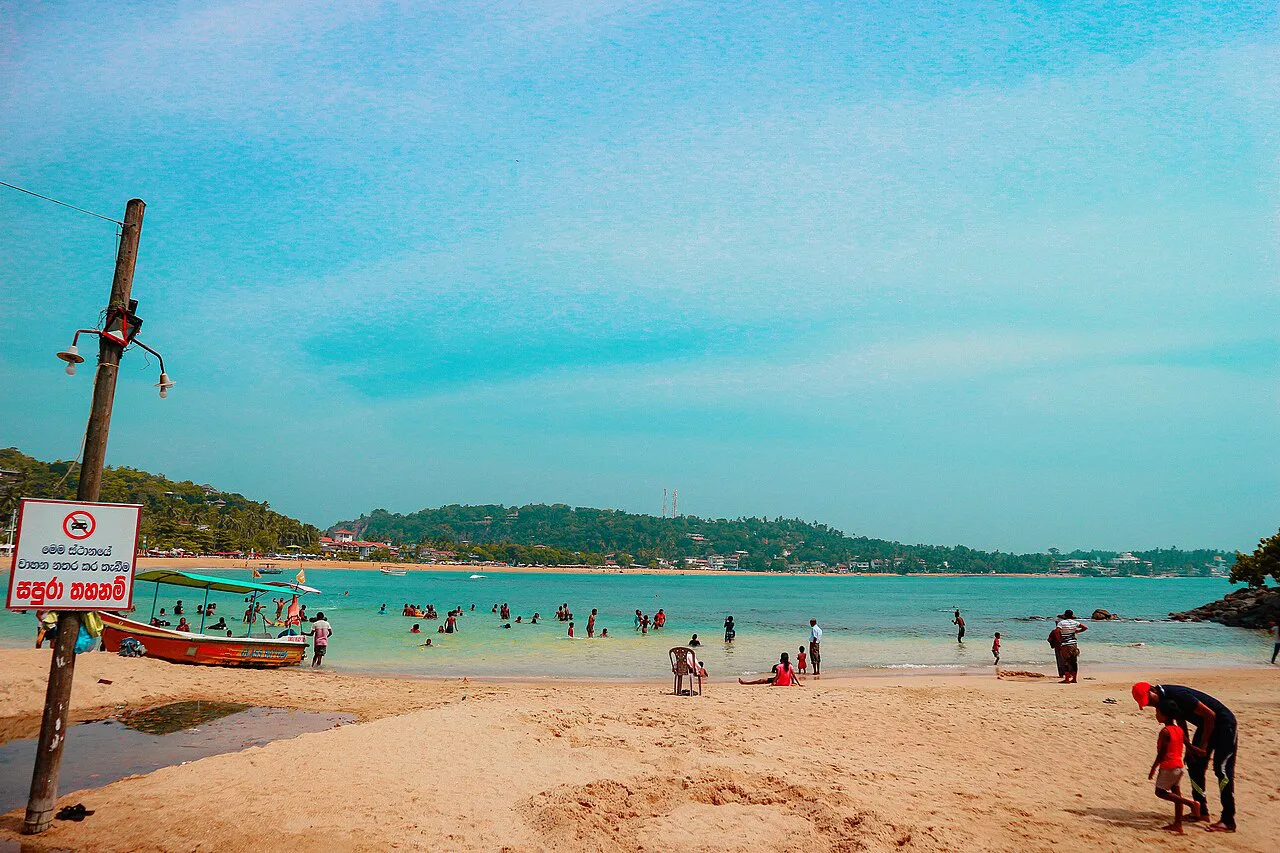
A crescent-shaped bay near Galle whose name comes from a chunk of the Himalayas that, according to legend, ‘fell down’ here while the monkey god Hanuman was flying medicinal herbs across the sky.
Unawatuna’s name translates roughly to ‘fell down,’ and the story behind it is one of the more entertaining legends attached to any Sri Lankan beach: a fragment of the Himalayas, dropped mid-flight by the monkey god Hanuman, supposedly landed here and became Rumassala, the forested hill still overlooking the bay today.
Quick Facts
| Location | About 5 km southeast of Galle |
| Name meaning | From Sinhala ‘Una-watuna,’ meaning ‘fell down’ |
| Legendary origin | Linked to Hanuman dropping a Himalayan mountain fragment during the Ramayana |
| Key natural feature | Rumassala Hill, home to around 150 species of medicinal plants |
| Colonial history | Dutch-built structures, including the Nooit Gedacht building |
| Notable resident | Author Arthur C. Clarke made Unawatuna his first Ceylon home in 1956 |
Commonly searched as: Unawatuna beach · Unawatuna Sri Lanka · Rumassala hill · Jungle Beach Galle · things to do near Galle
A Beach Named by the Ramayana
According to the version of the legend most commonly told locally, when Rama’s brother Lakshmana was near-fatally wounded in battle against the demon king Ravana, the monkey-warrior Hanuman was dispatched to the Himalayas to fetch specific medicinal herbs needed to save him. Unable to identify the exact plants, Hanuman instead lifted an entire chunk of mountain and carried it back toward the battlefield, but a fragment broke off and fell here, giving the site its name: Una-watuna, “fell down.” That fallen fragment is said to have become Rumassala, the hill still standing beside the bay, sometimes also called Buona Vista, “beautiful view,” a name given by later Portuguese visitors independently struck by the same scenic quality the legend already attributed to the hill.
A slightly different scholarly account, noted by writer C.G. Uragoda, suggests the name may actually derive from “Una-Patuna,” an old term for a small natural harbour or cove, similar to other ancient Sri Lankan place names like Dambakola Patuna. Whichever etymology is correct, the mythological version has become the story most visitors hear, and it adds a layer of storytelling charm to what would otherwise be simply an attractive beach.
Rumassala Hill and Jungle Beach
Rumassala’s reputation as a repository of medicinal plants ties directly back into the same legend, roughly 150 species of herbal and medicinal plants have been identified on the hill, a number folklore-minded observers note matches the traditional count of herbs said to grow on the Himalayan mountain Hanuman originally sought. Today the hill holds several small temples, including the Sri Vivekaramaya Temple with its towering Hanuman statue, the Samudragiri Viharaya with a Buddha statue overlooking the bay, and, at the summit, a Japanese-built Peace Pagoda offering panoramic ocean views. A footpath through the jungle leads to Jungle Beach, a secluded cove that has become one of the area’s most popular hidden-gem swimming and snorkelling spots.
A Colonial and Literary Footnote
Unawatuna’s more recent history includes a Dutch colonial chapter, with several buildings from that era still standing, including the Nooit Gedacht building, Unawatuna Hospital, and the Maharambe mansion, along with neighbourhood names like “Parangiyawatta” (land of the Portuguese) and “Ja-kotuwa” hinting at the area’s mixed colonial past. In 1956, the celebrated science fiction author Arthur C. Clarke chose Unawatuna as his very first home in Ceylon, reportedly drawn by the mystery and natural intrigue surrounding Rumassala.
What to Do Today
Beyond its legends, Unawatuna functions as a genuinely popular beach destination, with a calm, coral-reef-protected bay well suited to swimming, a lively strip of beachside restaurants and bars, and easy access to Galle Fort just a short drive away. Snorkelling and diving are popular given the sheltered reef conditions, and the beach’s crescent shape makes for reliably good sunset views.
Visiting Tips
- Hike up Rumassala Hill for temple visits and Peace Pagoda views, allowing extra time for the walk to Jungle Beach if you want a quieter swim.
- Combine with Galle Fort, only about 5 km away, for an easy half-day heritage and beach combination.
- Evenings bring a livelier beachside dining and bar scene; daytime is calmer and better for swimming.
- Respect the small temples on Rumassala Hill with modest dress and appropriate behaviour.
Where It Sits on the Map
Unawatuna, Galle District, Southern Province Open in Google Maps ↗
Frequently Asked Questions
Why is Unawatuna called that?
The name comes from the Sinhala phrase ‘Una-watuna,’ meaning ‘fell down,’ linked to a Ramayana legend in which a chunk of the Himalayas dropped here while Hanuman carried it to heal a wounded prince.
What is Rumassala Hill?
A forested hill overlooking Unawatuna’s bay, said in legend to be the fallen mountain fragment itself, home to around 150 species of medicinal plants and several small temples.
What is Jungle Beach?
A secluded cove reached by a footpath through the jungle on Rumassala Hill, popular for quieter swimming and snorkelling away from the main Unawatuna beach.
How far is Unawatuna from Galle Fort?
About 5 km, making it easy to combine both in a single day.
← Sri Lanka: The Complete Guide — see all 258 places by region
Related News
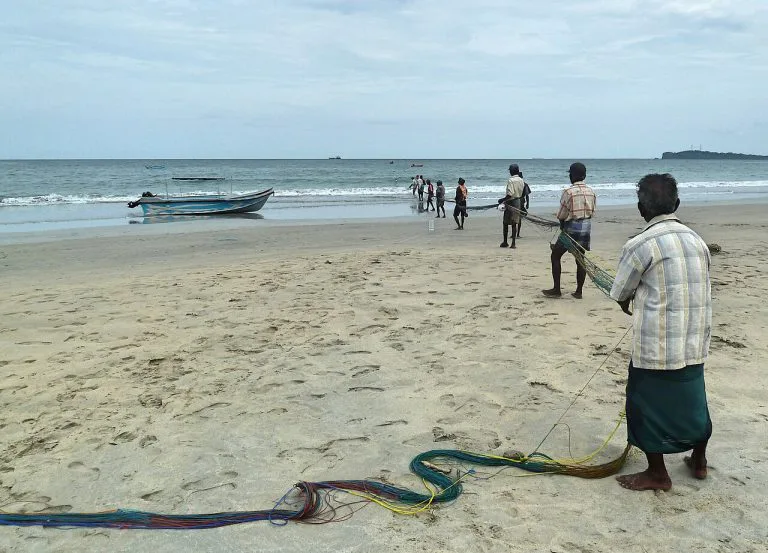
A guide to Southern Sri Lanka, from Galle to Kataragama: beaches, wildlife safaris, colonial forts, and travel tips.

A complete guide to Galle Fort: history from Ptolemy to the Dutch, walking the ramparts, top sights, and visiting tips.
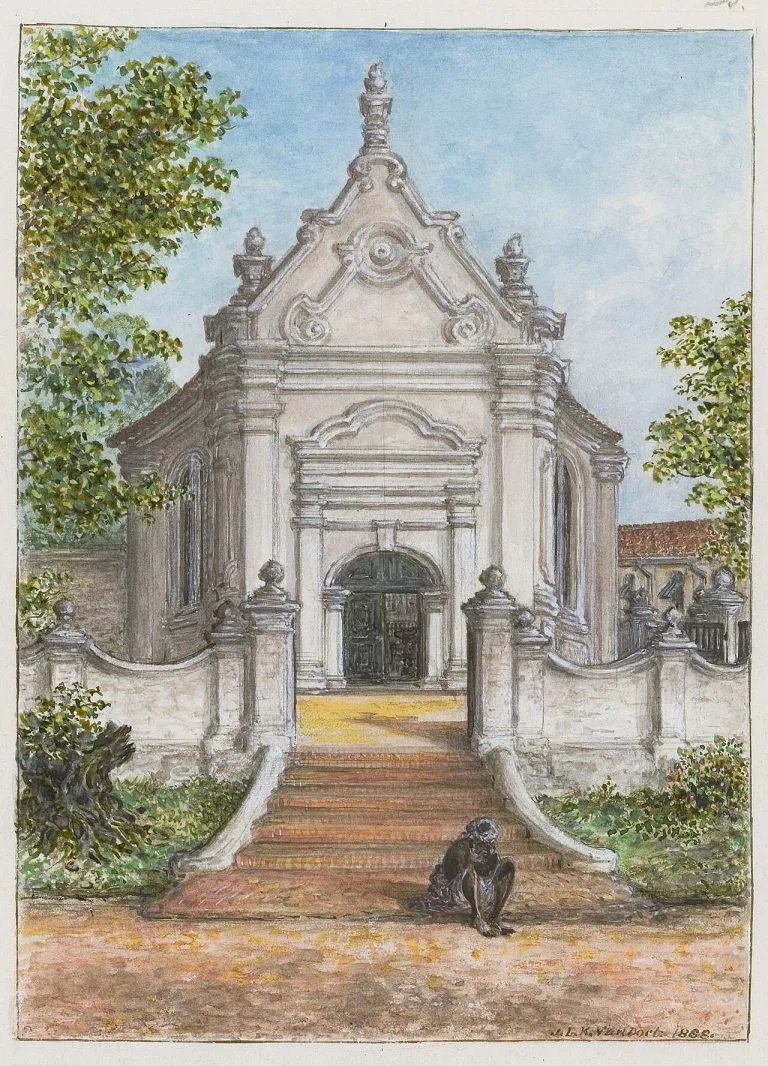
A guide to the Dutch Reformed Church in Galle Fort: the story behind its 1755 completion, the tombstone floor, visiting tips and map.













