

Dsigngo is a Graphic Design and Digital Marketing Company.
Write what you are looking for and press enter to begin your search!

The South, Sri Lanka
Uda Walawe National Park
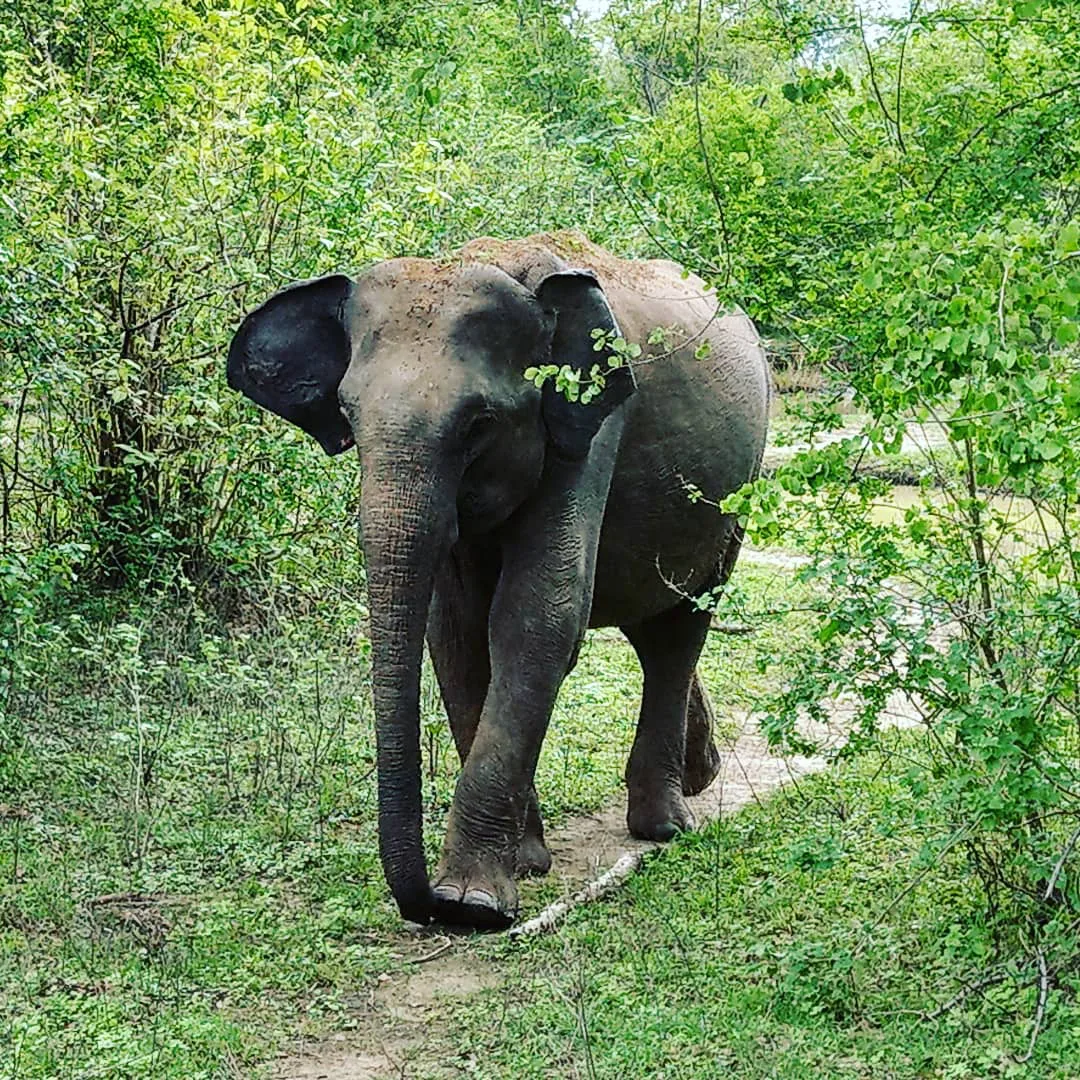
Created in 1972 to give displaced elephants a home after a reservoir flooded their habitat, Uda Walawe is now one of the most reliable places on Earth to see wild Asian elephants.
Uda Walawe exists because of a dam. When the Walawe River was blocked in the late 1960s to create a reservoir for irrigation and hydropower, the flooding displaced elephant herds and destroyed their habitat, and the Sri Lankan government responded by declaring a new national park specifically to give those displaced animals, and the reservoir’s own catchment, somewhere protected to be.
Quick Facts
| Location | South-central Sri Lanka, Sabaragamuwa and Uva Provinces, about 180 km from Colombo |
| Established | 30 June 1972, Sri Lanka’s fifth national park |
| Size | 30,821 hectares |
| Original purpose | Sanctuary for elephants displaced by the Udawalawe Reservoir dam project (built 1967 to 1969) |
| Elephant population | Around 500, often seen in herds of up to 100 |
| Elephant Transit Home | Established 1995, rehabilitating orphaned elephant calves near the park entrance |
Commonly searched as: Uda Walawe National Park · Sri Lanka elephant safari · Udawalawe Elephant Transit Home · Sri Lanka wildlife park · things to do in the South Sri Lanka
Born From a Dam Project
The story of Uda Walawe begins with an act of large-scale infrastructure development rather than conservation. Between 1967 and 1969, engineers dammed the Walawe River as part of Sri Lanka’s post-independence irrigation and hydroelectric programme, creating a substantial reservoir that flooded large areas of dry-zone forest and grassland. That flooding displaced elephant herds and other wildlife en masse, and destroyed the habitat many depended on, alongside triggering widespread logging and slash-and-burn chena farming in the surrounding cleared land.
In response, the government officially declared the area a national park on 30 June 1972, Sri Lanka’s fifth, under the Fauna and Flora Protection Ordinance. Its dual purpose was explicit from the start: protect the reservoir’s catchment area, and provide a home for the elephants displaced by its construction. A number of deliberate “elephant drives” were conducted in the years after, herding animals from developed land into the new park, and an electric fence was later built along the southern boundary to manage the boundary between park and farmland.
Grasslands Born From Farming
One of the park’s more ironic details is that its open, elephant-friendly grasslands are themselves a legacy of the very farming activity the park was created to end. Areas cleared for chena cultivation before the park’s declaration became colonised by Guinea grass, an imported fodder grass that spread widely after being introduced in the 1800s. That grass-dominated landscape, unintentional as its origins were, turned out to be ideal for elephant viewing, since it offers unobstructed sightlines across open plains rather than the dense forest cover that makes elephant spotting harder in parks like Wilpattu.
Sri Lanka’s Most Reliable Elephant Safari
Uda Walawe is widely considered the best place in Sri Lanka to see wild Asian elephants consistently, year-round, with an estimated 500 elephants living within the park, sometimes gathering in herds of up to 100 individuals around the reservoir’s shoreline. Beyond elephants, the park supports water buffalo, wild boar, spotted and sambar deer, jackals, toque macaques and grey langurs, along with over 180 recorded bird species, including painted storks, openbill storks and lesser adjutants. Leopards and sloth bears are present too, though sightings require considerably more luck than at Yala or Wilpattu.
The Elephant Transit Home
Near the park’s main entrance sits the Udawalawe Elephant Transit Home, established in 1995 to rehabilitate orphaned elephant calves before releasing them back into the wild. Unlike some elephant tourism venues elsewhere in Sri Lanka, the ETH operates on a strict hands-off, minimal-human-contact model designed to preserve the calves’ wild behaviour, and public viewing is limited to scheduled feeding times from an observation area.
Visiting Tips
- Book a jeep safari through a licensed operator or lodge near the park entrance; early morning or late afternoon drives generally offer the best sightings.
- Combine a park safari with a visit to the Elephant Transit Home for a broader elephant-focused day.
- The park’s smaller size and open terrain generally make for more predictable elephant sightings than at larger, denser parks.
- Uda Walawe pairs naturally with a wider South Coast itinerary, being roughly equidistant between Colombo and the beach towns further south.
Where It Sits on the Map
Uda Walawe National Park, Sabaragamuwa/Uva Provinces Open in Google Maps ↗
Frequently Asked Questions
Why was Uda Walawe National Park created?
It was established in 1972 specifically to protect elephants displaced by the construction of the Udawalawe Reservoir dam, built between 1967 and 1969, and to safeguard the reservoir’s catchment area.
How many elephants live in the park?
An estimated 500, making it one of the most reliable places in the world to see wild Asian elephants, often in herds of up to 100.
What is the Elephant Transit Home?
A rehabilitation facility near the park entrance, established in 1995, caring for orphaned elephant calves with minimal human contact before releasing them back into the wild.
Is Uda Walawe good for leopard sightings too?
Leopards and sloth bears are present, but sightings are considerably less reliable than at Yala or Wilpattu; elephants remain the park’s main draw.
← Sri Lanka: The Complete Guide — see all 258 places by region
Related News
A guide to Southern Sri Lanka, from Galle to Kataragama: beaches, wildlife safaris, colonial forts, and travel tips.

A complete guide to Galle Fort: history from Ptolemy to the Dutch, walking the ramparts, top sights, and visiting tips.
A guide to the Dutch Reformed Church in Galle Fort: the story behind its 1755 completion, the tombstone floor, visiting tips and map.













