

Dsigngo is a Graphic Design and Digital Marketing Company.
Write what you are looking for and press enter to begin your search!

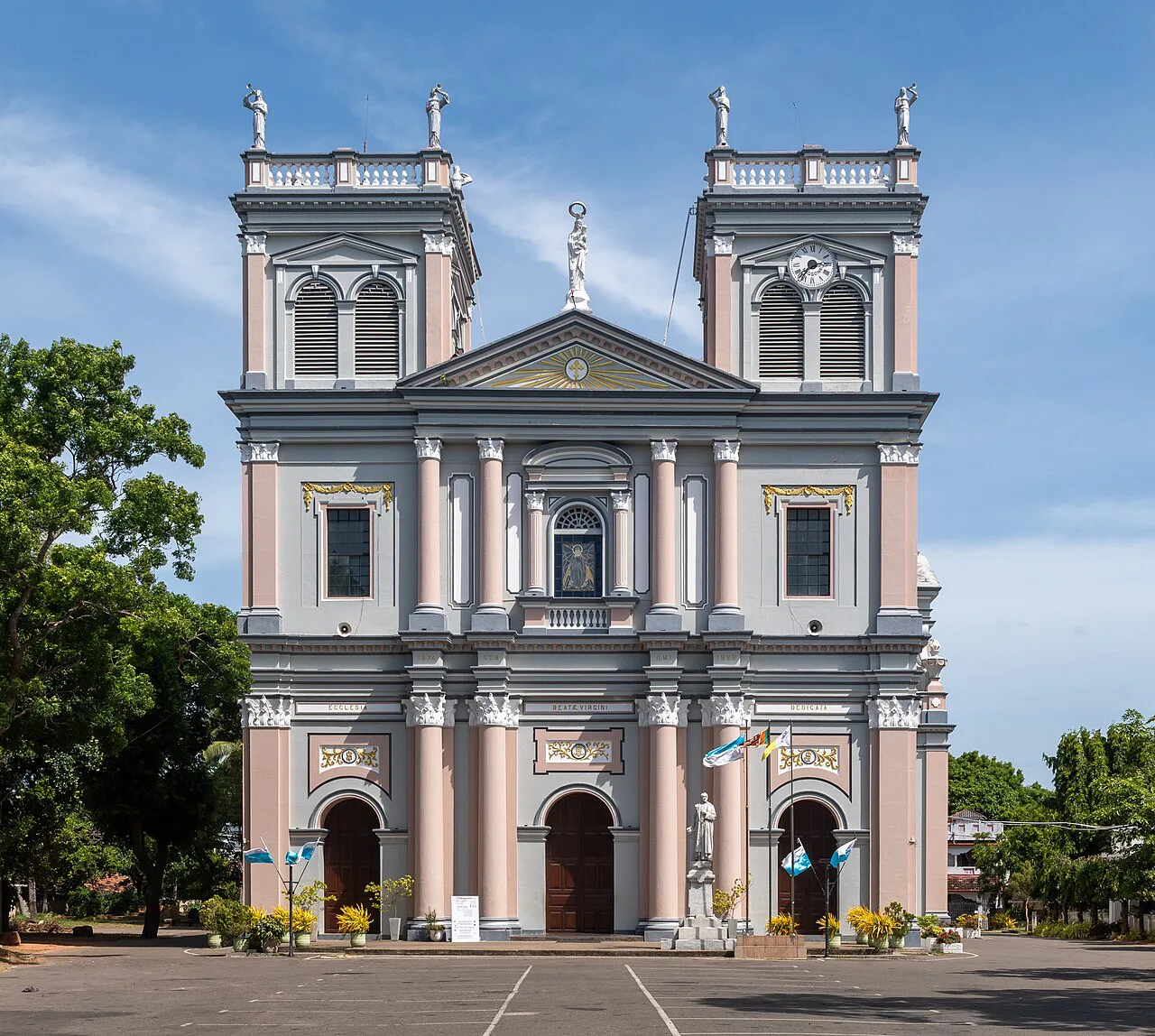
Negombo, West Coast
St Mary’s Church
One of Sri Lanka’s largest Catholic churches, its ceiling covered in scenes from the life of Christ, painted, unusually, by a local Buddhist artist.
Grand Street in central Negombo is dominated by a pale pink facade that locals will tell you, without exaggeration, is the crowning glory of the town. St Mary’s Church is the fifth church built on this site, and its scale and artistry explain why Negombo earned the nickname Little Rome in the first place.
Quick Facts
| Location | Grand Street, central Negombo |
| Construction | Began 1874, completed 1922, a 48-year project |
| Style | Neoclassical, with Gothic elements |
| Ceiling artist | N.S. Godamanne, a local Buddhist painter |
| Significance | One of the largest Catholic churches in Sri Lanka |
| Distance from airport | About 6 km from Bandaranaike International Airport |
Commonly searched as: St Mary’s Church Negombo · Negombo Little Rome church · Negombo things to do · Negombo cathedral ceiling paintings · Sri Lanka Catholic churches
The Fifth Church on the Same Ground
St Mary’s Church standing today is, according to church records, the fifth structure built on this particular site in Negombo, a detail that speaks to just how central this patch of ground has been to the town’s Catholic life since the earliest days of Portuguese missionary influence in the 16th century. Construction of the current building began in the latter part of 1874, but the project stretched across nearly five decades, not reaching completion until 1922, an unusually long build time even by the standards of grand religious architecture.
That drawn-out timeline reflects the town’s turbulent religious history. The Portuguese introduced Catholicism to Negombo after taking control in 1505, but when the Dutch seized the town in the mid-17th century, they suppressed the faith entirely, closing churches and schools and punishing anyone caught sheltering priests. It wasn’t until the British took over in 1796 that Catholic worship was formally restored, opening the door for the substantial church-building programme that eventually produced St Mary’s and earned Negombo its “Little Rome” nickname.
A Ceiling Painted by an Unlikely Hand
The church’s most celebrated feature is its ceiling, covered in alabaster-toned depictions of numerous saints and a series of scenes from the life of Christ. What makes these paintings especially notable is who created them: N.S. Godamanne, a local Buddhist artist, was commissioned to paint the Christian scenes, a detail that visitors and writers alike have highlighted as a striking example of Sri Lanka’s everyday religious pluralism, where faith communities routinely cross into and support one another’s traditions rather than remaining entirely separate.
Beyond the ceiling, the church’s neoclassical architecture features prominent columns, an imported European altar, and statuary depicting saints and angels along the upper walls, rendered in gold and red. The overall effect, height, colour, and dense religious imagery combined, has been described by more than one visitor as genuinely “thunderous.”
Visiting Etiquette
Photography is generally not permitted inside the church, including of worshippers or ceremonies, though photographing the exterior facade is fine. The church can be busy with local weddings, so timing a visit around early morning services, roughly 7 to 8 am, offers the clearest view of the interior without a scheduled event underway.
Visiting Tips
- Visit in the early morning for the quietest, most atmospheric experience of the painted ceiling.
- Respect the no-photography rule inside; save your camera for the exterior facade.
- Combine with a walk through central Negombo, since the church sits close to the town’s fish market and Dutch canal.
- Given its short distance from the airport, it’s an easy stop on arrival or before departure from Sri Lanka.
A Symbol of Negombo’s Religious Character
St Mary’s is worth understanding not just as an individual building but as the physical anchor of Negombo’s identity. A town nicknamed “Little Rome” needs a cathedral substantial enough to justify the comparison, and St Mary’s scale and near half-century construction timeline reflect just how seriously the local Catholic community took that ambition. The choice to commission a Buddhist artist for the ceiling’s Christian iconography, rather than importing European religious painters, also says something about how Sri Lankan the church’s Catholicism ultimately became, shaped by local craftsmanship and interfaith collaboration even as its architectural language remained thoroughly European.
Where It Sits on the Map
St Mary’s Church, Grand Street, Negombo Open in Google Maps ↗
Frequently Asked Questions
How long did St Mary’s Church take to build?
Construction began in 1874 and wasn’t completed until 1922, a project spanning nearly five decades.
Who painted the church’s famous ceiling?
N.S. Godamanne, a local Buddhist artist, was commissioned to paint the scenes depicting the life of Christ and various saints.
Can visitors take photos inside the church?
Photography is generally prohibited inside, though photographing the exterior facade is permitted.
Why is St Mary’s considered so significant?
It’s one of the largest Catholic churches in Sri Lanka and the centrepiece of Negombo’s identity as ‘Little Rome,’ reflecting the town’s deep Catholic heritage.
← Sri Lanka: The Complete Guide — see all 258 places by region
Related News
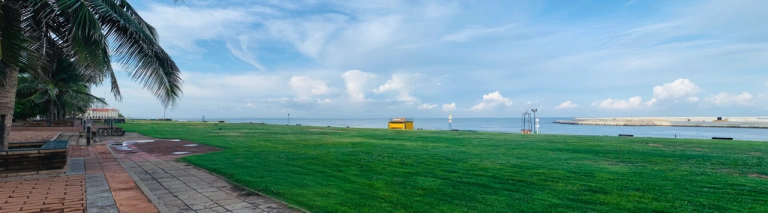
A guide to Sri Lanka's West Coast region, from Kalpitiya to Hikkaduwa: beaches, history, wildlife and travel tips.
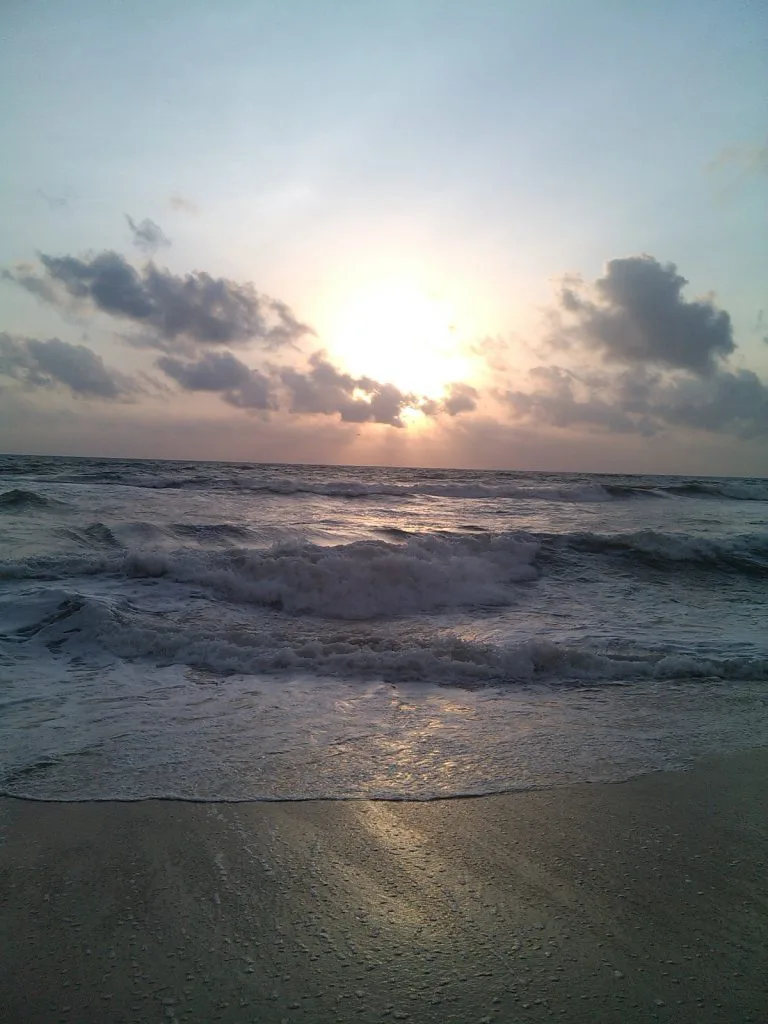
A complete guide to Negombo, Sri Lanka: history, the fish market, Dutch canal, churches, and visiting tips near the airport.

A guide to Sri Munneswaram Temple near Chilaw, Sri Lanka: history, the Ramayana legend, festivals, visiting tips and map.













