

Dsigngo is a Graphic Design and Digital Marketing Company.
Write what you are looking for and press enter to begin your search!

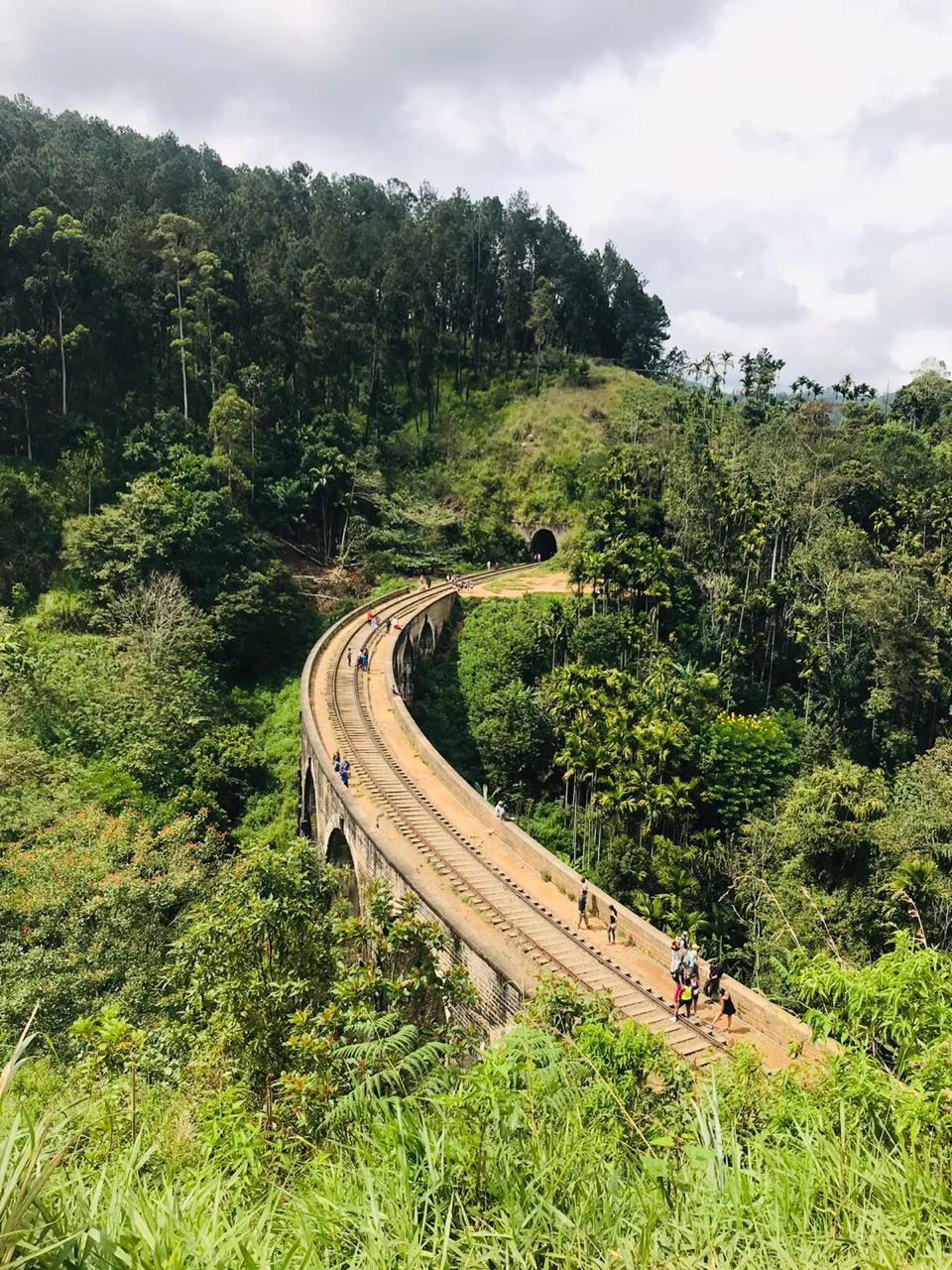
Ella, Hill Country
Nine Arch Bridge
When World War I redirected Britain’s steel supplies away from a colonial railway project, local engineers and labourers built a 91-metre viaduct entirely from stone, brick and cement instead, a structure that has now outlasted a century of trains.
Locally known as Ahas Namaye Palama, or ‘Nine Skies Bridge,’ this viaduct between Ella and Demodara stations has become one of the most photographed structures in Sri Lanka, and its fame rests as much on an engineering workaround as on its jungle-and-tea-plantation setting.
Quick Facts
| Location | Between Ella and Demodara railway stations, Uva Province |
| Sinhala name | Ahas Namaye Palama (‘Nine Skies Bridge’) |
| Dimensions | 91 metres long, 24 metres high, nine semicircular arches |
| Built | 1919 to 1921, during British colonial rule |
| Materials | Locally quarried stone, fired brick, and cement, no steel |
| Local builder credited | P.K. Appuhami, alongside engineer D.J. Wimalasurendra |
Commonly searched as: Nine Arch Bridge Ella · Ahas Namaye Palama · Ella train bridge · Sri Lanka colonial railway · things to do in Ella
A Bridge Built From a Wartime Shortage
Construction on the bridge began around 1917 as part of the British colonial railway’s expansion through the Hill Country, connecting Ella and Demodara stations across a steep jungle ravine. The original plan called for a conventional steel structure, standard for large railway viaducts of the era, but World War I intervened: steel supplies destined for the bridge were redirected to the war effort in Europe, leaving the project stalled partway through. Rather than wait indefinitely for materials that might never arrive, engineers and local labourers turned to what was actually available nearby, locally quarried stone, handmade fire-burnt bricks, and cement, building the entire 91-metre span across nine semicircular arches without a single structural steel beam.
Local tradition credits a Sri Lankan builder named P.K. Appuhami with much of the practical problem-solving that got construction moving again once the marshy, uneven ground beneath the bridge made simple stonework difficult, alongside engineer D.J. Wimalasurendra, who is often cited for pioneering the all-masonry solution more broadly. One frequently repeated (though difficult to verify) legend holds that Appuhami personally lay beneath the finished bridge as the first train crossed it, a dramatic act of confidence in his own work. The bridge was completed in 1921, and stands 24 metres above the valley floor, its stone and brick construction proving durable enough to carry rail traffic for well over a century since.
Watching the Trains
The bridge’s ongoing appeal rests heavily on timing: several trains cross it daily on the Kandy-to-Badulla line, and photographers and casual visitors alike gather beforehand to catch a train threading through the nine arches against a backdrop of tea plantations and jungle. Early morning, roughly 6:30 to 9 am, offers soft side-light and a chance of lingering valley mist, while the period from around 3:30 pm until dusk brings warmer, golden tones that contrast well against the brick.
Getting There and Staying Safe
The bridge sits an easy 30-minute walk from central Ella, either along the railway tracks themselves or via a marked path, with tuk-tuks also available for those preferring not to walk. There are no safety barriers on or around the bridge, so visitors should stay well clear of the tracks whenever a train is due, and always check current schedules locally rather than assuming fixed times.
Visiting Tips
- Check the current train schedule locally before setting out, to time your visit around an actual crossing.
- Visit in early morning or late afternoon for the most flattering light on the brick and stone arches.
- Combine with a walk to nearby Ravana Falls or a hike up Little Adam’s Peak for a fuller day around Ella.
- Exercise real caution around the tracks; there are no barriers, and trains use this stretch of line multiple times daily.
An Accidental Monument to Local Craftsmanship
What makes the Nine Arch Bridge more than just a scenic backdrop is what its construction actually represents. A project designed and initially engineered under British colonial administration ended up being completed almost entirely through the resourcefulness, skill and physical labour of Sri Lankan workers and builders, once the original plan fell apart. That inversion, colonial infrastructure ultimately built on local terms, using local materials and local ingenuity, gives the bridge a layer of significance well beyond its undeniable photogenic appeal. More than a century later, it remains structurally sound enough to carry modern rail traffic daily, a fact that speaks for itself about the quality of the improvised solution that saved the project when steel simply wasn’t available.
Where It Sits on the Map
Nine Arch Bridge, between Ella and Demodara stations Open in Google Maps ↗
Frequently Asked Questions
Why was the Nine Arch Bridge built without steel?
World War I disrupted steel shipments intended for the bridge, forcing engineers and local labourers to build the entire structure from locally quarried stone, brick and cement instead.
When was the bridge completed?
In 1921, after construction began around 1917 and was delayed by the wartime materials shortage.
What does ‘Ahas Namaye Palama’ mean?
It translates to ‘Nine Skies Bridge’ in Sinhala, a reference to the way the sky is visible through each of the bridge’s nine arches when viewed from below.
How do I best see a train cross the bridge?
Check the current Kandy-to-Badulla train schedule locally, and arrive at either the early morning or late afternoon light windows for the best photography conditions.
← Sri Lanka: The Complete Guide — see all 258 places by region
Related News
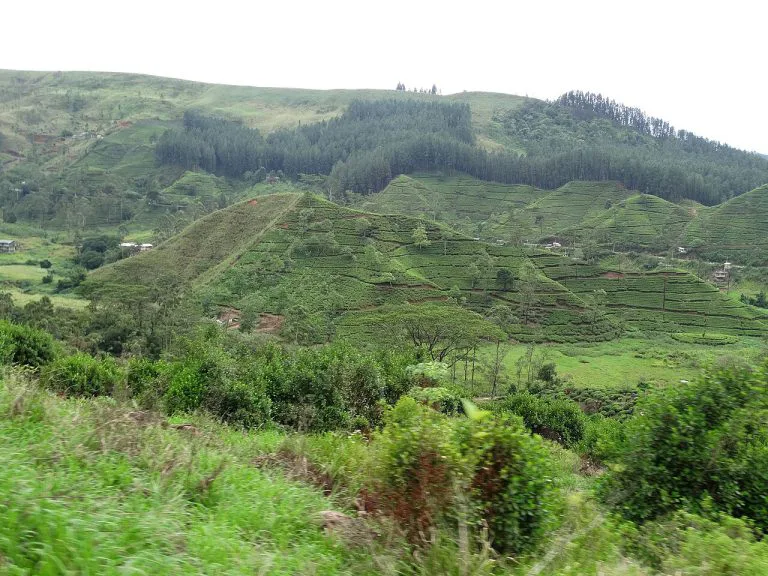
A guide to Sri Lanka's Hill Country: Kandy, tea plantations, Ella, Adam's Peak, Horton Plains, and travel tips.
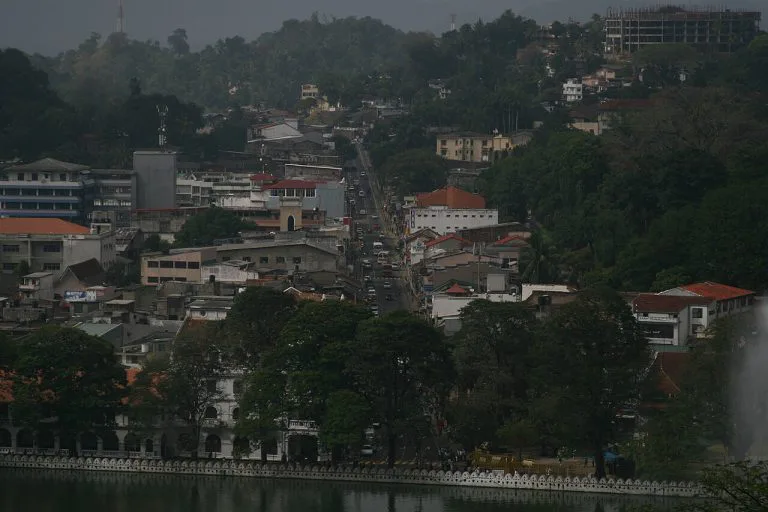
A complete guide to Kandy: the last Sinhalese kingdom's fall in 1815, the Temple of the Tooth, Kandy Lake, and visiting tips.
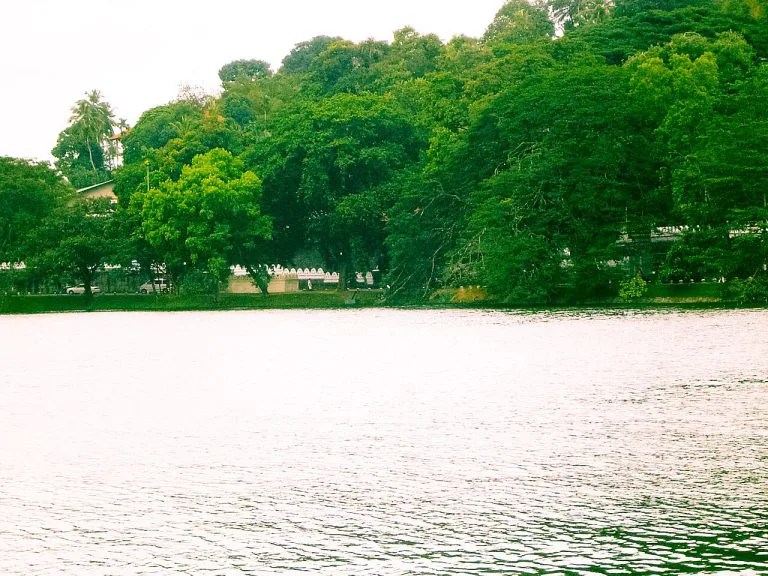
A guide to Kandy Lake, built by the last king of Kandy in 1807: its dark construction history, the island retreat, walking the shore, and...













