

Dsigngo is a Graphic Design and Digital Marketing Company.
Write what you are looking for and press enter to begin your search!

Koggala, The South
Martin Wickramasinghe Museum
The childhood home of the father of modern Sinhala literature, saved from a wartime air base and turned into a folk museum documenting the rural life that shaped his writing.
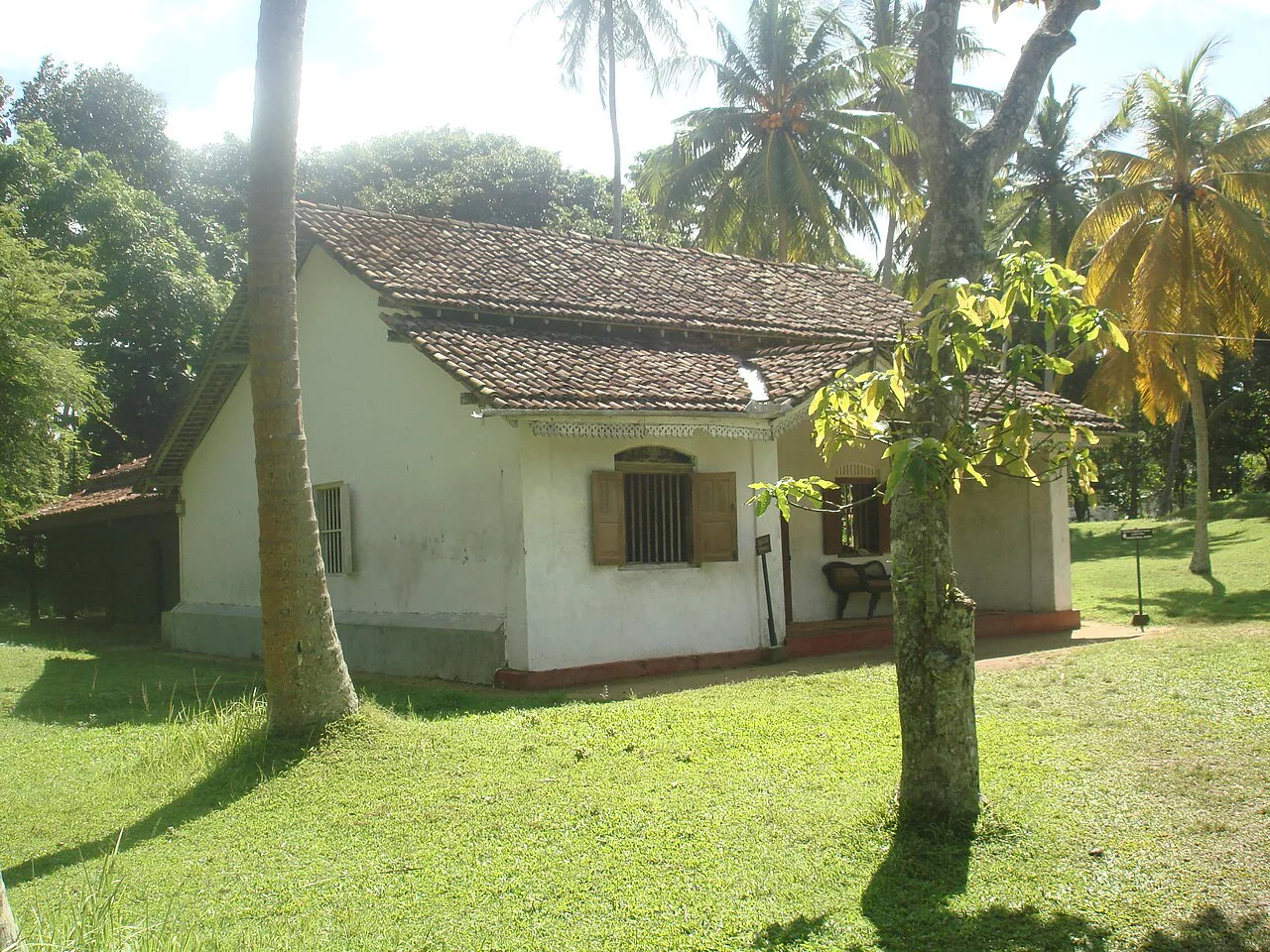
Martin Wickramasinghe’s childhood home nearly didn’t survive to become a museum at all. In 1941, the entire village of Koggala, including his family house, was razed to make way for a wartime Royal Air Force base, and only his ancestral home, spared by chance, remained standing to tell the story of the rural world that shaped Sri Lanka’s most influential modern writer.
Quick Facts
| Location | Koggala, near Galle, Southern Province |
| Subject | Martin Wickramasinghe (1890 to 1976), father of modern Sinhala literature |
| Museum established | 1981, by the Martin Wickramasinghe Trust (founded 1976) |
| House age | Over 200 years old, returned to Wickramasinghe in 1962 |
| National Heritage status | Since 2000 |
| Notable exhibits | Folk tools, Kolam masks, puppets, traditional costumes, the author’s personal effects |
Commonly searched as: Martin Wickramasinghe Museum · Koggala folk museum · Sinhala literature museum · things to do near Galle · Sri Lanka author museum
A House That Survived a War
Lama Hewage Don Martin Wickramasinghe was born on 29 May 1890 in the village of Malagama, part of the wider Koggala area, in a house set between a coastal reef and a mangrove-fringed lagoon dotted with small islands, a landscape that would later populate his most celebrated fiction. He spent his childhood exploring that lagoon and its islands before eventually settling in Colombo as an adult, working as a journalist and going on to become widely regarded as the father of modern Sinhala literature.
In 1941, as the Second World War reached the Indian Ocean, the British established RAF Koggala on land taken from the village, and virtually the entire settlement, including most of Wickramasinghe’s childhood surroundings, was demolished to make way for the airbase. His ancestral home survived, one of the only structures from the old village left standing, and it was formally returned to him in 1962 under the government of Prime Minister Sirimavo Bandaranaike. It had long been Wickramasinghe’s hope that the property could eventually house a folk museum and library, a wish realised only after his death in 1976, when the newly established Martin Wickramasinghe Trust began collecting folk art and artefacts, opening the museum to the public in 1981.
A Writer Who Reshaped Sinhala Literature
Wickramasinghe’s influence on Sri Lankan literary and intellectual life extended well beyond fiction. His clear, accessible writing style tackled subjects ranging from anthropology and linguistics to philosophy, Buddhism, and evolutionary biology, and his groundbreaking 1934 book “Sathva Santhathiya” introduced Darwinian evolutionary theory to Sinhala readers at a time when the concept remained novel even in much of the academic world. His novels, drawing heavily on the rural, coastal world of his Koggala childhood, were eventually translated into multiple languages, extending his reach well beyond Sri Lanka.
What’s Inside the Museum
The complex combines Wickramasinghe’s preserved ancestral home, over 200 years old, with a dedicated folk museum documenting the rural southern Sri Lankan life he wrote about so vividly. Visitors move through interconnected rooms organised by theme: traditional fishing tools, agricultural implements, brass and jewellery-making crafts, colonial-era crockery, antique kitchen utensils, and a particularly popular section featuring mannequins dressed in period clothing spanning different historical eras. A dedicated collection of Kolam masks and traditional puppets showcases performing arts traditions from the region, while larger exhibits too big for indoor display, mostly traditional boats reflecting Koggala’s coastal identity, are shown in an open-air area at the end of the tour.
The Author’s Resting Place
The museum grounds also serve as the final resting place of Wickramasinghe, his wife, and other family members, adding a personal, memorial quality to a visit beyond the folk exhibits themselves. A seven-acre garden surrounding the complex, planted with numerous native tree and shrub species, is considered as much a part of the experience as the museum interior, offering a genuinely peaceful setting that echoes the natural world Wickramasinghe grew up exploring.
Visiting Tips
- Photography is generally not permitted inside the main house, though it’s allowed in the surrounding grounds; check current rules on arrival.
- A small on-site bookshop sells Wickramasinghe’s works, a good starting point if you’re new to his writing.
- Combine with a visit to Koggala’s beach and lagoon, the very landscape that inspired much of his fiction.
- Entry fees are modest for locals and higher for foreign visitors; budget accordingly.
Where It Sits on the Map
Martin Wickramasinghe Folk Museum, Koggala, Southern Province Open in Google Maps ↗
Frequently Asked Questions
Who was Martin Wickramasinghe?
A Sri Lankan writer (1890 to 1976) widely regarded as the father of modern Sinhala literature, whose work also covered philosophy, anthropology, Buddhism and evolutionary biology.
Why is the museum’s house significant?
It’s one of the only structures to survive the 1941 demolition of Koggala village for a wartime RAF air base, and was returned to Wickramasinghe in 1962.
When was the museum established?
In 1981, by the Martin Wickramasinghe Trust, founded in 1976 following the author’s death.
What can visitors see there?
Traditional folk tools, Kolam masks and puppets, period costumes, colonial-era household items, and Wickramasinghe’s personal effects and preserved childhood home.
← Sri Lanka: The Complete Guide — see all 258 places by region
Related News
A guide to Southern Sri Lanka, from Galle to Kataragama: beaches, wildlife safaris, colonial forts, and travel tips.

A complete guide to Galle Fort: history from Ptolemy to the Dutch, walking the ramparts, top sights, and visiting tips.
A guide to the Dutch Reformed Church in Galle Fort: the story behind its 1755 completion, the tombstone floor, visiting tips and map.













