

Dsigngo is a Graphic Design and Digital Marketing Company.
Write what you are looking for and press enter to begin your search!

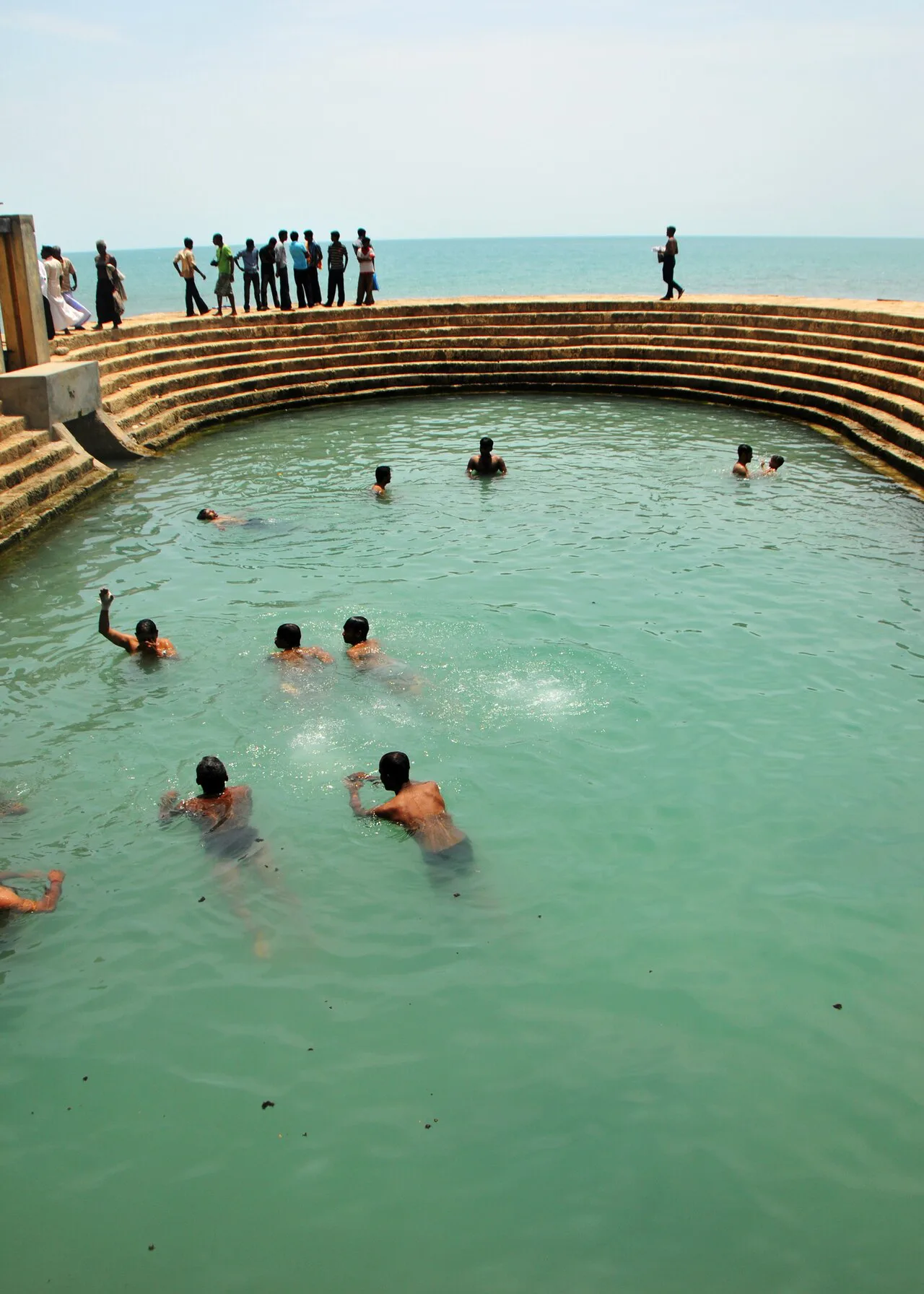
Near Jaffna, Jaffna Peninsula
Keerimalai Springs
A Pandyan princess afflicted with a horse-shaped face is said to have crossed the sea specifically to bathe here, and according to legend, emerged cured, founding a temple in gratitude that still stands nearby today.
Keerimalai’s name carries its own small legend before you even reach the water: it references Nagula Muni, an ancient sage so thin from ascetic austerities that he was likened to a mongoose, or ‘kiri’ in Tamil, giving the springs their lasting name.
Quick Facts
| Location | Kankesanthurai, about 17 km north of Jaffna city |
| Name origin | From Nagula Muni, a sage compared to a mongoose (‘kiri’) |
| Adjacent temple | Naguleswaram Kovil, one of the five Pancha Ishwarams of Shiva |
| Legendary healing | A Pandyan/Chola princess cured of facial disfigurement by bathing here |
| Bathing facilities | Separate stepped pools for men and women |
| Mineral properties | Scientific studies link the water’s high mineral content to its reputed curative effects |
Commonly searched as: Keerimalai Springs · Keerimalai Jaffna · Naguleswaram Kovil · Maviddapuram temple legend · things to do in Jaffna
A Sage, a Mongoose, and a Sacred Spring
Keerimalai’s name is rooted in the story of Nagula Muni, an ascetic sage said to have found a nearby cave suited to meditation, positioned so precisely that he could face the rising and setting sun with equal ease and observe both solstices directly overhead. His prolonged austerities left him so gaunt that he was likened to a “kiri,” a mongoose, giving the surrounding hill, and eventually the springs themselves, their lasting name.
The site’s fame grew considerably through a separate, later legend involving a princess, most tellings identify her as Maruthapura Veeravalli, daughter of a Pandyan or Chola king, though sources vary on the exact date, some placing the story as early as the 7th century, others as late as 785 CE, who suffered from a persistent digestive disorder alongside a facial disfigurement described in most versions as giving her features a horse-like appearance. Advised by a sage to bathe in the freshwater spring at Keerimalai, she did so and, according to the legend, emerged fully cured of both ailments. In gratitude, she commissioned the nearby Maviddapuram Kandaswamy Temple, whose very name is said to translate to “the place where the horse-face was left behind,” and later married King Ukkira Singhan at the springs themselves.
Faith and Science, Side by Side
Beyond the legend, Keerimalai’s reputed healing properties have drawn genuine scientific attention: irrigation studies examining the spring’s high mineral content have suggested a plausible link between the water’s chemical composition and its long-reported curative reputation, offering a rare case where local legend and measurable natural science point in roughly the same direction, even if the full scientific explanation remains incomplete.
Naguleswaram Kovil
Immediately adjacent to the springs stands Naguleswaram Kovil, also known historically as Thirutambaleswaram Kovil, one of only five Pancha Ishwarams, ancient shoreline temples dedicated to Shiva positioned around Sri Lanka’s coastline, and the only one situated on the Jaffna Peninsula itself. Like so many of the region’s Hindu temples, it suffered destruction during the Portuguese colonial era and further damage during Sri Lanka’s civil conflict, but has been continually rebuilt by devoted followers, its soaring, vibrantly painted gopuram now standing as a genuine symbol of spiritual endurance.
Visiting Tips
- Visit both the springs and the adjacent Naguleswaram Kovil together, given their close physical and legendary connection.
- Note the separate bathing pools for men and women; women should bathe modestly, and changing rooms are available on-site.
- Reach the springs via minibus from Jaffna or a three-wheeler from Tellippalai bus stand.
- Combine with a visit to Maviddapuram Kandaswamy Temple, a short distance away, to complete the full legend’s geography.
Where It Sits on the Map
Keerimalai Springs, Kankesanthurai, Jaffna Peninsula Open in Google Maps ↗
Frequently Asked Questions
Where does the name Keerimalai come from?
From Nagula Muni, an ascetic sage so thin from his austerities that he was compared to a ‘kiri,’ or mongoose.
What is the legend of the healed princess?
A princess afflicted with a digestive disorder and a horse-like facial disfigurement is said to have been cured by bathing in the springs, later building the nearby Maviddapuram Kandaswamy Temple in gratitude.
What temple sits next to the springs?
Naguleswaram Kovil, one of only five Pancha Ishwarams, ancient Shiva temples positioned around Sri Lanka’s coastline, and the only one on the Jaffna Peninsula.
Is there scientific basis for the springs’ healing reputation?
Studies of the water’s mineral content have suggested plausible links to its reported curative properties, though the full scientific explanation isn’t definitively established.
← Sri Lanka: The Complete Guide — see all 258 places by region
Related News
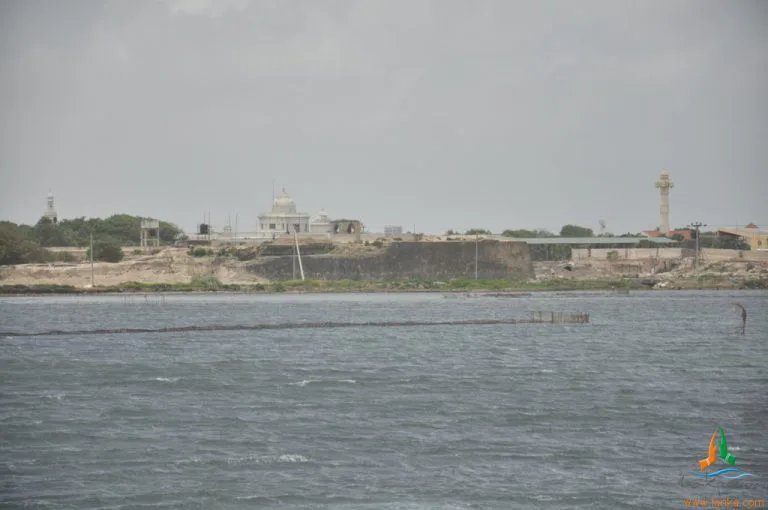
A guide to Jaffna and Sri Lanka's Northern Province: a four-century Tamil kingdom, colonial layers, post-war recovery, visiting tips and map.
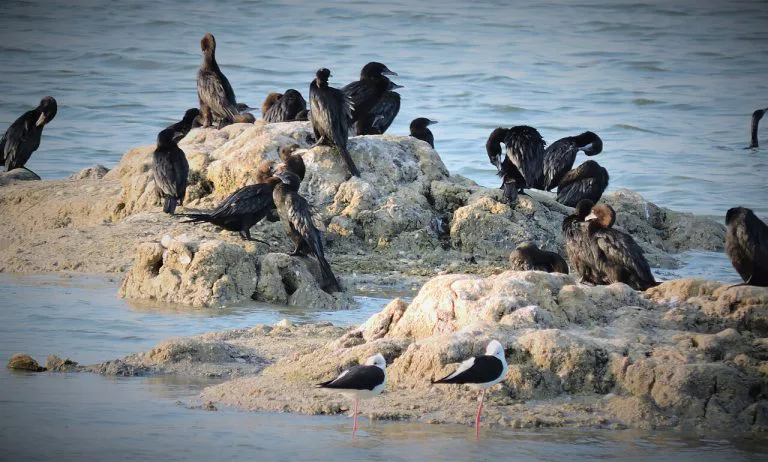
A guide to the Jaffna Peninsula: its temples, ancient sites, beaches and colonial heritage, spanning Jaffna city and its surrounding villages.
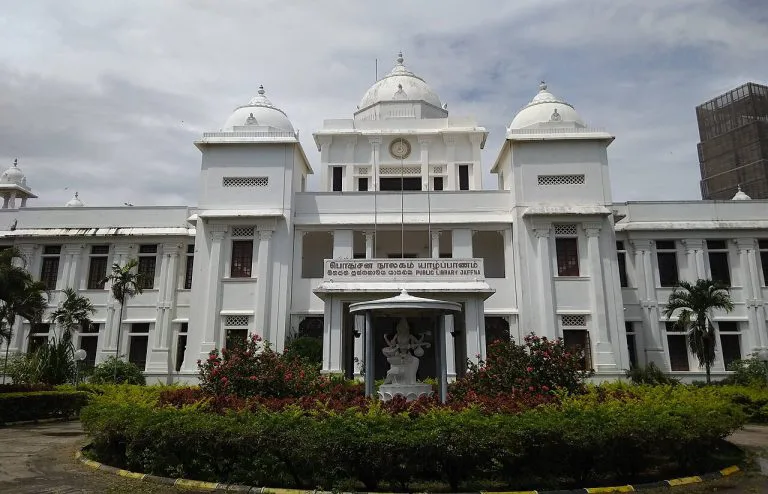
A guide to Jaffna city: capital of a 400-year Tamil kingdom, its library's destruction and rebirth, post-war recovery, visiting tips and map.













