

Dsigngo is a Graphic Design and Digital Marketing Company.
Write what you are looking for and press enter to begin your search!

Beruwala, West Coast
Kechimalai Mosque
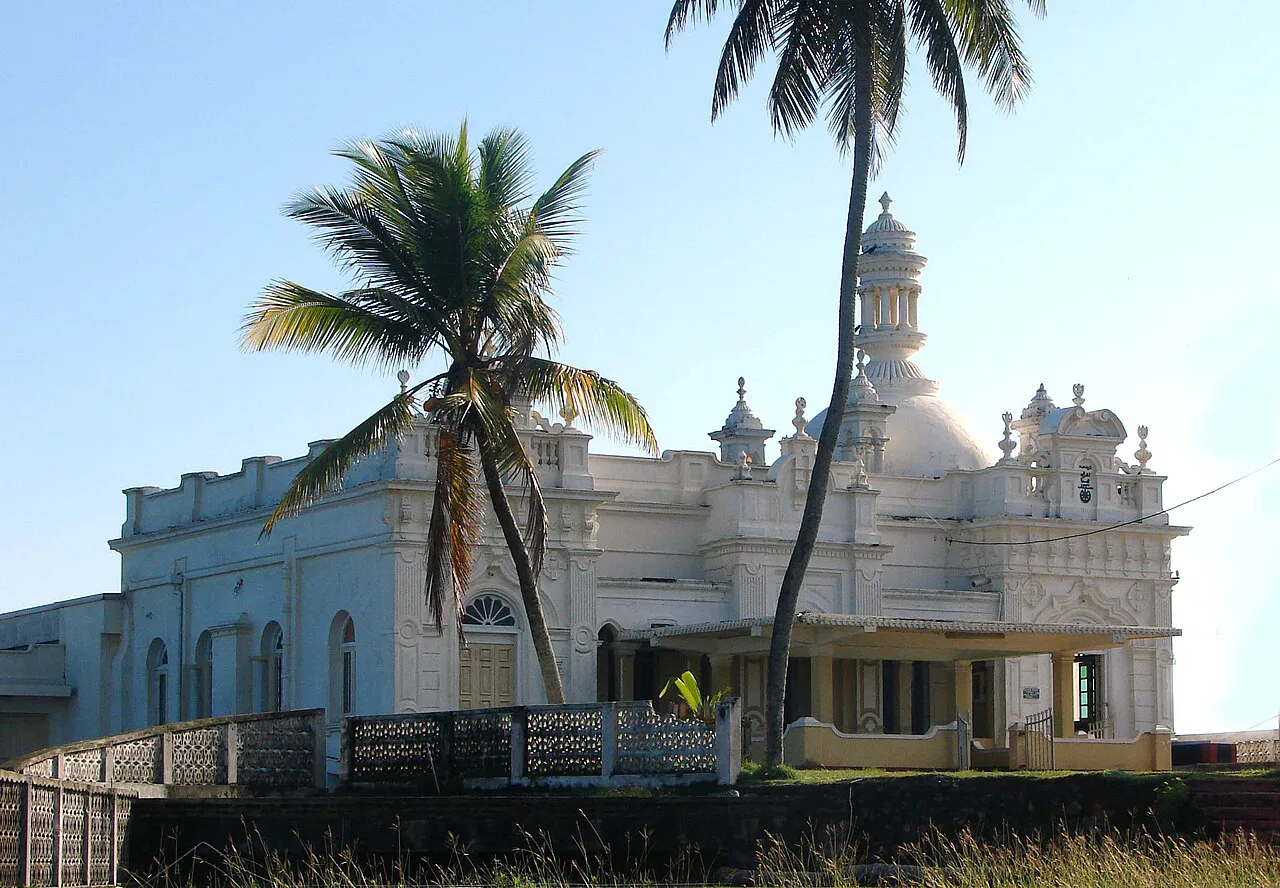
A whitewashed mosque on a headland above Beruwala’s harbour, marking the legendary spot where Arab Muslim traders first set foot in Sri Lanka over a thousand years ago.
Standing white and solitary on a rocky headland above Beruwala’s colourful fishing harbour, Kechimalai Mosque marks a spot local tradition holds sacred: the place where Arab Muslim traders are said to have first landed on Sri Lankan soil, planting the roots of a community that has called the island home for well over a thousand years.
Quick Facts
| Location | Headland overlooking Beruwala harbour |
| Also known as | Ketchimalai Dargah, Ketchchimalai Mosque |
| Legendary landing date | 1024 CE, though Arab trading links date back further |
| Current building | Constructed 1911, on a much older sacred site |
| Associated shrine | Tomb of Sheikh Ashraff Waliullah, a revered Islamic figure |
| Architecture | Arabic-influenced, with a domed minaret featuring a crescent and star |
Commonly searched as: Kechimalai Mosque · Ketchchimalai Mosque Beruwala · Sri Lanka oldest mosque · Beruwala Muslim heritage · things to do in Beruwala
A Legendary Landing
According to local tradition, Kechimalai marks the exact spot where Arab Muslim traders first landed on Sri Lankan soil, most commonly dated to 1024 CE, though broader historical accounts suggest Arab merchants were already trading along this coast from as early as the 8th century CE. One version of the founding legend describes a vessel coming ashore in the 12th century carrying seven members of a royal family from Hadramaut in Yemen, Sultan Ashraff Waliullah, his five brothers, and a sister, whose arrival is remembered as a formative moment in the community’s history. Waliullah’s tomb, considered a shrine by many worshippers, sits just outside the mosque, with a third grave inside, giving the site the character of a dargah, a shrine built around a revered religious figure, as much as an ordinary mosque.
The mosque’s hilltop position wasn’t accidental. Sitting prominently above the harbour, visible from the sea, it functioned historically as a landmark for sailors approaching the coast, much like other elevated religious structures found at strategic points along Sri Lanka’s shoreline.
An Old Site, A Newer Building
While the site’s religious significance stretches back centuries, the mosque structure visitors see today dates specifically to 1911, a relatively recent construction built atop ground considered sacred for far longer. Its architecture blends Arabic design elements with local building traditions: whitewashed walls, an unusual domed minaret topped with a crescent and star, an ornate arched exterior, and curving gables reminiscent of Dutch colonial influence, a detail reflecting the broader mix of architectural styles that shaped coastal Sri Lanka over successive waves of foreign contact.
Nearby stands the older Al Abrar Mosque, purportedly dating to as early as 920 CE and sometimes cited as Sri Lanka’s very first mosque, built by Arab merchants trading in spices, ginger and steel en route to China. Some worshippers direct their prayers there specifically because of its greater antiquity, treating the two mosques as complementary parts of the same historic religious landscape rather than competitors.
What Visitors Notice
Beyond its religious significance, Kechimalai draws visitors simply for its setting: panoramic views over Beruwala‘s fishing harbour and its cluster of colourful boats, framed by coconut palms along the headland. The mosque is often busiest on weekends, when local Muslim families visit in numbers, and the surrounding area includes an orphanage that some visitors have described as a genuinely moving addition to a mosque tour.
Visiting Tips
- Dress modestly, covering shoulders and knees, and remove shoes before entering.
- Expect larger crowds on weekends, when local family visits are most common.
- Combine with a walk down to the harbour below for views of the fishing boats and daily catch activity.
- Consider a respectful contribution to the mosque or adjoining orphanage if visiting as a guest.
A Site That Predates Sri Lanka’s Modern Religious Map
It’s worth appreciating how much older Kechimalai’s story is than the political and religious boundaries most visitors associate with Sri Lanka today. Long before European colonial powers introduced Catholicism and Protestant Christianity to the island’s coastline, and centuries before the more recent religious tensions that have occasionally strained relations between Sri Lanka’s communities, Arab Muslim traders had already peacefully established themselves at Beruwala, integrating into local life through commerce rather than conquest. Kechimalai stands as one of the clearest physical reminders that Sri Lanka’s religious diversity isn’t a recent phenomenon, it’s a genuinely ancient feature of the island’s history, with roots stretching back well over a millennium to this exact headland above the sea.
Where It Sits on the Map
Kechimalai Mosque, headland above Beruwala harbour Open in Google Maps ↗
Frequently Asked Questions
Why is Kechimalai Mosque significant?
Local tradition holds it as the site where Arab Muslim traders first landed in Sri Lanka, most commonly dated to 1024 CE, making it one of the earliest points of Muslim settlement on the island.
Who is Sheikh Ashraff Waliullah?
A revered Islamic figure whose tomb sits at the site, associated with a founding legend involving a royal family from Hadramaut, Yemen, arriving by ship.
When was the current mosque building constructed?
In 1911, though the site itself is considered sacred and historically significant for centuries longer.
Is there an older mosque nearby?
Yes, the Al Abrar Mosque nearby is sometimes cited as dating to 920 CE, making it one of the oldest, if not the oldest, mosques in Sri Lanka.
← Sri Lanka: The Complete Guide — see all 258 places by region
Related News
A guide to Sri Lanka's West Coast region, from Kalpitiya to Hikkaduwa: beaches, history, wildlife and travel tips.
A complete guide to Negombo, Sri Lanka: history, the fish market, Dutch canal, churches, and visiting tips near the airport.

A guide to Sri Munneswaram Temple near Chilaw, Sri Lanka: history, the Ramayana legend, festivals, visiting tips and map.













