

Dsigngo is a Graphic Design and Digital Marketing Company.
Write what you are looking for and press enter to begin your search!

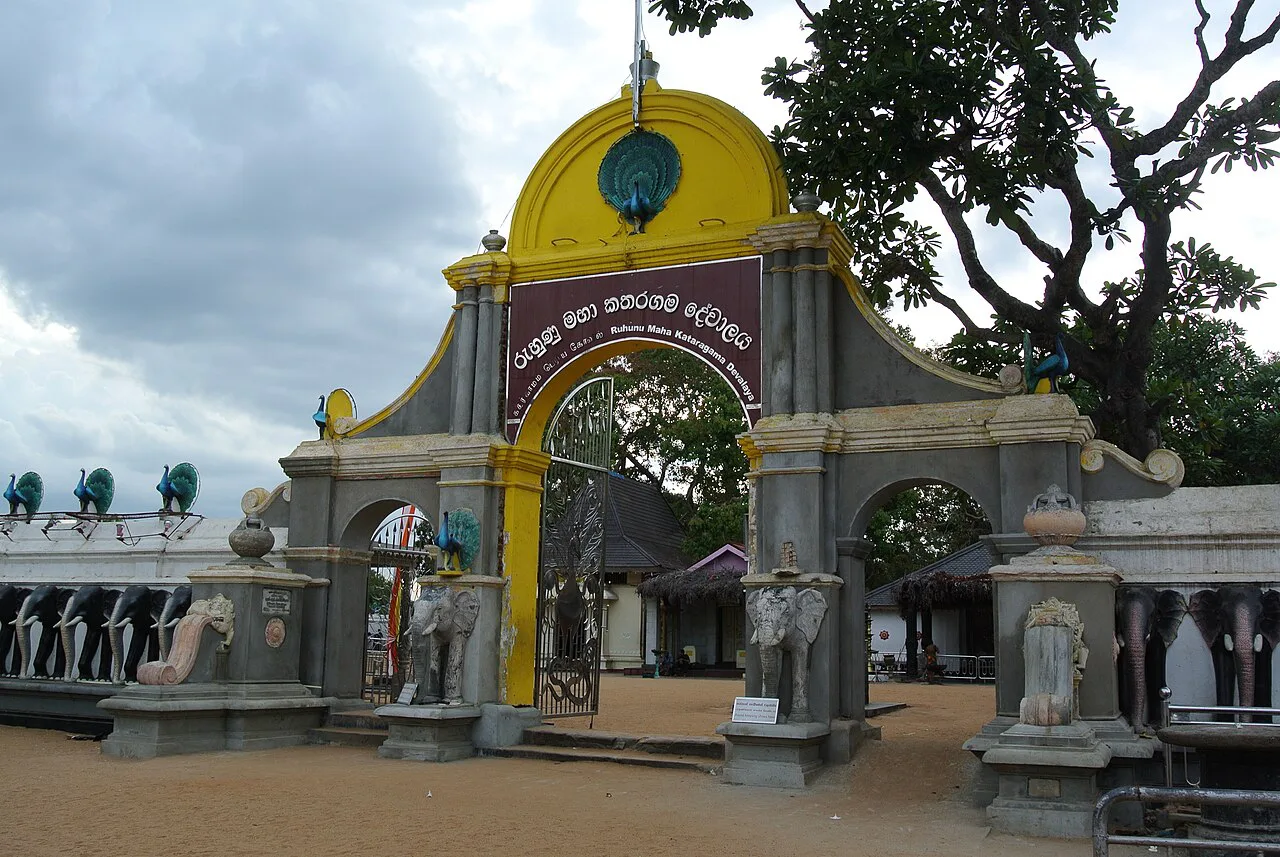
Kataragama, The South
Kataragama Museum
A small archaeological museum near the sacred precinct, holding artefacts, inscriptions and historical material documenting Kataragama’s role as a pilgrimage centre across more than two millennia.
Tucked near the busier temple precinct, Kataragama’s archaeological museum offers a quieter, more academic counterpoint to the devotional intensity outside. For visitors curious about the historical layers behind the town’s living religious practice, it’s a worthwhile stop before or after visiting the shrines themselves.
Quick Facts
| Location | Near the Kataragama temple precinct, Hambantota District |
| Run by | Sri Lanka’s Department of Archaeology |
| Collection focus | Archaeological finds, inscriptions and historical artefacts from the Kataragama area |
| Typical visit length | 30 to 45 minutes |
| Best paired with | The Maha Devale and Kiri Vehera nearby |
Commonly searched as: Kataragama Museum · Kataragama archaeology · Kataragama history exhibits · things to do in Kataragama · Sri Lanka pilgrimage town museums
Documenting a Site Older Than Its Legends
Much of what’s known about Kataragama‘s ancient history comes from a combination of religious chronicle, oral tradition and legend, since written records from the earliest centuries of the site’s use are sparse. The Kataragama Museum exists to fill in some of that gap with physical evidence: archaeological finds, inscriptions, and historical artefacts recovered from in and around the sacred precinct, offering visitors a more grounded, evidence-based counterpart to the devotional stories told at the temples themselves.
Given Kataragama’s status as one of the Solosmasthana, the sixteen most sacred Buddhist pilgrimage sites in Sri Lanka, and simultaneously one of the island’s most important Hindu shrines, the museum’s collection reflects that layered religious history rather than focusing on a single tradition.
What to Expect
Exhibits typically include stone inscriptions documenting historical royal patronage of the site, ritual objects connected to the temple’s long history, and interpretive material explaining the archaeological and historical context behind Kataragama’s development from an early settlement into a major multi-faith pilgrimage centre. The museum’s modest scale means a visit doesn’t take long, but it rewards visitors who want context before or after experiencing the more sensory, devotional atmosphere of the Maha Devale and surrounding shrines.
Given the layered history involved, artefacts here can touch on Buddhist, Hindu, and earlier pre-Buddhist religious practice associated with the site, since Kataragama’s sacred status appears to predate the arrival of both major traditions in their current form. That breadth makes the collection a useful anchor point for understanding how a single location can accumulate meaning across multiple religious eras without any one tradition fully displacing what came before it.
Why Visit
For most travellers, Kataragama’s appeal is primarily experiential, the rituals, the crowds, the sense of shared devotion across faiths. The museum offers a useful complement to that experience, helping visitors understand how the town’s various religious traditions developed and intersected over more than two thousand years, information that isn’t always easy to piece together simply by observing worship in progress.
Visiting Tips
- Visit before exploring the temple precinct for useful historical context, or after for a quieter reflection on what you’ve just seen.
- Check current opening hours locally, as smaller regional museums can have variable schedules.
- Combine with the Maha Devale and Kiri Vehera, both within easy walking distance.
- A modest entry fee typically applies; exact rates are best confirmed on arrival.
Filling in the Gaps Between Legend and Record
Much of Kataragama’s story, as told at the temples themselves, comes down through religious chronicle and oral tradition rather than contemporaneous written record, a common pattern for sites whose sacred significance predates reliable historical documentation by many centuries. The museum’s role is to bridge that gap wherever physical evidence allows, giving visitors something more concrete to stand alongside the legends of Prince Vijaya’s followers, King Dutugemunu’s shrine-building, and the Buddha’s own visits. That combination, devotional legend experienced firsthand at the temples, and physical evidence examined at the museum, gives visitors two genuinely different but complementary ways of understanding why this particular town has drawn pilgrims continuously for well over two thousand years.
For travellers with a genuine interest in South Asian religious archaeology, the museum’s modest collection also raises broader questions worth sitting with: how much of what pilgrims believe about a site like Kataragama rests on continuous oral tradition passed down largely unchanged, and how much has been reshaped over the centuries as different communities added their own layers of meaning to the same physical location. The museum doesn’t necessarily answer those questions definitively, but it gives visitors the raw material to start asking them.
Where It Sits on the Map
Kataragama Museum, near the temple precinct, Hambantota District Open in Google Maps ↗
Frequently Asked Questions
What does the Kataragama Museum focus on?
Archaeological finds, inscriptions and historical artefacts documenting the town’s development as a multi-faith pilgrimage centre over more than two thousand years.
Who manages the museum?
Sri Lanka’s Department of Archaeology.
How long does a visit take?
Around 30 to 45 minutes, given its modest scale.
Is it worth visiting alongside the temples?
Yes, it provides useful historical context that complements the devotional experience of visiting the Maha Devale and Kiri Vehera.
← Sri Lanka: The Complete Guide — see all 258 places by region
Related News
A guide to Southern Sri Lanka, from Galle to Kataragama: beaches, wildlife safaris, colonial forts, and travel tips.

A complete guide to Galle Fort: history from Ptolemy to the Dutch, walking the ramparts, top sights, and visiting tips.
A guide to the Dutch Reformed Church in Galle Fort: the story behind its 1755 completion, the tombstone floor, visiting tips and map.













