

Dsigngo is a Graphic Design and Digital Marketing Company.
Write what you are looking for and press enter to begin your search!

Vavuniya, The North
Grand Jummah Mosque
While most Sri Lankan mosques favour plain white exteriors, this one stands out deliberately, its aqua-tinted tiles and golden onion domes rising above one of Vavuniya’s busiest streets.
Most Sri Lankan mosques favour a fairly consistent white exterior, making the Grand Jummah Mosque in Vavuniya an immediate visual outlier, its aqua-tinted tiles and golden onion-shaped domes giving the building a genuinely distinctive presence in the middle of one of the town’s busiest streets.
Quick Facts
| Location | Central Vavuniya, near Kathiresu Highway |
| Architectural style | Golden onion-shaped domes with aqua-tinted exterior tiling |
| Function | Active place of worship, hosting regular Friday (Jummah) prayers |
| Community role | Cultural centre and community hub for social and educational gatherings |
| Symbolism | Reflects Vavuniya’s religious diversity alongside its Hindu, Buddhist and Christian communities |
| Nearby sight | Vavuniya Archaeological Museum, within easy reach |
Commonly searched as: Grand Jummah Mosque Vavuniya · Vavuniya mosque · Vavuniya religious sites · things to do in Vavuniya · Northern Province mosques
A Mosque That Stands Out on Purpose
The Grand Jummah Mosque’s most immediately striking feature is its colour palette, aqua-tinted tiles wrapping the exterior walls, a deliberate departure from the plain white finish typical of most Sri Lankan mosques. That distinctive turquoise, paired with golden, onion-shaped domes rising prominently over the surrounding streetscape, has made the mosque one of Vavuniya‘s most visually recognisable landmarks, admired as much for its architectural boldness as for its religious significance.
Located near the busy Kathiresu Highway in the heart of town, the mosque’s design incorporates elements some observers describe as genuinely contemporary within the broader tradition of Islamic architecture in Sri Lanka, a building meant to be noticed rather than blend quietly into its surroundings.
More Than a Place of Prayer
Beyond its role hosting regular Jummah (Friday) prayers and religious observances, the Grand Jummah Mosque functions as a genuine cultural centre and community hub for Vavuniya’s Muslim population, providing space for social gatherings and educational programmes that extend well beyond purely religious activity. That broader community function reflects the mosque’s aim of fostering unity within the town’s genuinely diverse population, a symbol of religious pluralism in a town where Hindu kovils, Buddhist temples, churches and mosques all share the same compact urban space.
That shared urban space is worth appreciating on its own terms: rather than existing in separate districts or quarters, Vavuniya’s diverse places of worship sit within easy walking distance of one another, a physical layout that reflects generations of genuinely intermixed community life rather than communities living in parallel but separate spheres.
A Reflection of Vavuniya’s Character
The mosque’s prominent, deliberately distinctive presence mirrors Vavuniya’s broader identity as a genuine crossroads town, a place where Sri Lanka’s Sinhalese, Tamil and Muslim communities have coexisted for generations, each contributing its own visible mark on the town’s religious and architectural landscape.
Visiting Tips
- Photograph the mosque’s distinctive aqua-and-gold exterior from the street, particularly striking in bright daylight.
- Dress modestly if visiting during prayer times, and be respectful of the mosque’s active religious function.
- Combine with a visit to the nearby Vavuniya Archaeological Museum for a fuller day of sightseeing in town.
- Approach respectfully as a functioning community hub, not purely a photo stop.
Where It Sits on the Map
Grand Jummah Mosque, central Vavuniya Open in Google Maps ↗
Frequently Asked Questions
What makes the Grand Jummah Mosque architecturally distinctive?
Its aqua-tinted exterior tiles and golden onion-shaped domes set it apart from the predominantly white mosques found elsewhere in Sri Lanka.
What role does the mosque play beyond religious worship?
It functions as a cultural centre and community hub, hosting social gatherings and educational programmes for Vavuniya’s Muslim community.
Where is the mosque located?
In central Vavuniya, near the Kathiresu Highway, within easy reach of the town’s Archaeological Museum.
Is the mosque open to visitors of other faiths?
Yes, though visitors should dress modestly and be respectful of its active religious and community function.
← Sri Lanka: The Complete Guide — see all 258 places by region
Related News
A guide to Jaffna and Sri Lanka's Northern Province: a four-century Tamil kingdom, colonial layers, post-war recovery, visiting tips and map.
A guide to the Jaffna Peninsula: its temples, ancient sites, beaches and colonial heritage, spanning Jaffna city and its surrounding villages.
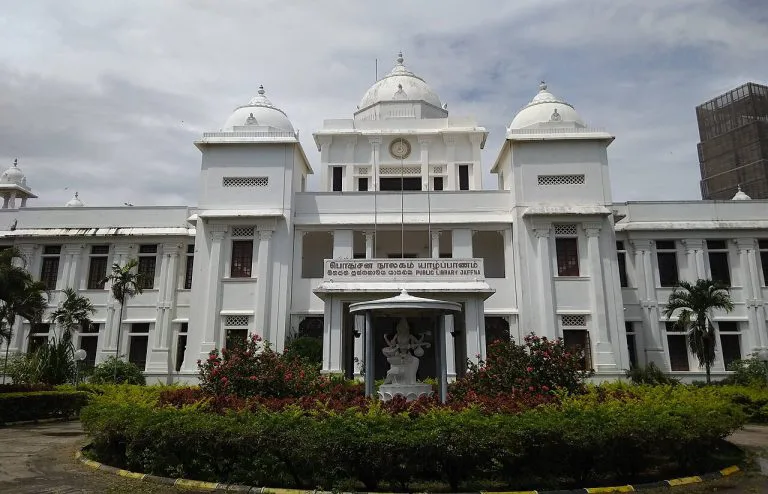
A guide to Jaffna city: capital of a 400-year Tamil kingdom, its library's destruction and rebirth, post-war recovery, visiting tips and map.













