

Dsigngo is a Graphic Design and Digital Marketing Company.
Write what you are looking for and press enter to begin your search!

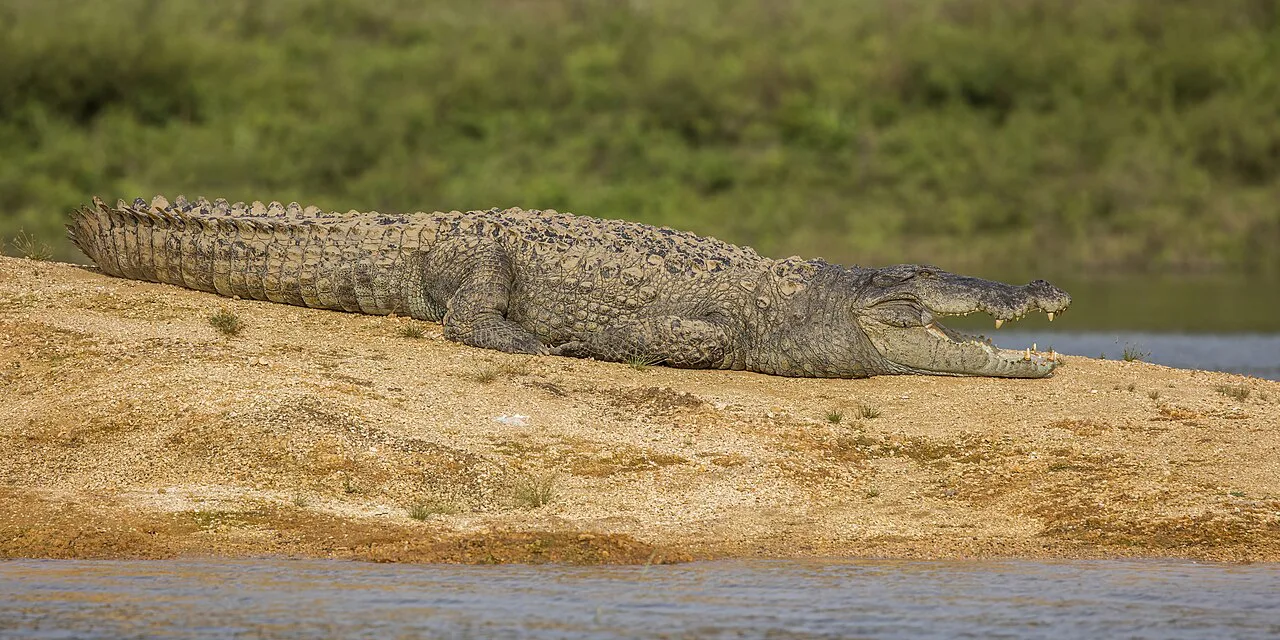
The East, Sri Lanka
Gal Oya National Park
A dam built for irrigation in 1950 created an inland sea so vast that elephants now regularly swim between its scattered islands, using their trunks as makeshift snorkels in a sight found almost nowhere else on Earth.
Gal Oya holds a genuinely unique distinction among Sri Lanka’s national parks: it’s the only one where safaris are conducted by boat, gliding across a reservoir so large that elephants have adapted to swimming between its islands rather than walking around it.
Quick Facts
| Location | Uva and Eastern Provinces, near Ampara |
| Established | 12 February 1954, to protect the Senanayake Samudra catchment |
| Size | 25,900 hectares |
| Centrepiece | Senanayake Samudra, Sri Lanka’s largest reservoir, dammed 1949-50 |
| Best time for swimming elephants | Roughly March to July |
| Indigenous community | Home to one of Sri Lanka’s Vedda clans |
Commonly searched as: Gal Oya National Park · Gal Oya swimming elephants · Senanayake Samudra · boat safari Sri Lanka · things to do in the East Sri Lanka
A Reservoir Built for Irrigation, Not Wildlife
Gal Oya National Park exists today because of a mid-20th-century development project rather than any original conservation intent. The Senanayake Samudra, Sri Lanka’s largest reservoir, was created by damming the Gal Oya river at Inginiyagala around 1949-50, part of a broader irrigation and development scheme intended to boost agricultural output across the country’s dry eastern plains. Recognising the ecological significance of the resulting catchment area, authorities declared Gal Oya National Park on 12 February 1954, later transferring management to the Department of Wildlife Conservation in 1965.
That practical, infrastructure-driven origin story echoes the pattern seen at Minneriya and Kaudulla further north, reservoirs built for irrigation that inadvertently became some of Sri Lanka’s most significant wildlife habitats, proof that the country’s ancient and modern hydraulic engineering has shaped its national parks almost as directly as its agriculture.
The Only National Park You Explore by Boat
Gal Oya’s defining feature is its boat safari, the only one of its kind offered at any Sri Lankan national park, gliding across the vast Senanayake Samudra past scattered rocky islands rather than following dusty jeep tracks. The reservoir’s genuine highlight, when conditions align, is watching wild elephants swim between islands, propelling themselves through open water while using their trunks as functional snorkels, a behaviour rarely observed with such regularity anywhere else in the world. That spectacle is most reliably seen roughly between March and July, when water levels and elephant movement patterns combine most favourably.
Beyond the swimming elephants, the park supports 32 recorded mammal species, including leopards, sloth bears, langurs, toque macaques and water buffalo, alongside around 150 bird species, among them the endemic Red-faced Malkoha and Sri Lanka Spurfowl, and the rare, dry-zone-dependent Painted Partridge, for which Gal Oya represents one of its last strongholds.
Home to an Indigenous Vedda Community
The mountainous terrain west of the park has historically served as one of the last remaining strongholds of the Vedda people, widely considered Sri Lanka’s indigenous community, adding a genuine cultural dimension to Gal Oya beyond its wildlife and scenery. The park also holds Buddhangala Sanctuary, home to a stupa and other monuments dating to the 2nd century BCE, tying the area’s natural and human history together across an extraordinarily long span of time.
Visiting Tips
- Visit March to July for the best chance of witnessing elephants swimming between the reservoir’s islands.
- Book both a boat safari and a jeep safari or guided hike if time allows, given Gal Oya’s genuinely varied terrain.
- Consider a stay at a lodge bordering the park, some of which offer wildlife views directly from the accommodation.
- Expect a considerably quieter, less crowded experience than Yala or Udawalawe, part of Gal Oya’s distinct appeal.
A Park Defined by What It Isn’t
Much of Gal Oya’s appeal comes from what it deliberately lacks: the crowded convoys of jeeps that can gather around a single leopard sighting at Yala, or the dense tourist infrastructure surrounding Sri Lanka’s more famous parks. Reaching Gal Oya takes genuine effort, several hours further than the more accessible Yala or Udawalawe, and that extra distance has kept visitor numbers meaningfully lower, preserving a sense of genuine wilderness that’s become increasingly rare at Sri Lanka’s better-known reserves.
Where It Sits on the Map
Gal Oya National Park, Uva/Eastern Provinces, near Ampara Open in Google Maps ↗
Frequently Asked Questions
Why is Gal Oya National Park unique among Sri Lanka’s parks?
It’s the only national park in Sri Lanka where safaris are conducted by boat, exploring the vast Senanayake Samudra reservoir rather than following jeep tracks.
What is the famous ‘swimming elephants’ phenomenon?
Wild elephants regularly swim between the reservoir’s scattered islands, using their trunks as snorkels, a sight rarely observed elsewhere in the world, most reliable roughly March to July.
When was Gal Oya National Park established?
On 12 February 1954, to protect the catchment area of the Senanayake Samudra reservoir, created by a dam completed around 1949-50.
What indigenous community is associated with Gal Oya?
The Vedda people, widely considered Sri Lanka’s indigenous community, have historically inhabited the mountainous terrain to the park’s west.
← Sri Lanka: The Complete Guide — see all 258 places by region
Related News
A guide to Sri Lanka's East Coast: Trincomalee, Batticaloa, Arugam Bay, wildlife parks, and the region's unique dry-season timing.
A guide to Trincomalee: one of the world's finest natural harbours, its ancient temple, colonial and WWII history, visiting tips and map.
A guide to Fort Frederick in Trincomalee: built from a demolished temple's stones, still an active Sri Lankan military base, its resident deer, visiting tips...













