

Dsigngo is a Graphic Design and Digital Marketing Company.
Write what you are looking for and press enter to begin your search!

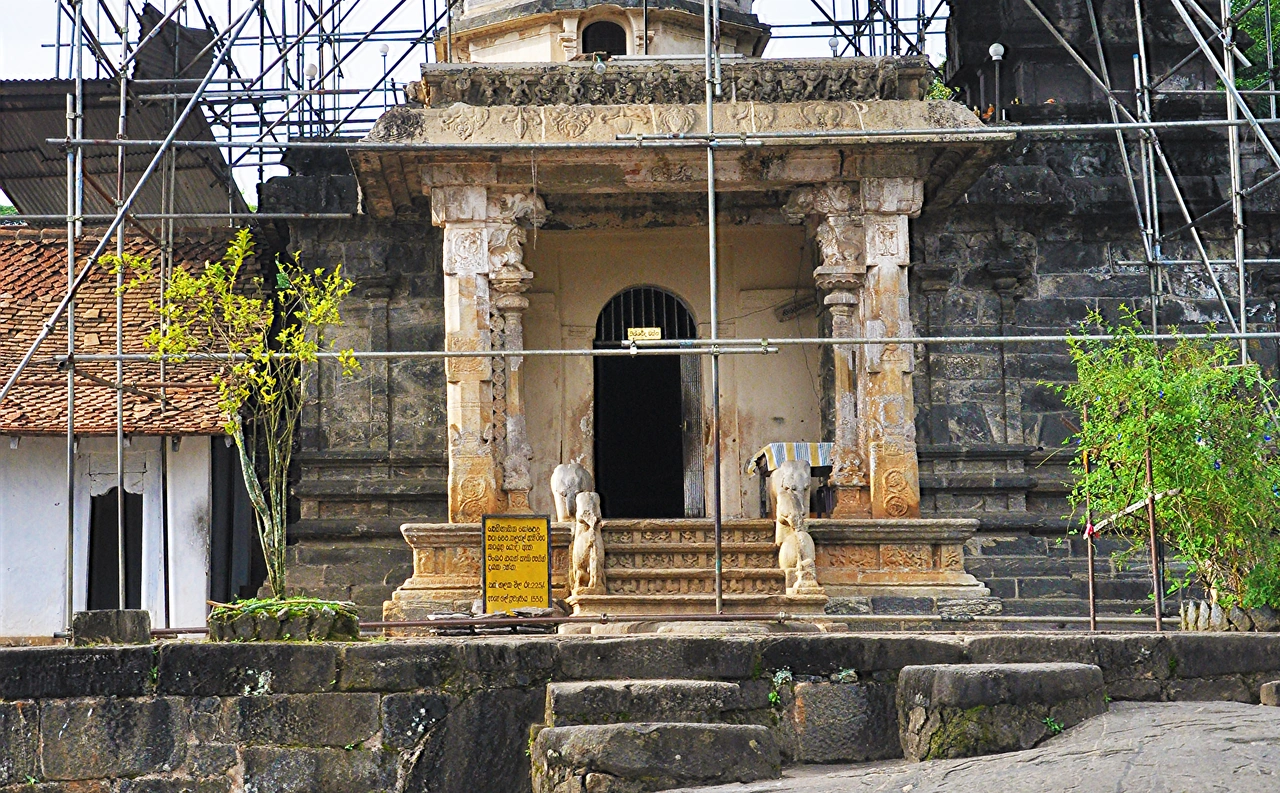
Near Kandy, Hill Country
Gadaladeniya Temple
Built in 1344 by a South Indian architect brought specifically for the job, this stone temple on a flat rock outcrop stands as one of the clearest examples of Dravidian influence on Sri Lankan Buddhist architecture.
Gadaladeniya Temple’s stone gopuram tower and pillared halls look, at first glance, more like a South Indian Hindu temple than a Sri Lankan Buddhist one, and that’s precisely the point: it was designed by a South Indian architect, brought to Sri Lanka specifically to build it.
Quick Facts
| Location | Diggala, about 4 km from Pilimathalawa on the Kandy-Colombo road |
| Also known as | Saddharmatilake Vihara, Dharma Kirthi Viharaya |
| Built | 1344, under King Bhuvanekabahu IV |
| Architect | Ganesvarachari, brought from South India |
| Style | Dravidian architecture with Sinhalese elements |
| Material | Built entirely of stone, on a flat rock outcrop |
Commonly searched as: Gadaladeniya Temple · Saddharmatilake Vihara · Three Temples Loop Kandy · Dravidian architecture Sri Lanka · things to do near Kandy
An Architect Imported for the Job
Gadaladeniya was built in 1344 under the patronage of King Bhuvanekabahu IV, who ruled from Gampola during a period when Sri Lankan Buddhist architecture was actively absorbing influences from South India. Rather than rely on local builders alone, the king brought in Ganesvarachari, a South Indian architect, to design and construct the temple, and the result shows clearly in its Dravidian-style pillared halls, gopuram entrance tower, and intricately carved stone sculptures, a design vocabulary drawn far more directly from South Indian Hindu temple architecture than from earlier Sri Lankan Buddhist tradition.
That deliberate cross-cultural commission reflects the broader character of the Gampola period, when the kingdom’s rulers actively blended Hindu and Buddhist elements, a syncretism scholars have connected to the ruling class reinforcing its own legitimacy through religious architecture during a time of declining political and military power relative to earlier Sinhalese kingdoms.
Built Entirely in Stone
Unlike Embekke, celebrated for its wooden carving, Gadaladeniya is built almost entirely of stone, set on a flat rock outcrop at Diggala. Faded paintings within the temple, dating to around the same period as its construction, offer clues to historical building methods and decorative choices from the era, adding an additional layer of historical documentation beyond the architecture itself.
A Buddhist Temple With a Hindu Extension
Gadaladeniya’s layout includes a Hindu shrine extension alongside its main Buddhist temple structure, a physical embodiment of the religious blending typical of the Gampola era, and a detail that distinguishes it from more purely Buddhist temples elsewhere on the island.
Visiting Tips
- Visit as the first stop on the Three Temples Loop, given its position closest to the main Kandy-Colombo road.
- Look closely at the stone carvings and the faded period paintings, both offering direct visual evidence of the temple’s original construction.
- Combine with Lankatilaka and Embekke temples nearby for a fuller half-day heritage circuit.
- Dress modestly, as with any active Buddhist temple.
A Physical Record of a Cultural Crossroads
Gadaladeniya’s real significance lies less in any single carving or architectural flourish and more in what its very existence represents: a Sri Lankan king deliberately importing foreign expertise to build a religious monument, rather than relying solely on local tradition. That choice speaks to how genuinely interconnected the medieval Indian Ocean world was, with ideas, craftsmen, and artistic styles moving fluidly between South India and Sri Lanka well before European colonial contact reshaped the region’s trade and cultural networks. Visiting Gadaladeniya today means standing inside a tangible record of that older, pre-colonial cross-cultural exchange, one carved directly into stone nearly seven centuries ago.
Where It Sits on the Map
Gadaladeniya Temple, Diggala, near Pilimathalawa Open in Google Maps ↗
Frequently Asked Questions
Who built Gadaladeniya Temple?
It was constructed in 1344 under King Bhuvanekabahu IV, designed by South Indian architect Ganesvarachari.
Why does Gadaladeniya look different from typical Sri Lankan temples?
Its Dravidian-style pillared halls, gopuram tower, and stone carvings reflect direct South Indian architectural influence, unusual for a Buddhist temple of this period.
What material is the temple built from?
Stone, set on a flat rock outcrop at Diggala, distinguishing it from the wood-focused Embekke temple nearby.
Is Gadaladeniya part of a larger heritage route?
Yes, it’s the first stop on the Three Temples Loop, alongside Lankatilaka and Embekke.
← Sri Lanka: The Complete Guide — see all 258 places by region
Related News
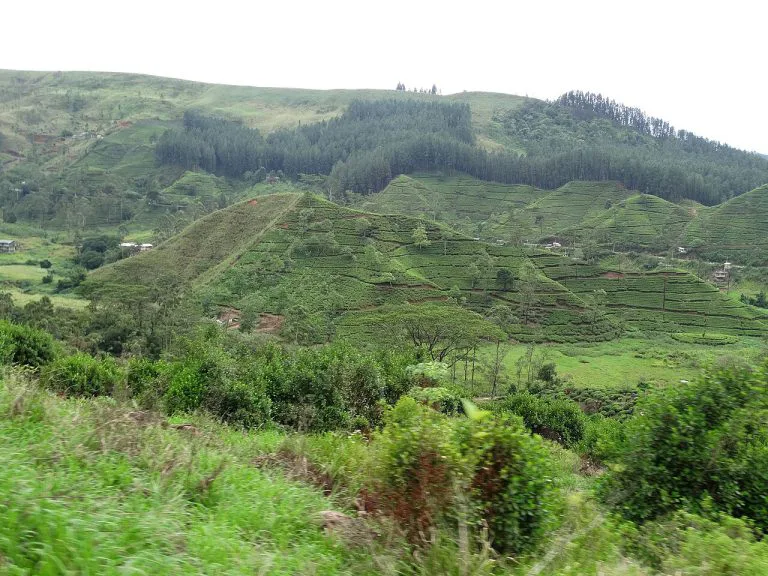
A guide to Sri Lanka's Hill Country: Kandy, tea plantations, Ella, Adam's Peak, Horton Plains, and travel tips.
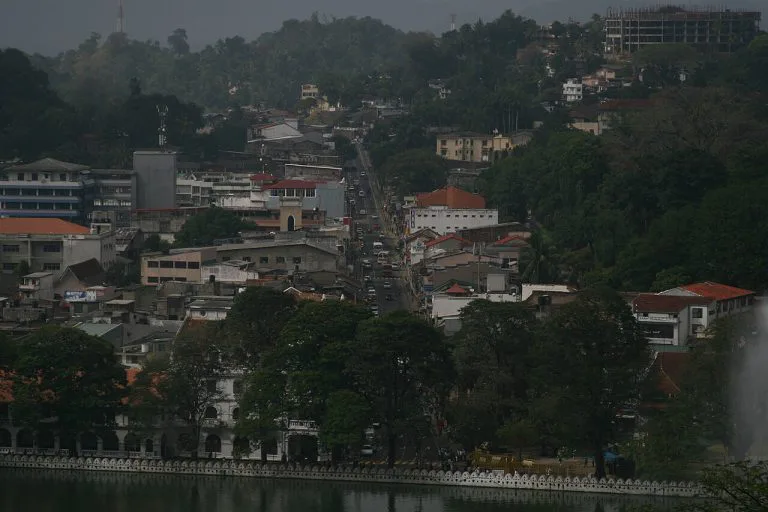
A complete guide to Kandy: the last Sinhalese kingdom's fall in 1815, the Temple of the Tooth, Kandy Lake, and visiting tips.
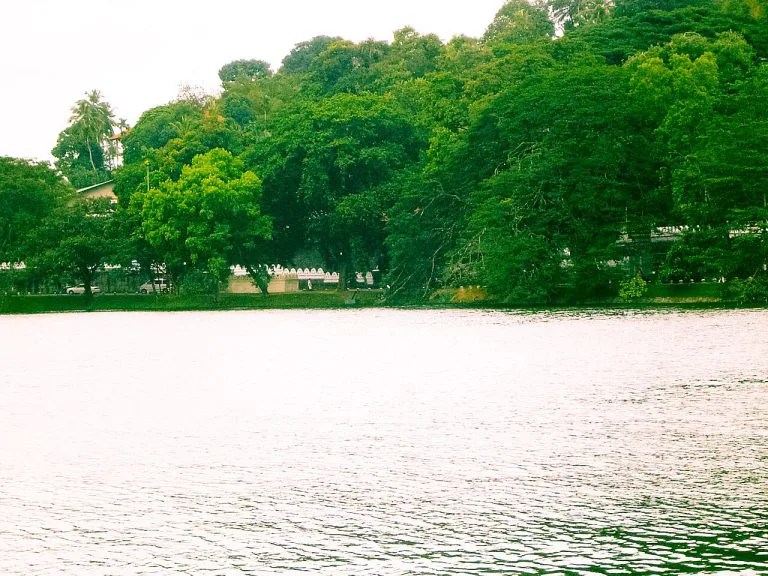
A guide to Kandy Lake, built by the last king of Kandy in 1807: its dark construction history, the island retreat, walking the shore, and...













