

Dsigngo is a Graphic Design and Digital Marketing Company.
Write what you are looking for and press enter to begin your search!

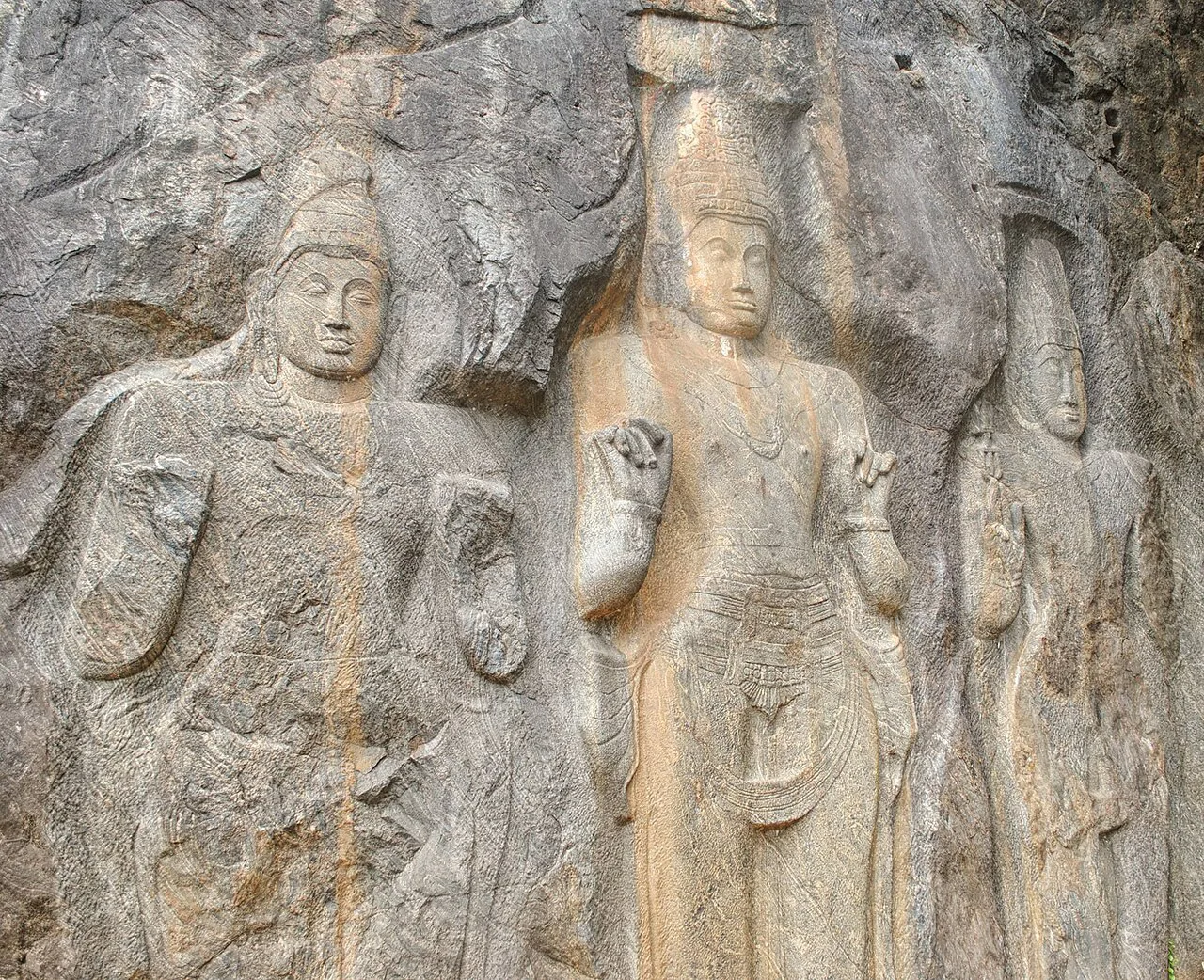
Near Wellawaya, Hill Country
Buduruwagala
Carved into a rock shaped like a kneeling elephant, this centre statue stands 51 feet tall, making it the tallest ancient Buddha statue anywhere in South Asia outside Afghanistan’s destroyed Bamiyan Buddhas.
Buduruwagala’s name simply means ‘the rock with the statue of the Buddha,’ a fittingly modest description for a site holding South Asia’s tallest ancient Buddha statue outside Afghanistan, carved into a rock face that itself resembles a kneeling elephant with its head bowed.
Quick Facts
| Location | About 5 to 9 km from Wellawaya, Monaragala District |
| Main statue height | 51 feet (15.5 metres) |
| Number of figures | Seven, carved into a single rock face |
| Dating | Generally attributed to the 9th or 10th century CE |
| Tradition | Mahayana Buddhist influence, unusual for predominantly Theravada Sri Lanka |
| Rediscovery | By a British surveyor in the early 20th century |
Commonly searched as: Buduruwagala · tallest Buddha statue South Asia · Wellawaya rock carvings · Buduruwagala Mahayana Buddhism · things to do near Ella
A Site With No Written History
Unlike many of Sri Lanka’s major archaeological sites, Buduruwagala appears in no ancient chronicles or written records, an unusual gap for a monument of this scale. Even its original name has been lost; the modern name, derived from the Sinhala words for Buddha (Budu), image (ruwa), and rock (gala), was applied after a British surveyor rediscovered the site in the early 20th century. Archaeologists generally date the carvings to the 9th or 10th century CE, though without documentary evidence, that dating rests on stylistic analysis rather than any confirmed historical record, and the site is thought to have originally served as a forest hermitage for monks.
Seven Figures, One Extraordinary Centrepiece
The site’s seven statues are carved directly into a single rock face measuring 305 feet long and 70 feet high, a formation whose overall shape resembles a kneeling elephant with its head lowered. At the centre stands the main attraction: a colossal standing Buddha in the Abhaya Mudra gesture, measuring 51 feet from head to toe, making it the tallest ancient Buddha statue in South Asia outside Afghanistan, whose taller Bamiyan Buddhas were destroyed by the Taliban in 2001. Traces of the statue’s original stuccoed robe remain visible, along with a long streak of orange pigment suggesting the figure was once brightly painted in its heyday.
Flanking the central Buddha are six smaller figures showing clear Mahayana Buddhist influence, unusual in a country whose Buddhist tradition is overwhelmingly Theravada. A crowned figure is thought to represent Maitreya, the future Buddha, while a figure holding a vajra (thunderbolt symbol) is identified as Vajrapani, an unusual example of Tantric Buddhist influence in Sri Lanka. Another grouping is believed to depict Avalokiteshvara, the bodhisattva of compassion, alongside a female figure thought to be his consort Tara, and, according to local legend, Prince Sudhana.
The Mysteriously Wet Cavity
At the base of the main Buddha statue lies a flame-shaped cavity in the rock that remains perpetually and inexplicably wet with an oily substance, said to resemble the scent of mustard oil. Local legend connects this to a sealed treasure chamber supposedly hidden within the rock; treasure hunters reportedly once attempted to blast their way in with dynamite, cracking the rock and, according to the story, causing healing oil from an inner rock-cut bath to seep to the surface ever since. Today, pilgrims rub the emerging oil on their foreheads, believing in its sacred and medicinal properties.
Visiting Tips
- Combine with a visit to the nearby Buduruwagala reservoir (wewa) for scenic views and birdwatching, including hawk-eagles and white-bellied sea eagles.
- The site sits along a scenic side road off the main Wellawaya-Thanamalvila route, reachable by tuk-tuk or car.
- Dress modestly and remove shoes near the shrine areas, as at any active Buddhist site.
- Visit in the morning for cooler temperatures and better light on the carvings.
A Monument Preserved by Obscurity
It’s worth appreciating how genuinely unusual it is for a monument of this scale, the tallest ancient Buddha statue in South Asia outside Afghanistan, to have gone essentially unrecorded in written history until a colonial-era surveyor stumbled upon it. That obscurity likely helped protect the site from the kind of destruction or repurposing that befell more prominently documented monuments during periods of foreign invasion or religious upheaval elsewhere on the island. Buduruwagala’s isolation, tucked away off a side road well south of the main Cultural Triangle circuit most visitors follow, continues to work in its favour today, keeping it a genuinely quiet, uncrowded site despite its considerable historical and artistic significance.
Where It Sits on the Map
Buduruwagala, near Wellawaya, Monaragala District Open in Google Maps ↗
Frequently Asked Questions
How tall is the main Buduruwagala Buddha statue?
51 feet (15.5 metres), making it the tallest ancient Buddha statue in South Asia outside Afghanistan.
When were the statues carved?
Generally dated to the 9th or 10th century CE, though no written historical records document the site’s origin.
Why is Buduruwagala unusual for a Sri Lankan Buddhist site?
Several of its statues show clear Mahayana Buddhist influence, including Tantric elements, unusual for a country whose Buddhist tradition is predominantly Theravada.
What is the story behind the wet cavity at the statue’s base?
A flame-shaped cavity remains mysteriously wet with an oily substance; local legend links it to a sealed treasure chamber that treasure hunters once tried to blast open.
← Sri Lanka: The Complete Guide — see all 258 places by region
Related News
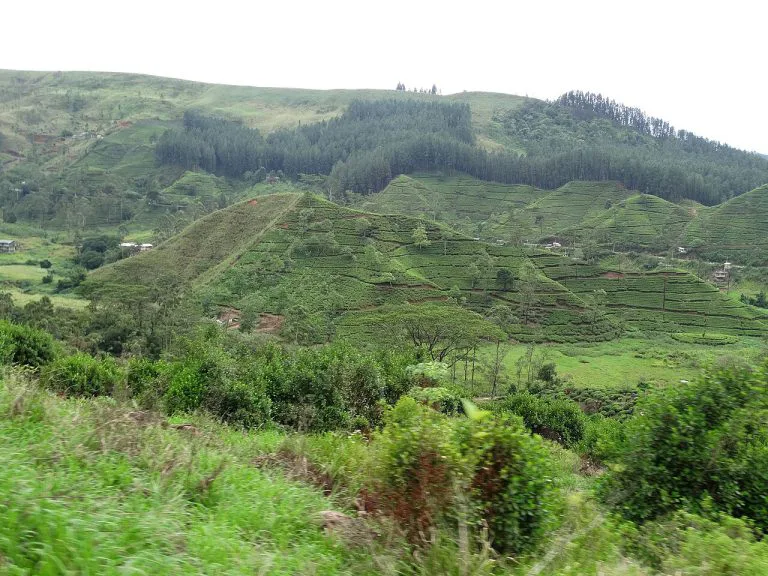
A guide to Sri Lanka's Hill Country: Kandy, tea plantations, Ella, Adam's Peak, Horton Plains, and travel tips.
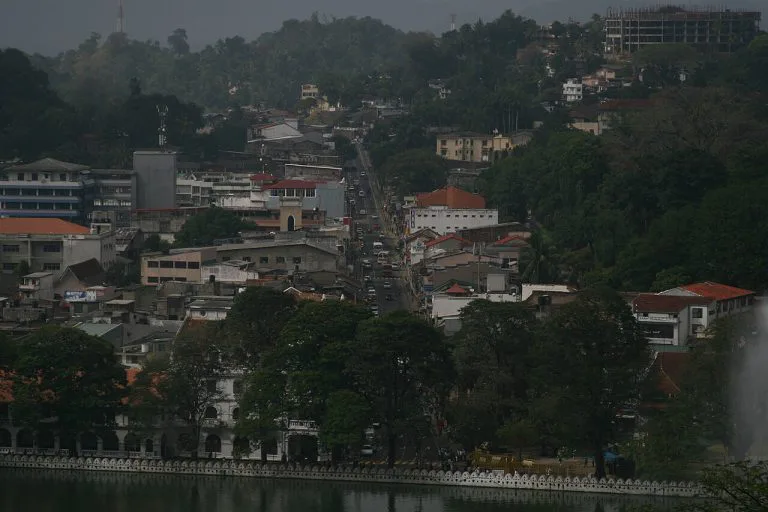
A complete guide to Kandy: the last Sinhalese kingdom's fall in 1815, the Temple of the Tooth, Kandy Lake, and visiting tips.
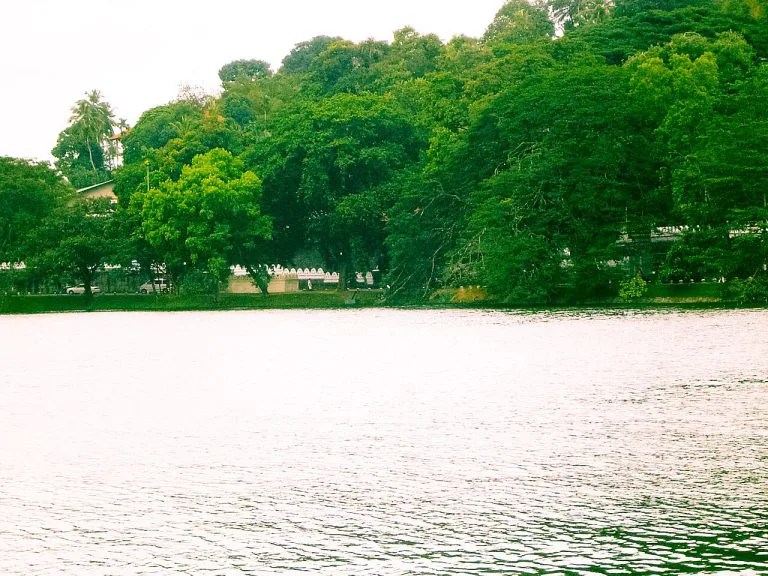
A guide to Kandy Lake, built by the last king of Kandy in 1807: its dark construction history, the island retreat, walking the shore, and...













