

Dsigngo is a Graphic Design and Digital Marketing Company.
Write what you are looking for and press enter to begin your search!

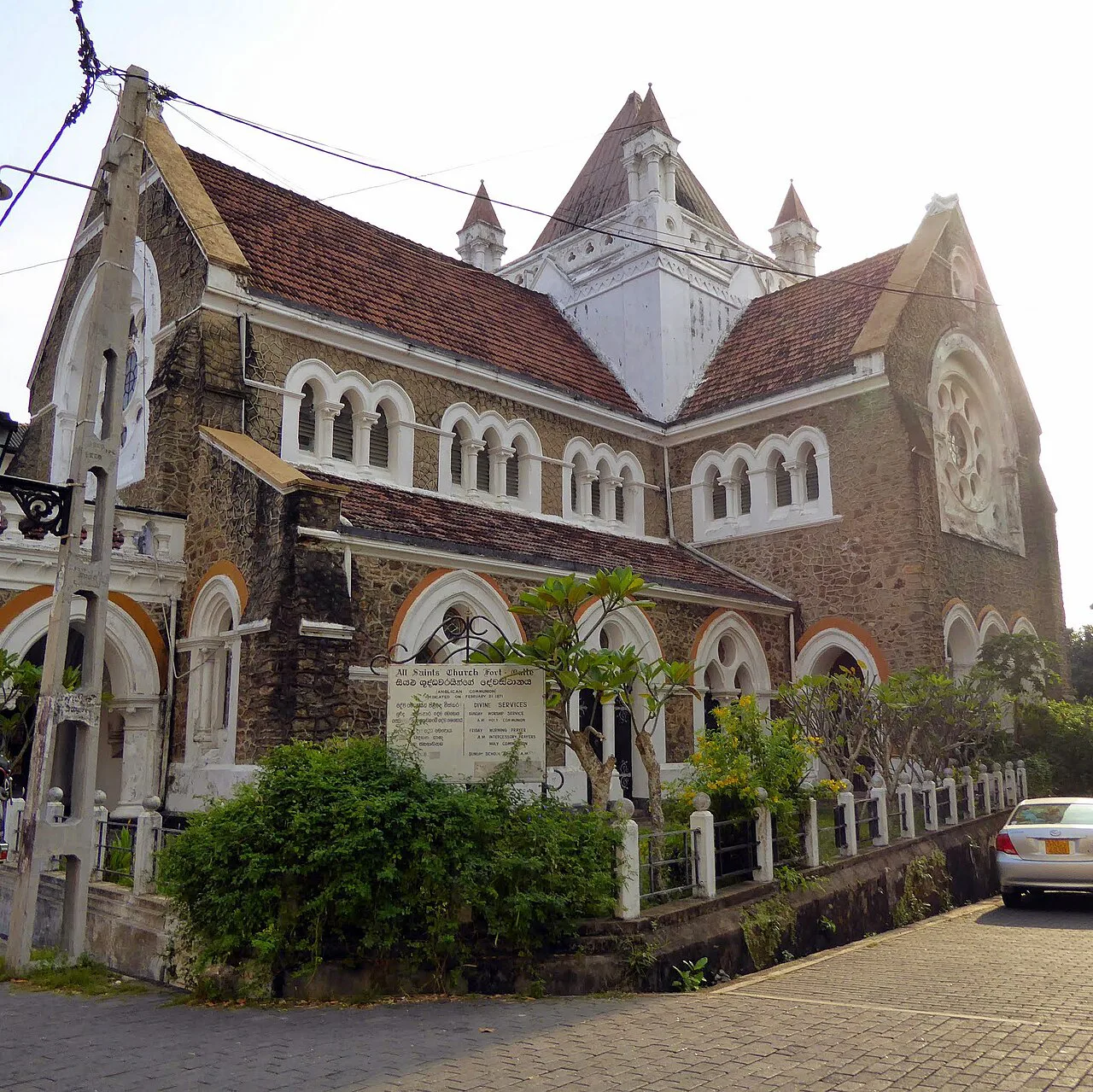
Galle Fort, The South
All Saints Church
Galle Fort’s first Anglican church, a Victorian Gothic Revival building consecrated in 1871, said to stand on the site of a courthouse and, according to local legend, a former gallows.
Galle Fort’s first Anglican church took shape at half past four in the morning, when the foundation stone was laid before dawn on 30 October 1868. Nearly three years later, All Saints’ Church was consecrated as the finest example of English Gothic architecture in Sri Lanka, built, according to persistent local legend, on the site of an old courthouse and, before that, a gallows.
Quick Facts
| Location | Church Road, Galle Fort |
| Foundation laid | 30 October 1868, by Bishop Piers Calveley Claughton |
| Consecrated | 21 February 1871 |
| Architect | J.G. Smither, who later designed the Colombo National Museum |
| Construction cost | About £1,600, funded by a government grant and an English parish donation |
| Style | Victorian Gothic Revival, cruciform plan, adapted for the local climate |
Commonly searched as: All Saints Church Galle · Galle Fort Gothic church · Galle Anglican church · things to do in Galle Fort · Galle Fort churches
Built for Galle’s Growing English Community
The push to build an Anglican church at Galle began formally on 16 December 1862, when members of the Church of England in Galle met at the Queen’s House to discuss the idea, under the direction of James Chapman, the first Bishop of Colombo. It took another six years before ground was actually broken: the foundation stone was laid before sunrise on 30 October 1868, by the second Bishop of Colombo, Rt. Rev. Dr. Piers Calveley Claughton. Construction was funded by a grant of land and £600 from Sir Hercules Robinson, the 13th Governor of Ceylon, topped up by a further £1,000 contribution from an English parish, bringing the total cost to around £1,600.
The church was designed by J.G. Smither, then the government architect, who would later go on to design the Colombo National Museum, one of Sri Lanka’s most recognisable colonial-era buildings. All Saints’ was consecrated on 21 February 1871, and the very same day saw its first baptism, of Lilian Slade Godolphin Ozanne. Its first wedding followed a month later, on 25 March 1871, between James Weir and Jane Strene King.
The Gallows Legend
According to persistent local legend, unconfirmed but widely repeated among Galle Fort tour guides, the site now occupied by the church’s altar once held a courthouse and, before that, a set of gallows used to execute convicted criminals during an earlier period of the fort’s history. Whether or not the story is historically accurate, it adds a slightly darker undertone to what is otherwise a serene, well-preserved place of worship, and it’s the kind of detail visitors tend to remember long after forgetting the precise construction dates.
The Architecture
All Saints’ follows a basilican plan under Victorian Gothic Revival influence, modified specifically to suit Galle’s tropical climate rather than following an unadapted English template. Its cruciform layout rests on stone columns and beautifully carved timber arches, and the interior holds heavily carved wooden pews and a sanctuary considered among the finest examples of 19th-century English Gothic craftsmanship anywhere in Sri Lanka. Marble plaques throughout the church commemorate British residents who lived in Galle during the colonial era, and vivid stained glass windows cast coloured light across the interior. The church bell, notably, came from the Liberty Ship “Ocean Verity” and was donated by the Clan Line Steamship Company.
Visiting Tips
- Visit in the morning or late afternoon for the best light through the stained glass windows.
- Check local service schedules if you’d like to attend a Sunday service.
- The church sits within easy walking distance of the Galle Lighthouse and Dutch Reformed Church, making it easy to combine on a fort walking tour.
- Take a moment in the surrounding gardens, a peaceful spot amid the fort’s busier streets.
An English Church Adapted for the Tropics
What makes All Saints’ architecturally interesting isn’t just its Gothic pedigree, it’s how deliberately that style was reworked for a completely different climate than the one it originated in. English Gothic Revival architecture developed around cold, wet weather and low ambient light, features like thick stone walls and small windows made sense in Britain but would have made a Sri Lankan church stiflingly hot and dim. Smither’s design kept the recognisable Gothic silhouette and cruciform layout while adapting proportions, ventilation and materials to suit Galle’s tropical conditions, a balancing act that shows up throughout British colonial religious architecture across South Asia, but rarely as successfully as here.
Where It Sits on the Map
All Saints’ Church, Church Road, Galle Fort Open in Google Maps ↗
Frequently Asked Questions
When was All Saints’ Church built?
Its foundation stone was laid on 30 October 1868, and the church was consecrated on 21 February 1871.
Who designed the church?
J.G. Smither, then Ceylon’s government architect, who also later designed the Colombo National Museum.
What is the legend associated with the church’s site?
Local tradition holds that the church was built on the site of a former courthouse and, before that, gallows used for executions, though this is unconfirmed.
Is All Saints’ Church still active today?
Yes, it remains a functioning Anglican church under the Church of Ceylon, Diocese of Colombo.
← Sri Lanka: The Complete Guide — see all 258 places by region
Related News
A guide to Southern Sri Lanka, from Galle to Kataragama: beaches, wildlife safaris, colonial forts, and travel tips.

A complete guide to Galle Fort: history from Ptolemy to the Dutch, walking the ramparts, top sights, and visiting tips.
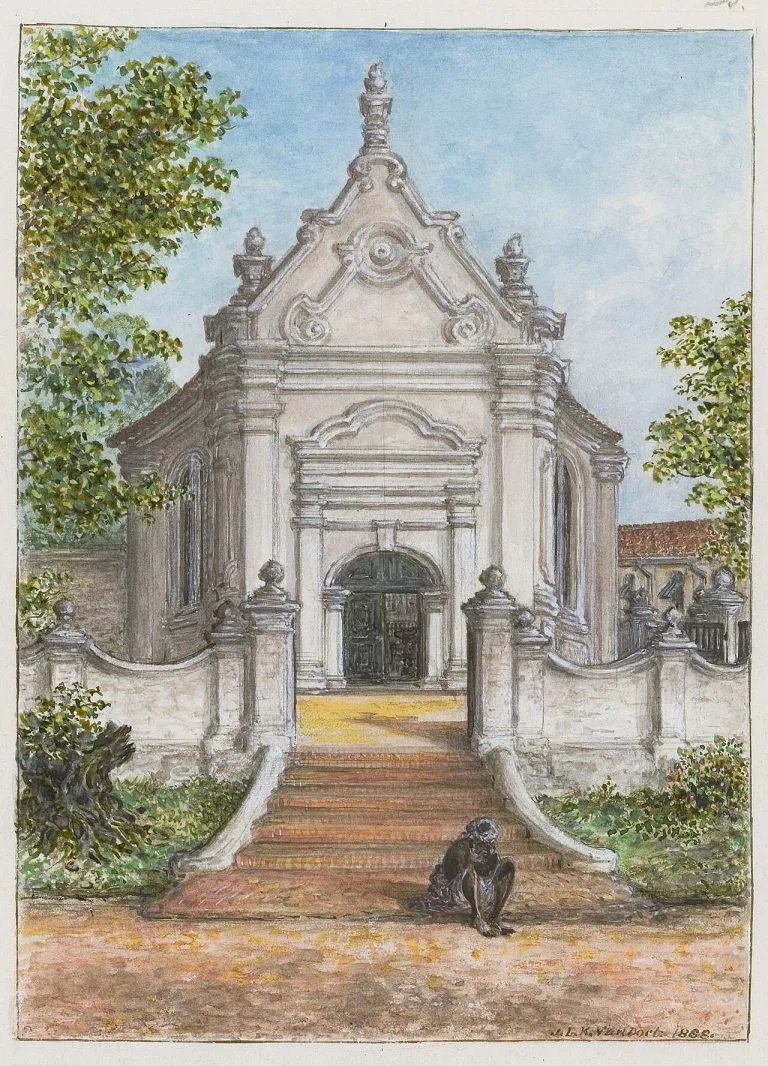
A guide to the Dutch Reformed Church in Galle Fort: the story behind its 1755 completion, the tombstone floor, visiting tips and map.













