

Dsigngo is a Graphic Design and Digital Marketing Company.
Write what you are looking for and press enter to begin your search!

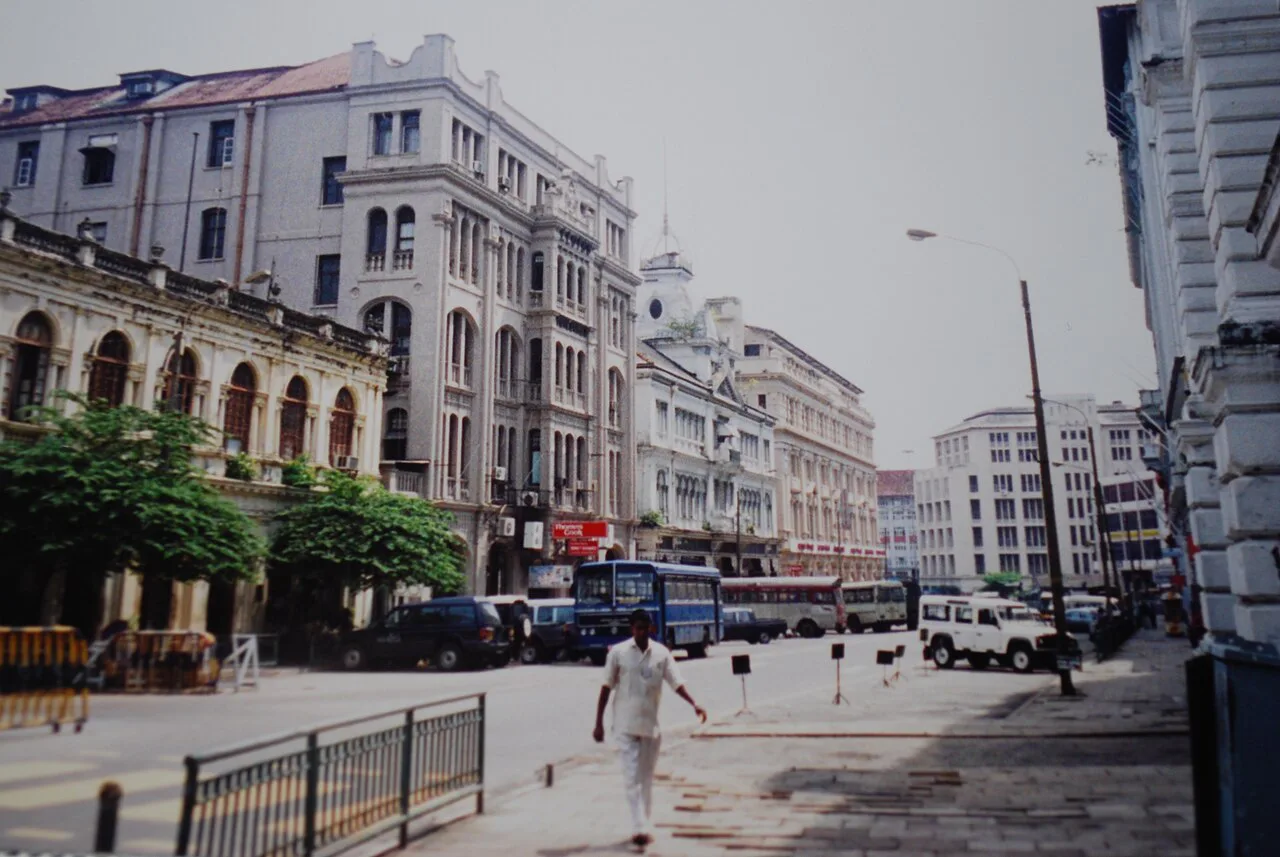
Fort, Colombo
St Peter’s Church
Hidden behind the Grand Oriental Hotel, this unassuming building has been a Portuguese monastery, a Dutch governor’s residence, and now one of Colombo’s oldest working churches.
Few buildings in Colombo pack three distinct colonial chapters into one structure quite like St Peter’s Church. Tucked behind the Grand Oriental Hotel and easy to walk straight past, it looks more like a colonial mansion than a church, and that’s because for most of its life, it wasn’t one.
Quick Facts
| Location | Church Street, Fort, Colombo 01 |
| Original use | Portuguese-era Dominican monastery site, c.1627 |
| Dutch period use | Official residence of the Dutch Governor, from c.1666 |
| Converted to a chapel | 1804, under Governor Frederick North |
| Consecrated | 1821 |
| Denomination | Anglican, Church of Sri Lanka |
Commonly searched as: St Peter’s Church Colombo · Colombo Fort churches · Dutch Governor’s Residence Colombo · oldest churches Sri Lanka · things to do in Colombo Fort
Monastery, Mansion, Chapel
The site’s story begins under Portuguese rule, when a Dominican monastery and a charity hall known as the Chapel of Misericordia stood here from around 1627. When the Dutch captured Colombo and took control of the site around 1666, they had little interest in preserving Portuguese Catholic architecture, but the building itself was too solidly constructed to demolish economically. Instead, they converted it into the official residence of the Dutch Governor, adding an elegant two-storey facade facing the waterfront, complete with a flat roof, generous windows, and a grand arched portico. For the next 130 years, this building hosted council meetings and banquets, including receptions for ambassadors from the independent Kingdom of Kandy.
When the British took Colombo in 1796, the former Governor’s residence briefly served as the home of Lieutenant General Hay MacDowall, but by then the building had fallen into disrepair, its roof leaking badly. Rather than restore it as a residence, Governor Frederick North had it converted into a garrison chapel in 1804, giving British soldiers and officials a place to worship without relying on the Dutch Reformed congregation at nearby Wolvendaal Church. The building was formally consecrated as St Peter’s Church in 1821, and further alterations in 1832 added classical masonry columns while removing much of what remained of the original residential structure.
A Plain Exterior, a Storied Interior
From the street, St Peter’s still looks more like a stately colonial building than a place of worship, a stone facade with little obvious religious ornamentation. Inside, though, the church is packed with history in the form of memorial plaques and tombstones commemorating governors, bishops, military officers and ordinary colonial-era residents. One well-known inscription memorialises a young man killed by an elephant near Ruanwella in 1838, a small but vivid detail of what life, and death, looked like in 19th-century Ceylon. The church has also long served seafarers through its association with the Mission to Seafarers, reflecting its position close to the Port of Colombo.
Finding It
St Peter’s sits down a quiet covered walkway next to the Grand Oriental Hotel, easy to miss if you’re not specifically looking for it. That relative obscurity is part of its appeal for visitors interested in Colombo’s lesser-known colonial history rather than its headline attractions.
Visiting Tips
- Look for the entrance beside the Grand Oriental Hotel rather than expecting a standalone church facade from the main street.
- Take time to read the memorial plaques inside; they offer a genuinely personal window into colonial-era Colombo.
- Combine with the Clock Tower and Old Dutch Hospital for a compact historical walk through northern Fort.
A Building That Outlasted Its Purpose Three Times Over
What makes St Peter’s genuinely unusual isn’t any single feature, it’s the sheer number of times the same physical structure was repurposed to suit whichever colonial power controlled Colombo at the time. Most heritage buildings in Fort represent a single era: the Clock Tower is British, the Dutch Period Museum is Dutch, the mosque nearby is neither. St Peter’s is different, it’s a rare case where you can trace Portuguese, Dutch and British layers within one continuously occupied footprint, each power adapting rather than replacing what came before, largely because the underlying structure was simply too well built to tear down.
That practical, almost accidental continuity gives St Peter’s a different character from Colombo’s more deliberately preserved monuments. It wasn’t kept standing because anyone set out to protect a historical landmark, it survived because reusing a solid building was more efficient than starting from scratch, three times in a row, across three different empires.
Where It Sits on the Map
St Peter’s Church, Church Street, Fort, Colombo 01 Open in Google Maps ↗
Frequently Asked Questions
Why doesn’t St Peter’s Church look like a typical church?
Because it wasn’t originally built as one. The building started as a Portuguese monastery structure, then became the Dutch Governor’s official residence, and was only converted into a chapel in 1804.
When was it consecrated as a church?
In 1821, after British authorities converted the former Governor’s residence into a garrison chapel starting in 1804.
What is inside the church?
Numerous memorial plaques and tombstones commemorating colonial-era governors, clergy, military officers and residents, offering a detailed record of Colombo’s European community.
Is St Peter’s Church still active?
Yes, it remains a functioning church under the Anglican Church of Sri Lanka.
← Sri Lanka: The Complete Guide — see all 258 places by region
Related News
A complete guide to Pettah, Colombo's historic bazaar district: history, top sights, street food, shopping tips and map.
A complete guide to the Colombo Fort district: colonial history, the Clock Tower, Old Dutch Hospital, walking tips and map.
A complete guide to Gangaramaya Temple in Colombo: history, architecture, its unusual museum, festivals, tips and map.













