

Dsigngo is a Graphic Design and Digital Marketing Company.
Write what you are looking for and press enter to begin your search!

Colombo 13
Kotahena
A northeastern Colombo suburb that grew into the island’s Catholic heartland, home to some of the city’s grandest and most historic churches.
Kotahena doesn’t get the same attention as Fort or Pettah in most Colombo itineraries, but for Sri Lankan Catholics it’s genuinely sacred ground. This northeastern suburb grew, largely by necessity, into the administrative and spiritual heart of Catholicism in Colombo, and its churches remain some of the most historically significant religious buildings in the city.
Quick Facts
| Location | Northeast Colombo, Colombo 13 |
| Character | Historic Catholic neighbourhood |
| Key landmarks | St Lucia’s Cathedral, St Anthony’s Shrine, St Thomas’ Church, Wolvendaal Church |
| Historical roots | Catholic worship here dates to the Dutch colonial period |
| Best known for | Being the seat of the Archdiocese of Colombo |
Commonly searched as: Kotahena Colombo · Colombo Catholic churches · St Lucia’s Cathedral · St Anthony’s Shrine Kochchikade · things to do in Colombo
How a Suburb Became a Sacred District
Kotahena’s Catholic identity has deep roots, stretching back to the Dutch colonial period, when Catholicism was officially banned across Dutch-controlled Ceylon and priests were forced to practise and preach in secret. Despite that suppression, a small worship community persisted here, and by 1820 Kotahena had become the headquarters of the Oratorian Fathers, a Catholic religious order active on the island. That concentration of clergy and worshippers laid the groundwork for what would eventually become the seat of the Roman Catholic Archdiocese of Colombo.
Today the district is known as Colombo 13, and while it functions as an ordinary residential and commercial suburb day to day, its skyline and street life are still shaped heavily by its churches, most visibly St Lucia’s Cathedral’s soaring dome and facade, along with the more modest but historically significant St Anthony’s Shrine nearby.
What to See in Kotahena
St Lucia’s Cathedral
The seat of the Archbishop of Colombo and the largest Catholic cathedral in Sri Lanka, built in stages across the 19th century on the site of an original 1760s chapel.
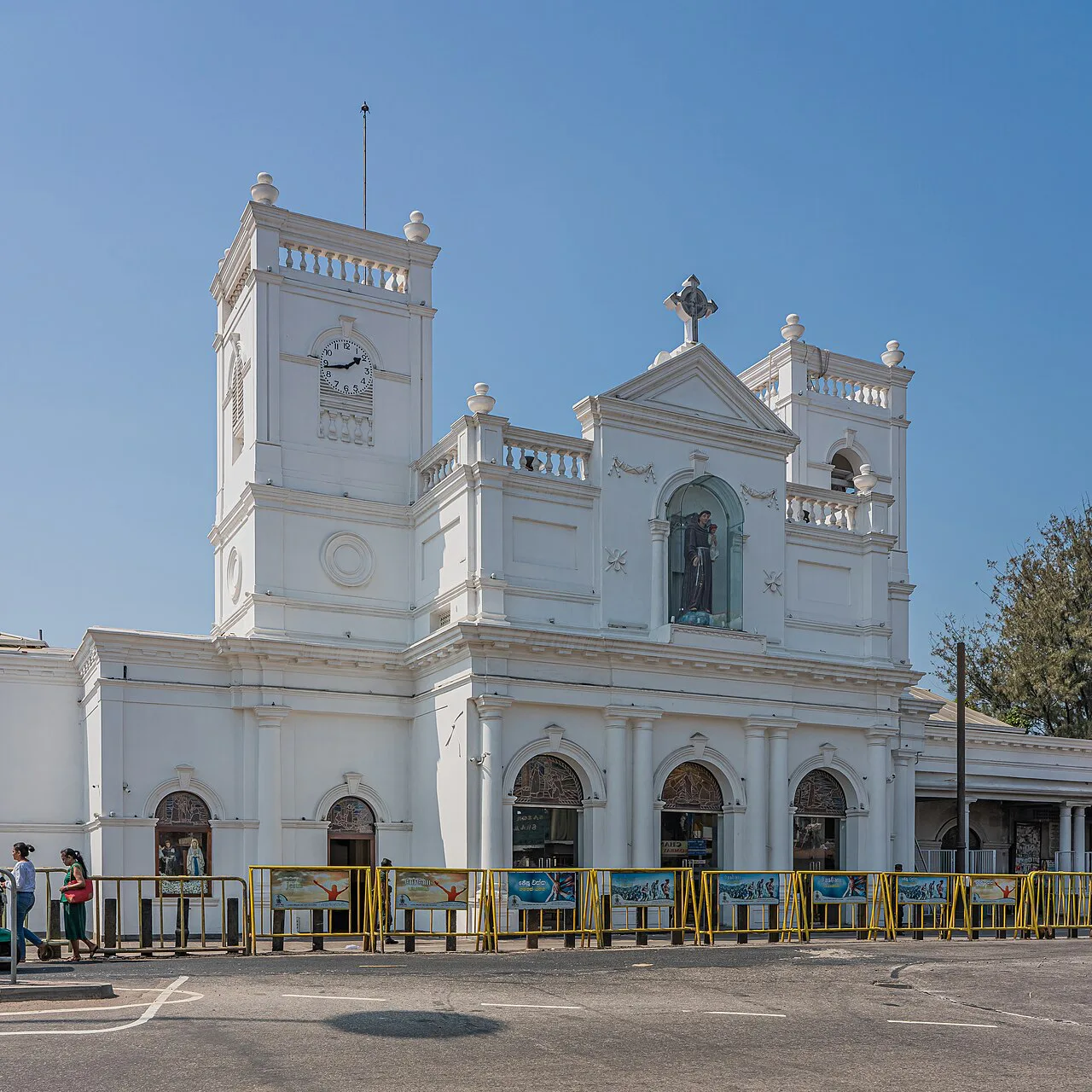
St Anthony’s Shrine
A deeply revered Catholic shrine known for its weekly Tuesday novenas, tragically also a site targeted in the 2019 Easter Sunday bombings, and rebuilt as a symbol of the community’s resilience.
Other Historic Churches
Kotahena is also home to St Thomas’ Church (Anglican) and sits close to Wolvendaal Church, the oldest Protestant church in Sri Lanka, giving the wider district an unusually dense concentration of historic religious buildings across multiple denominations.
Visiting Kotahena
Most visitors approach Kotahena specifically to see St Lucia’s Cathedral and St Anthony’s Shrine, treating the district as a religious heritage stop rather than a typical tourist neighbourhood. That’s a reasonable approach, since Kotahena’s appeal lies almost entirely in its churches and their history rather than in shopping, dining, or scenic views. A visit works well combined with a wider look at Pettah, which sits close by to the south.
Practical Tips
- Dress modestly when visiting any of Kotahena’s churches, in keeping with standard etiquette for active places of worship.
- Security measures at St Anthony’s Shrine have increased since 2019; be patient with any checks on arrival.
- Combine with Pettah for a fuller half-day covering both the market district and Colombo’s Catholic heritage core.
A Neighbourhood Shaped by Faith, Not Tourism
What sets Kotahena apart from most entries on a Colombo sightseeing list is that it wasn’t built, planned, or preserved with visitors in mind at all. Its churches exist because generations of worshippers needed somewhere to practise their faith, first in secret under Dutch rule, later openly and on an increasingly grand architectural scale as the Catholic community grew in size and confidence through the 19th and 20th centuries. That gives the district a different texture from Fort‘s colonial-administrative buildings or Pettah’s commercial energy, Kotahena is fundamentally a lived, working neighbourhood organised around continuous religious practice rather than a preserved historical set piece.
For visitors willing to treat it that way, respectfully, without expecting a curated tourist experience, Kotahena offers one of the more genuine windows into how deeply religious identity has shaped specific pockets of Colombo’s urban geography over several centuries.
Where It Sits on the Map
Kotahena, Colombo 13 Open in Google Maps ↗
Frequently Asked Questions
Why is Kotahena significant to Sri Lankan Catholics?
It has served as the centre of Catholic worship and administration in Colombo since the Dutch colonial period, and today hosts the seat of the Archdiocese of Colombo at St Lucia’s Cathedral.
What are the main landmarks in Kotahena?
St Lucia’s Cathedral and St Anthony’s Shrine are the best known, alongside St Thomas’ Church and the nearby Wolvendaal Church.
Is Kotahena safe to visit?
Yes, though security has increased at St Anthony’s Shrine following the 2019 Easter Sunday bombings; visitors should expect and be patient with security checks.
Can Kotahena be combined with other Colombo sights?
Yes, it sits close to Pettah, making it easy to visit both districts in a single day.
← Sri Lanka: The Complete Guide — see all 258 places by region
Related News
A complete guide to Pettah, Colombo's historic bazaar district: history, top sights, street food, shopping tips and map.
A complete guide to the Colombo Fort district: colonial history, the Clock Tower, Old Dutch Hospital, walking tips and map.
A complete guide to Gangaramaya Temple in Colombo: history, architecture, its unusual museum, festivals, tips and map.













